Hydrogen Production Breakthrough: KIMS Technology Turns Waste Alkaline Water into Green Hydrogen
South Korea’s KIMS develops a cost-effective nickel-cerium oxide catalyst for green hydrogen production directly from industrial waste alkaline water, challenging conventional electrolysis economics and supporting national decarbonization goals.
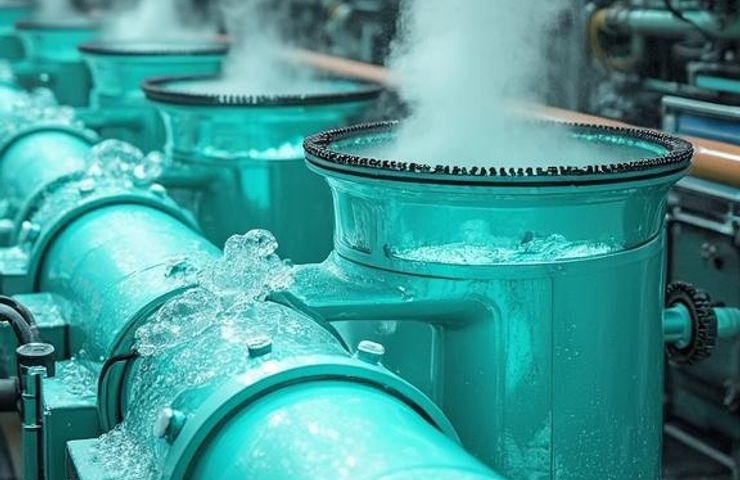
South Korea just took a big step forward in the race to decarbonize heavy industry, and it's thanks to some seriously cutting-edge work by the team at the Korea Institute of Materials Science (KIMS). They’ve come up with a cost-effective, scalable way to produce green hydrogen—and get this—from dirty, industrial waste alkaline water. That’s right—no more pricey water purification needed, which has been a major bottleneck for traditional electrolysis up to now.
Turning Industrial Waste into Clean Hydrogen
Led by Dr. Sung Mook Choi, KIMS developed a smart and efficient new catalyst made from common materials—nickel and cerium oxide. This is a big deal, because it skips the use of rare, expensive metals and still holds its own even in grimy, impurity-heavy waste water. The catalyst runs inside an Anion Exchange Membrane Water Electrolysis (AEMWE) setup, letting it pull hydrogen straight out of waste streams from industries like semiconductors and metal manufacturing—no high-end filtration required.
The project teamed up with researchers from Pukyong National University and Konkuk University, who helped run advanced modeling and built a tough, tailor-made membrane to work alongside the new catalyst. Put to the test in a cell with commercial-scale dimensions (64 cm²), the system ran over 2,000 hours and showed less than 5% performance loss. In short, it works—and it’s built to last.
A Game-Changer for Green Hydrogen Economics
Here’s some sobering math: classic water electrolysis eats up about 18 tons of purified water to make just one ton of hydrogen—and that can tack on over $2,300 to your clean fuel bill just for the water side of things. By tapping into waste water directly, KIMS slashes this cost off the top, while also eliminating the headaches (and dollars) tied to disposing of that industrial waste.
For South Korea, this isn’t just about cleaner hydrogen—it’s about smarter energy independence. No reliance on rare materials. No competition with drinking water. It's a perfect piece of the bigger picture: cleaner power, circular economy, and a boost to homegrown tech.
Under the Hood: How the Tech Works
The catalyst is made using a method called co-precipitation, followed by heat treatments that give it its special properties. The real magic lies in a unique heterojunction interface—basically, it repels the usual impurities found in industrial runoff, which keeps the hydrogen production flowing smoothly. Meanwhile, the cerium oxide part adds “oxygen vacancies” (tiny defects, on purpose!) that supercharge the system by improving electron movement and overall catalyst stability.
And the newly engineered membrane? It stands up to just about anything these dirty waste streams throw at it, solving a long-standing challenge in the world of electrolysis.
What Makes This So Exciting?
- No precious metals: It’s affordable and avoids reliance on rare-earth materials.
- Skips water purification: Saves more than $2,000 per ton of hydrogen compared to standard clean-water methods.
- Turns waste into value: Helps industries like semiconductors and metalworks manage waste sustainably while producing fuel.
- Built to endure: Proven to run over 2,000 hours with minimal loss in performance.
- Strategically aligned: Perfect fit for South Korea’s green hydrogen and circular economy roadmap.
The Bigger Picture
Most green hydrogen projects today still rely on ultra-clean water and expensive precious-metal technologies, like PEM systems. What KIMS has done is open a new lane: low-grade water electrolysis using cheaper, scalable materials. Europe and China are dabbling in similar spaces, but KIMS’s full-package approach—using waste water, non-precious catalysts, and robust membranes—is something pretty rare right now.
What’s Next? Going Beyond Wastewater
The team isn’t stopping here. They’ve already started adapting their tech to tackle even trickier feedstocks—like seawater. If they pull it off, this could open the doors to powering up hydrogen production right in coastal industrial zones worldwide. That would be a total game-changer—and it’s not as far off as you might think.
Bottom line? For anyone keeping a close eye on sustainable energy, this isn’t just a cool lab trick—it could be the tipping point that brings low-cost, large-scale hydrogen production from waste streams into the mainstream. It’s smart, it’s scalable, and it’s backed by national funding, with results already published in the high-profile journal Advanced Science.
South Korea may have just set the new bar for what practical, impactful industrial decarbonization research really looks like in action.