POSCO’s Green Steel Demonstration Right in Step with K-GX Strategy
POSCO Holdings is partnering with the South Korean government under the K-GX strategy to demonstrate hydrogen-reduction steelmaking, aiming to cut emissions, create jobs and boost export competitiveness.
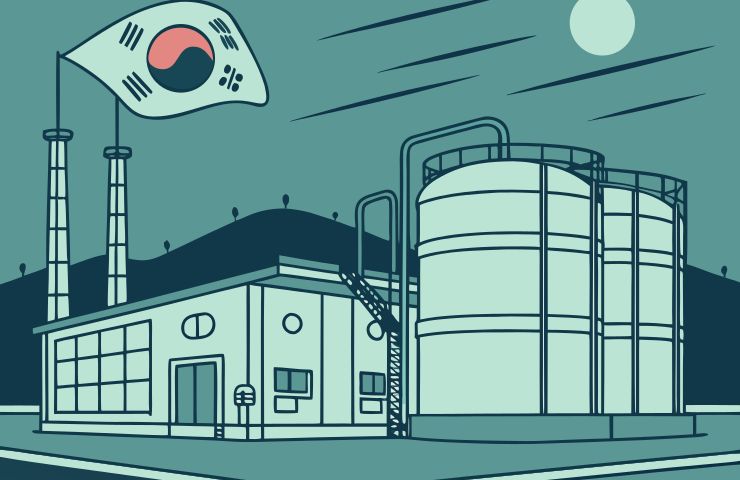
POSCO Holdings has entered a partnership with the Government of the Republic of Korea under the Korea-Green Transformation (K-GX) strategy to develop a hydrogen-reduction steelmaking demonstration facility, according to POSCO Holdings. The company says the collaboration represents a major step toward industrial decarbonization and is intended to demonstrate low-emissions steel production at a commercial scale, POSCO adds.
National Strategy and Financing
The K-GX strategy spans a ten-year period from 2026 through 2035 and combines fiscal spending, climate finance and private-sector support to decarbonize five high-emitting sectors—steel, petrochemicals, refining, cement and semiconductors and displays, Government materials state. The government says it will mobilize about 1,000 trillion won in public and policy-backed financing through 2035, including 200 trillion won in fiscal resources and over 790 trillion won in climate finance (Government of the Republic of Korea). Private-sector signature projects are valued at approximately 220 trillion won, Government materials note.
Powering Steel Production with Hydrogen
The Steel GX project is one of ten signature initiatives under K-GX, focused on decarbonizing heavy industry sectors such as steel, petrochemicals, refining, cement and semiconductors (Government of the Republic of Korea). Alongside Steel GX, the strategy sets a target of 100 gigawatts of renewable-energy capacity by 2030 and aims to ensure electric and hydrogen vehicles account for more than 70% of new vehicle sales by 2035, Government materials say. Its core objective is to replace coal-based reduction with hydrogen-based reduction in ironmaking.
Technical Essentials of HyREX
In conventional steelmaking, blast furnaces rely on coke to produce carbon monoxide that removes oxygen from iron ore, a process that emits carbon dioxide. HyREX draws on POSCO’s earlier work in fluidized-bed ironmaking and the FINEX process and substitutes hydrogen in the reduction reaction, producing water vapour rather than CO2, POSCO Holdings explains.
A Simple But Powerful Idea
The idea is simple but powerful: use hydrogen to strip oxygen from iron ore, yielding direct-reduced iron with water as the only byproduct, POSCO Holdings says. That direct-reduced iron can then be melted in an electric arc furnace, removing the need for coke and offering a lower-carbon route that aligns with South Korea’s net-zero objectives.
Building on a Hydrogen Roadmap
Government materials note that the project builds on the 2019 hydrogen-economy roadmap and the 2020 Hydrogen Economy Promotion and Hydrogen Safety Management Act, which together established a legal framework and coordinated oversight. By leveraging this policy foundation, the demonstration phase is intended to accelerate both technology development and safety governance.
From Demonstration to Deployment
POSCO Holdings says the demonstration facility is slated to achieve an annual capacity of 300,000 tonnes and come online around 2028 (POSCO Holdings). It will be co-located at steelmaking sites in the industrial hubs of Pohang and Ulsan, tapping into clean-hydrogen supply chains and existing utilities to streamline construction and operation, POSCO Holdings notes.
Partnership Across Sectors
Government materials describe collaboration among the Ministry of Finance and Economy, the Ministry of Climate, Energy and Environment, and five policy-finance institutions as essential to the project’s success. These institutions include climate-focused lenders set to provide loans, guarantees and financial support, Government of the Republic of Korea sources say.
Made in South Korea, Made for South Korea’s Future
This initiative is tapping into Pohang and Ulsan’s steelmaking expertise and existing hydrogen infrastructure to localize technology development and equipment manufacturing, POSCO Holdings says. It reflects a ‘made in South Korea, made for South Korea’s future’ approach that aims to strengthen domestic capabilities and reduce reliance on imported components.
Local Supply Chains and Job Creation
By investing in onshore production of electrolyzers, compression units and specialized steelmaking equipment, the project is expected to create thousands of direct and indirect jobs in engineering, fabrication and maintenance throughout the industrial clusters, POSCO Holdings indicates.
Scaling Up Hydrogen Infrastructure
Government materials note that expanding renewable electricity to 100 gigawatts by 2030 provides the basis for large-scale green hydrogen production (Government of the Republic of Korea). The plan also includes grid upgrades and storage projects to manage variable output, addressing intermittency and helping to ensure a reliable supply for hydrogen electrolysis.
Environmental Impact
When powered by low-emissions hydrogen and electricity, hydrogen-reduction steelmaking can significantly cut carbon emissions compared to blast furnaces, POSCO Holdings notes. The shift is presented as important for meeting South Korea’s 2035 NDC target of a 53% to 61% reduction below 2018 levels, Government of the Republic of Korea materials state.
Economic and Industrial Benefits
The demonstration phase is expected to spur domestic supply chains for electrolyzers, hydrogen storage systems and steelmaking equipment, strengthening South Korea’s clean-tech industry, government sources say (Government of the Republic of Korea). That local industrial activity is intended to underpin broader economic resilience as the country moves toward lower-carbon production.
Unlocking Export Competitiveness
Global buyers and regulators are increasingly demanding lower-carbon steel, and mechanisms such as the European Union’s Carbon Border Adjustment Mechanism raise the stakes for exporters, Government materials indicate (Government of the Republic of Korea). In this context, developing hydrogen-based steelmaking capacity could become a competitive necessity for sellers in international markets.
Aiming for Scale
POSCO Holdings has set a broader target of scaling hydrogen-reduction steel capacity to 2.5 million tonnes by 2035, according to company announcements. POSCO adds that achieving this scale will depend on hydrogen availability, technology performance and financing.
Overcoming Challenges Ahead
An independent analysis for RMI indicates that hydrogen-based steel may remain more expensive than conventional blast-furnace steel even with policy support (RMI analysis). To close this cost gap, government loans, guarantees and tax incentives are intended to reduce early-stage investment risk and attract private capital, Government of the Republic of Korea sources say.
A Blueprint for Industrial Decarbonization
By mobilizing public finance alongside private investment, the Steel GX project offers a model for decarbonizing other carbon-intensive industries such as petrochemicals and cement, Government materials suggest (Government of the Republic of Korea). The demonstration is being positioned as a template that, if successful, could be adapted elsewhere.
Looking Ahead
This partnership aims to solve real-world problems by aligning industrial strategy with climate commitments. Tapping into local expertise and clean-hydrogen technology, the demo project is right in step with the national push to build a competitive, low-carbon economy.