Hydrogen Council Adds Six New Members to Strengthen Global Hydrogen Infrastructure
The Hydrogen Council expanded its membership with six new industry players to broaden its global hydrogen production, logistics and policy coordination amid ongoing deployment challenges.
The Hydrogen Council announced on 29 September 2026 that six new members have joined its CEO-led alliance focused on accelerating the global hydrogen infrastructure, according to the Council.
Expanded value-chain coverage
The alliance said the additions broaden its network across multiple segments of the hydrogen production and distribution ecosystem:
- ACWA Power of Saudi Arabia is a developer, investor and operator of power, water-desalination and renewable-hydrogen projects, including participation in the NEOM Green Hydrogen Project and the Yanbu Green Hydrogen Hub, according to secondary reports. Its experience underlines the need for coordinated deployment of renewable electricity, electrolyzers, water systems, offtake arrangements and export infrastructure.
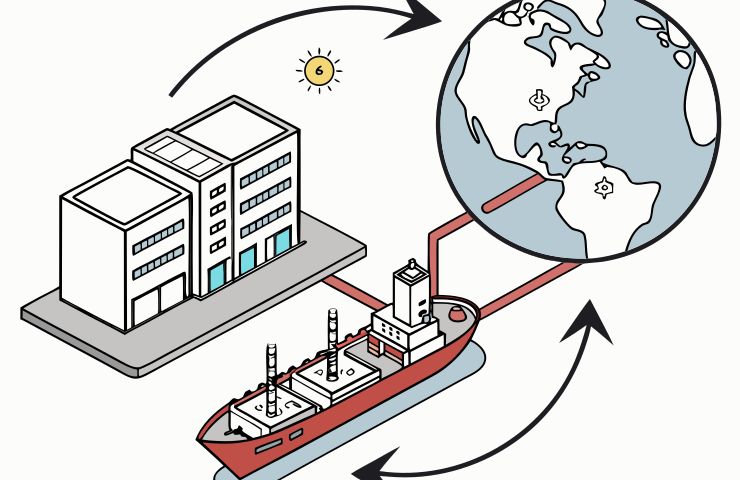
- EcoLog of the Netherlands is developing a planned liquid-hydrogen import terminal in Amsterdam and dedicated shipping solutions, with a reported first-phase design capacity of 200,000 tonnes per year, according to announcement coverage. Its corridor concept aims to link production regions with demand centers across Europe and Asia, addressing the energy intensity and safety requirements of cryogenic shipping.
- Hydrom in Oman serves as the national orchestrator and master planner for the country’s renewable-hydrogen strategy, handling land allocation, developer selection and shared infrastructure planning, according to Zawya. Its participation gives the Council a direct connection to Oman’s state-backed market-development effort and potential export of hydrogen-derived products.
- Mitsui O.S.K. Lines of Japan is contributing maritime transport expertise and has demonstrated liquefied-hydrogen shipping initiatives and hydrogen-powered maritime equipment, according to the Council. Maritime transport is critical when production sites are distant from industrial demand centers.
- TANAKA of Japan brings expertise in precious-metal catalyst materials for fuel cells, addressing cost and durability bottlenecks in catalyst technology, according to the announcement. Catalyst supply, often based on platinum-group metals, remains a key constraint for fuel-cell economics.
- 2JCP of the Czech Republic is a reported new member, though its hydrogen activities and organizational profile have not been independently verified.
Why the expansion matters
No hydrogen project stands alone. It requires matched decisions on renewable electricity, electrolyzers, water management, conditioning equipment, storage, transport, end-use systems and offtake contracts. By inviting members that cover power and water integration, national market planning, liquid-hydrogen logistics, maritime shipping and fuel-cell materials, the Council aims to enhance coordination and reduce execution risk across:
- Infrastructure standards for pipelines, terminals and shipping corridors.
- Hydrogen storage solutions in compressed and liquid forms.
- Policy advocacy on green hydrogen production quotas and support mechanisms.
- Technical bottlenecks from catalyst materials to cryogenic handling.
This move reflects an ecosystem approach, where no single company can build a hydrogen economy alone. Bringing together upstream producers, midstream logistics providers, national planners and technology suppliers can help close gaps that have stalled past projects.
Business and policy angle
Expanding the roster enhances the alliance’s ability to mobilize financing, supply-chain partnerships and government engagement. ACWA Power and other project developers can share insights on structuring offtake agreements, financing large-scale electrolysis systems and integrating renewable electricity with water-desalination. EcoLog and Mitsui O.S.K. Lines bring expertise in liquid-hydrogen transport and maritime logistics. Meanwhile, Hydrom connects industry coordination with Oman’s state-backed market-development programmes.
The Council may leverage these capabilities to push for certification protocols, emission-reduction incentives and cross-border trade rules that support wider hydrogen energy adoption. However, as an industry coalition, it naturally advocates for frameworks favorable to its members, creating potential tension with independent regulators and non-industry stakeholders.
- Alignment with public funding instruments such as grants and carbon-pricing schemes.
- Sharing best practices on project de-risking to attract debt and equity financing.
- Support for harmonized permitting processes across jurisdictions.
Technical snapshot: value-chain integration
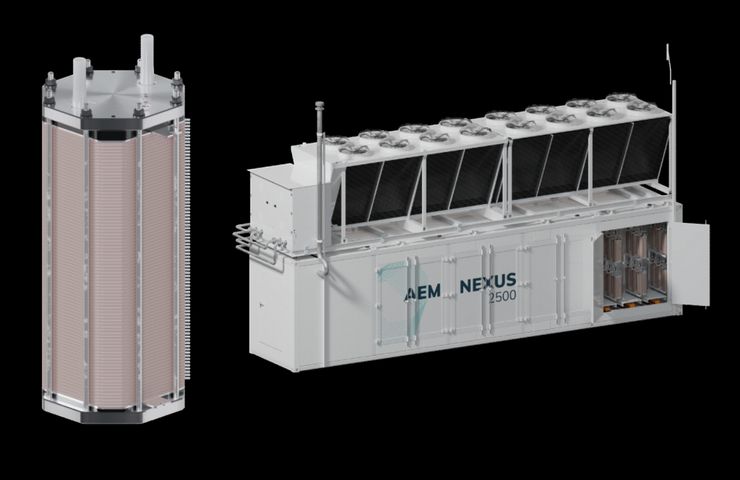
Renewable hydrogen is produced via water electrolysis powered by wind or solar electricity. An electrolyzer splits water into hydrogen at the cathode and oxygen at the anode. The hydrogen is then dried, compressed or liquefied before storage or transport. Liquid hydrogen, cooled to around –253 °C, offers higher volumetric energy density but demands insulated tanks, boil-off mitigation and specialized safety systems.
Fuel cells convert hydrogen and oxygen into electricity through electrochemical reactions. At the anode, catalysts separate hydrogen into protons and electrons; protons cross an electrolyte while electrons generate power in an external circuit. At the cathode, oxygen combines with protons and electrons to form water. Precious-metal catalysts, such as those produced by TANAKA, influence efficiency, cost and durability.
Market context and industry challenges
Despite growing interest, commercial deployment of low-emissions hydrogen remains limited. According to the International Energy Agency, global hydrogen demand reached almost 100 million tonnes in 2024, but less than 1% of production came from low-emissions technologies. The IEA also reports that announced low-emissions production potential for 2030 declined from 49 million tonnes to 37 million tonnes per year between its previous review and the 2025 update.
Cost remains a central barrier: the gap between unsubsidized low-emissions hydrogen and conventional fossil-based hydrogen persists. The IEA also notes a slowdown in new offtake agreements in 2024, highlighting the need for firm long-term contracts, financing and infrastructure delivery.
The IEA also identifies regulatory uncertainty, long permitting timelines and infrastructure delays as continuing barriers, contributing to slower project announcements and constrained deployment.
Historical background and policy drivers
The Council was launched at the World Economic Forum in Davos in 2017 by 13 founding companies to promote hydrogen as a tool for the energy transition, according to the Council’s founding story. Founders included Air Liquide, Toyota, Hyundai, Shell and Linde. Since launch, the Council has aimed to coordinate companies that cannot build a hydrogen economy independently, reflecting the complexity of aligning diverse stakeholders.
It now represents about 140 companies across more than 20 countries, with self-reported metrics including roughly 6.8 million full-time-equivalent employees, US$9 trillion in combined market capitalization and US$6.4 trillion in revenues. Public policy has expanded alongside industry interest. According to the European Commission, the EU’s REPowerEU framework targets production of 10 million tonnes of renewable hydrogen and import of another 10 million tonnes by 2030, alongside binding quotas in heavy industry and transport sectors.
Outlook and next steps
Membership growth strengthens the alliance’s ability to advocate for certification schemes, infrastructure investment and common standards. However, the Council’s expansion does not equate to immediate commercial scale. Actual market progress hinges on:
- Final investment decisions and capital deployment for announced projects.
- Firm offtake agreements that match supply volumes and delivery schedules.
- Delivery of pipelines, terminals and shipping corridors on schedule.
- Verification of lifecycle emissions across the value chain.
The group’s next steps include working-group meetings to align technical requirements and policy recommendations among its expanded membership.
Ultimately, the Hydrogen Council’s broadened roster may improve coordination and policy alignment, but the transition to a low-emissions hydrogen economy will depend on tangible project execution, cost reductions and regulatory clarity.