Hydrogen News: Daihatsu Displays Development-Stage Ammonia/Hydrogen Co-Firing Engine
Daihatsu displayed an ammonia/hydrogen co-firing engine prototype at Japan Mobility Show Bizweek 2026, generating hydrogen onboard to improve combustion without a separate tank.
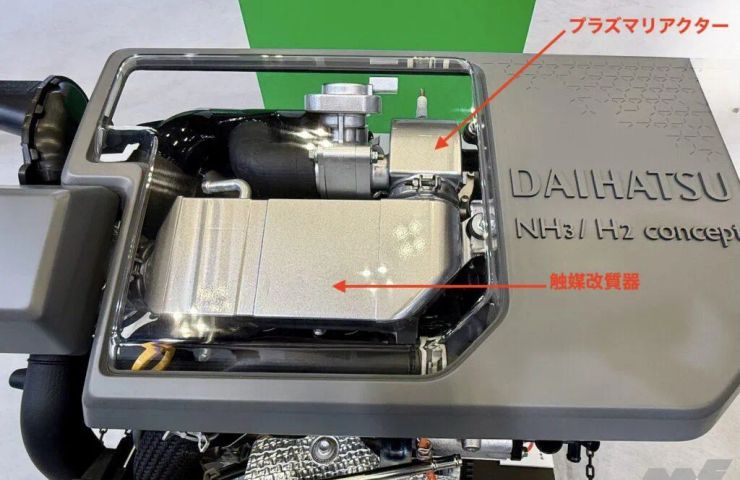
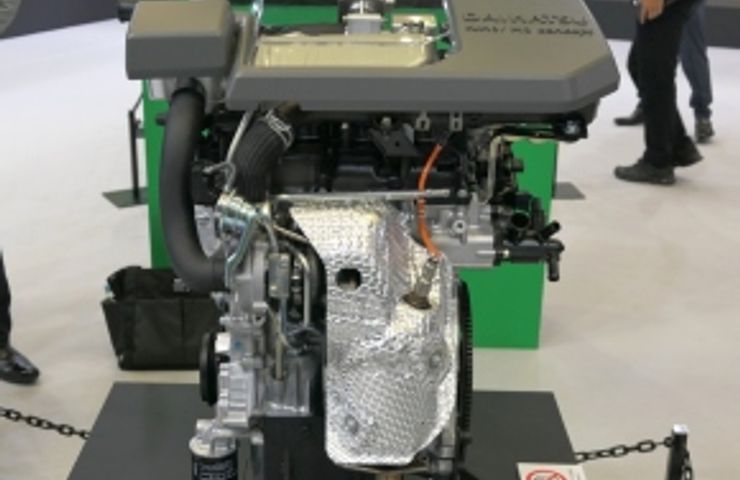
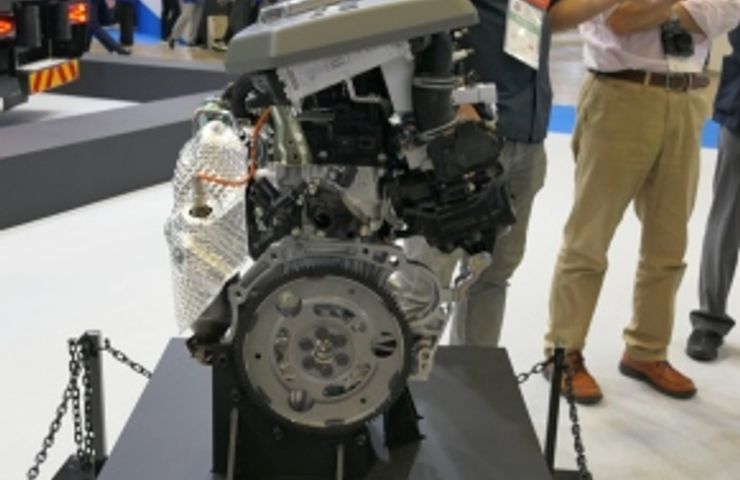
Daihatsu Motor Co., Ltd. recently displayed a development-stage ammonia/hydrogen co-firing internal-combustion engine at Makuhari Messe during the Japan Mobility Show Bizweek 2026, according to the Japan Automobile Manufacturers Association. The prototype enters the hydrogen news stream as a response to ammonia ignition challenges; instead of carrying compressed hydrogen, it generates hydrogen onboard to stabilise combustion, the company says.
Rethinking Ammonia as Fuel
Ammonia has long been studied as a carbon-free energy carrier. Peer-reviewed publications trace early experiments back to the early 20th century and even wartime bus operations. Practical use, however, has been constrained by ammonia’s narrow flammability range and slow flame speed. Daihatsu’s concept addresses those issues by storing liquid ammonia in a dedicated tank and reforming part of it into hydrogen directly on the engine, the company says.
Japan’s light-vehicle market imposes tight limits on size, mass and refuelling practicality. With that in mind, Daihatsu is targeting a compact engine package that leans on established internal-combustion expertise while creating a pathway for green hydrogen production approaches that use ammonia as a storage medium. That trade-off underpins the company’s design rationale.
Industry reviews note another practical advantage: ammonia can be liquefied at ambient temperature under moderate pressure, making it easier to handle than compressed hydrogen or cryogenic fuels. Simple handling is part of the appeal.
Engineering the Spark
At the heart of the system sits an engine-mounted reforming assembly. Daihatsu describes it as a combination of a non-thermal plasma reactor and a catalytic converter. Electrical energy in the plasma reactor produces reactive species that help break ammonia molecules into a hydrogen-rich gas during cold starts or unstable loads, the company says.
Once the engine is warm, exhaust heat can sustain catalytic ammonia decomposition, independent reporting adds, which would reduce the need for continuous plasma power. Generating hydrogen in situ avoids a bulky high-pressure hydrogen tank. Independent outlets also noted a turbocharged 658 cc three-cylinder layout weighing roughly 60 kg, although these specifications have not been confirmed by Daihatsu.
Key performance metrics remain undisclosed. The plasma reactor’s power consumption, hydrogen yield fraction and reforming efficiency have not been released. These values will be central to judging whether onboard reforming improves overall thermal efficiency or if gains are offset by auxiliary power demand.
Control is another critical area. Managing the ratio of reformer-produced hydrogen to ammonia requires a sophisticated engine control unit. Independent reporting says real-time monitoring of gas composition and reactor temperature will be vital to prevent misfires or incomplete combustion as loads change.
Advantages in Practice
Daihatsu and technical analyses highlight several potential advantages of this hydrogen production method for small vehicles:
- Compact storage: Store liquid ammonia at moderate pressure, avoiding bulky compressed-hydrogen tanks and complex high-pressure systems.
- Supply-chain leverage: Tap into existing industrial ammonia distribution networks instead of building new hydrogen infrastructure.
- Engine familiarity: Retain conventional internal-combustion architecture and maintenance practices, easing technician transition.
- Zero tailpipe CO₂: Ammonia contains no carbon, so ideal combustion emits no CO₂ at the tailpipe; actual lifecycle emissions depend on how the ammonia is produced.
- Performance boost: A reported turbocharger compensates for ammonia’s lower volumetric energy density by increasing intake-air pressure.
- Rapid deployment potential: Could be adapted to existing light-vehicle platforms with fewer modifications than fuel-cell systems.
Challenges and Unknowns
Significant integration challenges remain. The system adds components and could strain size, weight and cost targets for light vehicles. For now, the engine exists only as a bench-development prototype. Daihatsu has not published verified figures for power output, fuel consumption, driving range or measured emissions, the company states.
Several technical questions loom large:
- The energy balance of onboard reforming and its impact on overall efficiency.
- Cold-start reliability and stable combustion during transient driving conditions.
- Materials compatibility, corrosion and ammonia embrittlement risks in fuel lines and reactor components.
- Effective exhaust-gas purification to manage nitrogen oxides, nitrous oxide and unburned ammonia slip.
- Packaging constraints when integrating the reformer, catalyst, controls, safety systems and tank within a small-engine bay.
- Regulatory approval for ammonia handling, leak detection and new vehicle certification standards.
- Added complexity: Reforming, catalyst, reactor and after-treatment components increase system complexity and may add cost.
Next Steps in Development
Daihatsu’s press release says the company is actively seeking co-creation partners for ammonia reforming catalysts, exhaust purification technology, downsizing electronics, safety validation and supply-infrastructure development. The stated objective is to take the design from bench-scale evaluation toward vehicle integration.
Independent reporting indicates the unit has not yet been installed in a test vehicle, and no road trials have been conducted. Meeting real-world demands will require new control strategies to manage dynamic hydrogen production rates, advanced thermal management for the reformer and robust sealing to prevent ammonia leaks.
The open invitation for partners, the company says, reflects a move toward collaborative R&D and aligns with wider industry trends in co-creation of alternative-fuel technologies.
Strategic Alignments
The demonstration aligns with Japan’s national hydrogen and ammonia strategies. Government policy summaries point to support from initiatives like the Green Innovation Fund and the Hydrogen Society Promotion Act. The event was co-hosted with CEATEC and organised by the Japan Automobile Manufacturers Association, which emphasised multiple energy pathways, hydrogen adoption and circular-economy principles.
Daihatsu is listed as the general exhibitor and is now a wholly owned subsidiary of Toyota Motor Corporation. While Toyota’s broader work on ammonia engines exists, public records do not confirm Toyota’s direct role in this specific project. JAMA’s support was organisational; the association did not provide technical development or funding for the engine, its release clarifies.
Implications for Transport
Carrying ammonia and producing hydrogen on demand offers an alternative route to electrification. It could allow legacy automakers to keep internal-combustion manufacturing capabilities while exploring lower-carbon options. That said, the approach will face competition from mature fuel-cell drivetrains and battery-electric powertrains that already have established refuelling and service networks.
The climate benefit depends on how ammonia is produced. Conventional ammonia production carries upstream greenhouse-gas emissions unless paired with renewable hydrogen or carbon capture. Exhaust after-treatment will be essential to meet air-quality standards and emissions regulations.
In urban markets, where small city cars lead sales, the lack of a widespread passenger refuelling network remains a barrier. Although industrial ammonia logistics are in place, creating retail ammonia refuelling points for vehicles would require new infrastructure and regulatory frameworks.
Where It Fits in Hydrogen News
This ammonia/hydrogen co-firing engine adds depth to clean hydrogen news by demonstrating a hydrogen storage method that leverages ammonia’s liquid-phase handling. It underscores the variety of hydrogen production and utilisation pathways under investigation as the automotive industry seeks carbon-neutral solutions.
As automakers balance battery electrification against fuel cells and other options, ammonia co-firing remains a less-explored avenue. Extensive testing, new safety and emissions standards, and investment in refuelling infrastructure will be required before the concept moves beyond demonstration. Stay tuned as this concept evolves and informs future chapters of green hydrogen production and clean hydrogen news.