:Austria’s WAG Loop 1 Expansion Bolsters Gas Capacity and Future Hydrogen Network
Austrian operator Gas Connect Austria is launching WAG Loop 1, a 40 km hydrogen-ready DN1200 pipeline to boost gas imports by 30%, backed by €70 million in state funds.
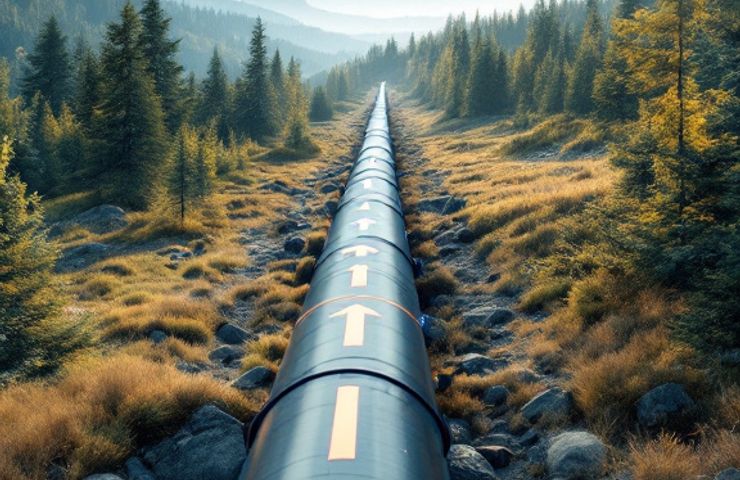
In the charming hills of Upper Austria’s Mühlviertel, something is happening with the WAG Loop 1 expansion, marking a fresh chapter in Austria's gas transmission story. This new pipeline, stretching about 40 kilometers and featuring a DN1200 pipeline, is all set to amp up the transport capacity from west to east, right into the heart of the country’s industrial scene. But it’s not just about getting more gas flowing—this line is designed to be hydrogen-ready, hinting at a significant shift towards integrating renewable hydrogen into what has traditionally been a natural gas-focused corridor.
The brains behind this project is Gas Connect Austria GmbH, a partnership between OMV (holding 51%) and AS Gasinfrastruktur GmbH (49%). Their goal? To boost import capacity from Germany by about 27 TWh per year—a solid 30% increase at the Oberkappel border. With an investment in the ballpark of €175.5 million to €200 million, they’ve managed to secure up to €70 million in repayable support from the federal government. After getting the thumbs up from E-Control in 2023, construction is set to kick off this year, paving the way for greater operational flexibility in local storage facilities like Haidach and Seven Fields. They’re aiming for everything to be up and running by mid-2027.
A Look Under the Hood
The heart of the WAG Loop 1 project is a robust high-pressure natural gas transmission pipeline built to DN1200 standards, which means it has a nominal diameter of 1.2 meters. This pipe will run right alongside the existing West-Austria-Gasleitung, linking Oberkappel to Bad Leonfelden. It’s designed to operate at pressures of up to 80 bar and is geared to transport about 2.5 billion cubic meters of gas annually, translating to roughly 27 TWh. There are compressor stations at both ends, along with metering stations to monitor the flow and ensure gas quality. By sticking to an established corridor, they’re minimizing land use, and this dual-loop setup also allows for bidirectional operation, providing extra reliability for maintenance or any hiccups that might arise.
Construction will follow the standard trench-and-backfill technique, with the pipeline buried at least 1.2 meters below ground. Advanced coatings and cathodic protection are in place to fend off corrosion risks. The parallel design means that, once it’s operational, one section can potentially be converted or shared for hydrogen transport, as long as material compatibility and regulatory adjustments allow for it.
Funding and Policy Support
From day one, the WAG Loop 1 project has been framed as crucial for national energy security and bolstering industrial competitiveness. Austria’s Federal Ministry for Labour and Economy has thrown its support behind it as a strategic move to diversify energy sources away from Russian dependencies. They’ve backed funding that the market might not deliver alone. After some back and forth regarding financial risks, parliament approved up to €70 million in repayable funds. This kind of support alleviates some of the financial pressure on Gas Connect Austria, enabling the government to have some leverage if needed, balancing supply security with prudent oversight of public finances.
Getting the Green Light
Under Austria’s Environmental Impact Assessment Act, Gas Connect Austria submitted comprehensive documentation for a corridor covering about 130 hectares. The regional environmental authority, Oö. Umweltanwaltschaft, assessed the potential impacts on everything from forests and soils to waterways and local wildlife. After public hearings and incorporating feedback—like promoting climate-friendly reforestation and habitat compensation—they deemed the project environmentally sound. The permit comes with conditions that require ongoing monitoring and habitat restoration, striking a balance between infrastructure needs and ecological considerations.
Looking Ahead with Hydrogen
What makes the WAG Loop 1 particularly noteworthy is its hydrogen-ready design. They’ve selected materials and welding techniques to counteract hydrogen embrittlement, and the valves, seals, and compressors are all set to be upgradable for pure hydrogen use. This proactive approach aligns with the European Hydrogen Backbone concept, which envisions transforming or routing existing gas pipelines into a continental hydrogen network. Essentially, once renewable hydrogen production scales up, one segment of the pipeline could transition from methane to hydrogen, delivering cleaner energy to industrial centers near Linz and refineries around Vienna.
A Legacy of Evolution
Austria’s transmission network has seen steady evolution over the decades. The original West-Austria-Gasleitung was established in 1980 to connect the Baumgarten hub to Germany. Over time, expansions like WAG Plus 600 in the mid-2000s and WAG Expansion 3 in the early 2010s added additional lines and upgraded compressors to meet growing demand. The current WAG Loop 1 is a continuation of this legacy, responding to changing market dynamics and geopolitical challenges, such as the reduction of gas supplies via Ukraine and broader EU strategies aimed at decreasing reliance on single energy suppliers.
What Locals Think
Local leaders from the Wirtschaftskammer Oberösterreich, Upper Austria’s industrial chamber, see this project as a cornerstone for the region's 1.5 million residents and the energy-hungry manufacturing sector. They highlight that improved access to Norwegian pipeline gas and LNG will help stabilize prices and enhance supply security for vital industries like steel, chemicals, and ceramics. Meanwhile, local government officials agree on the necessity for a secure supply while also pushing for alignment with EU’s decarbonization targets. However, some environmental advocates are wary about locking into new fossil fuel infrastructure and are calling for a clear transition plan towards hydrogen.
With regulatory approvals and funding now secured, the groundwork for WAG Loop 1 is set to start soon, with a goal to be fully operational by mid-2027. As Europe pushes to ramp up hydrogen production, Austria will have a ready-to-go pipeline to inject clean energy into its industrial framework. The success of this versatile pipeline could very well provide a model for striking a balance between short-term energy security and long-term climate goals, provided that the anticipated hydrogen future materializes on schedule. Other operators in the region are already eyeing similar hydrogen-ready upgrades, suggesting that Austria's innovative approach could become a reference point for others to follow.