Hydrogen Infrastructure Gets a Safety Boost with Honeywell's Real-Time Leak Detector
Honeywell releases a long-life hydrogen leak sensor with breakthrough sensitivity, targeting safety gaps in hydrogen infrastructure and reducing OPEX by $12K/unit.
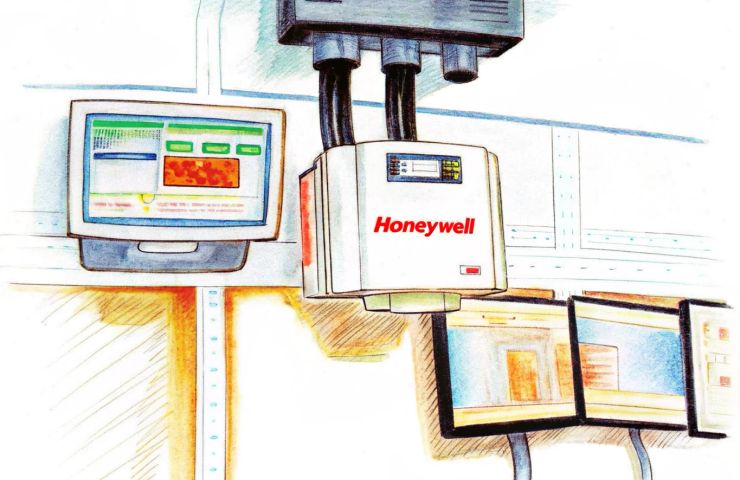
Hydrogen safety has always been a big question mark hovering over the clean energy movement, but with the launch of the new Honeywell Hydrogen Leak Detector (HLD), that narrative might finally be changing.
A Fresh Take on an Old Challenge
In 2024, Honeywell rolled out a game-changing hydrogen leak sensor that’s pushing the limits of what gas detection can do. Using Thermal Conductivity Detection (TCD), this compact device can sniff out leaks as tiny as 50 parts per million (ppm)—a level of precision that meets, and often beats, the requirements needed for today’s growing hydrogen infrastructure. Even better? It gets the job done without all the usual headaches—no frequent recalibrations, no complicated maintenance. We’re talking a full decade of maintenance-free operation.
That’s a big deal, especially in an industry still carrying the weight of disasters like the 1937 Hindenburg explosion. Hydrogen is tricky stuff—its molecules are incredibly small, and it takes almost nothing to ignite (just 0.02 mJ!). Traditional detectors often struggle with it, and even when they’re working well, they typically need to be recalibrated every few months. It’s expensive, inefficient, and frankly, not good enough.
Why Hydrogen Safety is a Game Changer
As the push for industrial decarbonization gains momentum, whole sectors—from transportation to home energy—are banking on hydrogen fuel cells and other distributed energy systems. But here’s the catch: none of that matters if people don’t trust that it’s safe.
And timing matters. Hydrogen-powered vehicles are on the rise, with over 90,000 fuel cell electric vehicles (FCEVs) already on roads globally in 2024. At the same time, hydrogen-based energy setups are popping up in homes, hospitals, and off-grid locations. But if leak detection can't keep up, public confidence—and the pace of adoption—can hit a wall fast.
This is where Honeywell’s leak detector really shines. Not only does it deliver powerful, accurate detection—it also cuts down on the long-term management costs that so often bog down new technologies. Compared to older sensors that need quarterly maintenance, this sensor can save users up to $12,000 per unit over 10 years. For companies and utilities rolling out large-scale fuel cell technology, that’s a serious win.
Putting It to Work: Real-World Integration with BWR Innovations
A sensor’s only as good as the impact it makes in the real world—and Honeywell’s found a solid partner in BWR Innovations. Based in Canada, this cleantech company is already folding the Honeywell HLD into its advanced Oncore Energy System, which powers everything from remote sites to backup systems for commercial and residential use.
The fact that this tech is already hitting the field adds serious credibility. It’s not just some future-forward idea anymore—it’s part of real hydrogen infrastructure that’s scaling up today. And yes, it’s backed by global standards. The device meets ISO 26142:2010 safety benchmarks, so it’s ready for prime time in regulated markets around the world.
Smart, Simple, and Surprisingly Sophisticated
So, how does it actually work? It tracks the subtle shift in thermal conductivity between hydrogen and the surrounding air. Hydrogen, being a fast conductor of heat, creates changes that the sensor picks up reliably—with barely any false alarms. It’s the kind of sharp, sophisticated detection that older tech just can’t match.
And it’s all done in real time. Constant monitoring, smart integration, and quick response—this thing is built for the kind of fast, high-stakes environments where hydrogen fuel cells are becoming more common. Think hospitals, smart homes, and industrial plants. In those places, safety can’t be an afterthought—it needs to be baked in from the start.
Beyond Tech: Building Trust to Scale
From government targets to corporate climate goals, momentum around sustainable energy and green hydrogen is picking up fast. But let’s be real—concerns about safety aren’t just technical hurdles; they’re deal-breakers. Hydrogen behaves differently than natural gas, and it requires leak detectors to be two to four times more sensitive. Lags in safety tech have already slowed rollout in cities, transport terminals, and critical facilities.
What Honeywell has delivered isn’t just another gadget—it’s a trust builder. It gives planners, regulators, and engineers the green light to move forward confidently with the kind of fuel cell technology we need to hit emissions targets and modernize energy systems.
And there’s a broader message here, too. When a major industrial player like Honeywell gets serious about hydrogen infrastructure, it sends a powerful signal: zero-emission tech isn’t a fringe idea anymore. It's mainstream—and ready to scale with the same dependability industry expects.
Who Is Honeywell?
Honeywell is a U.S.-based Fortune 100 company that’s been around since 1906. With a long track record in advanced sensing, aerospace, and industrial safety systems, the company is now all-in on sustainable energy. In the hydrogen space, its focus is on delivering rugged, intelligent components that speed up the transition to next-gen energy systems—safely and efficiently.