Hydrogen Infrastructure: 3.6 MW Fuel Cell System Powers Jinchang Chlor-Alkali Plant
REFIRE’s subsidiary Pandong Electric installed a 3.6 MW hydrogen fuel cell system at Jinchuan’s chlor-alkali plant, coupling PSA purification, solid-state storage and heat recovery to cut coal use and emissions.
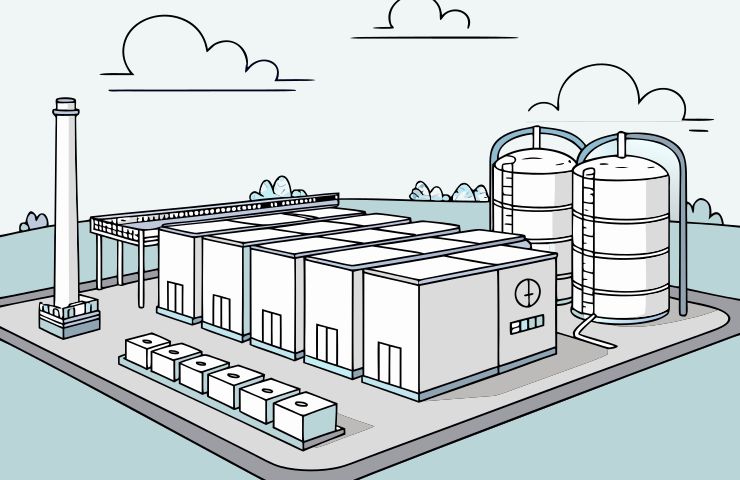
Jiangsu Pandong Electric Technology, a part of the REFIRE Group, has recently handed over two fully integrated hydrogen fuel cell power generation systems, each offering 1.8 MW of power—altogether a solid 3.6 MW—to the Jinchuan Group Chemical New Materials at Plant No. 3 in Jinchang, Gansu Province. This project marks a significant milestone, being the first large-scale demonstration in China that fuses pressure swing adsorption (PSA) hydrogen purification, solid-state hydrogen storage, fuel cell generation, direct current supply, and even chlor-alkali electrolysis hydrogen production all in one package.
These new systems will make excellent use of hydrogen that’s a by-product of the plant’s chlor-alkali process. They'll clean up that hydrogen right on-site, store it, and then convert it using proton exchange membrane stacks into electricity and recover heat in the process. Thanks to Jinchang's high-altitude conditions, the equipment can achieve an impressive rated electrical efficiency over 48%, with total energy efficiency above 85% when waste heat recovery is integrated. Plus, these systems are designed for continuous operation in a wide temperature range of −30°C to 45°C, boasting a lifespan of over 40,000 service hours.
Market Impact and Strategic Significance
This setup has a profound role in boosting the Jinchuan Group’s wider green agenda, aligning well with China's ambitious “dual-carbon” targets. With their existing ventures valued at 331.5 billion yuan in minerals, chemicals, and new materials, switching to clean energy sources will help Jinchang significantly reduce coal consumption—by about 60,000 tonnes annually—and cut their carbon dioxide emissions by as much as 160,000 tonnes. Moreover, this move can help lessen their reliance on grid electricity, potentially saving them tens of millions of yuan each year and enhancing their overall financial viability. By capitalizing on by-product hydrogen, Jinchuan could see a meaningful improvement in their ESG profile, paving the way for green bond issuances and more favorable financing opportunities, while signaling a flourishing market for industrial-scale clean hydrogen solutions that may draw in substantial new orders by 2028.
REFIRE’s Strategic Pivot to Stationary Power
For REFIRE Group, known for its hydrogen fuel cell expertise and boasting over 11 years of R&D work, the Jinchang project represents a key step into the world of multi-megawatt stationary power. Since 2022, its subsidiary, Jiangsu Pandong Electric Technology, has taken the lead in engineering, procurement, and construction of on-site power plants in various settings like oilfields and industrial parks. This deployment of 3.6 MW not only proves REFIRE’s ability to manage projects from start to finish but also stands as a strong reference point for international clients in the chemical and metallurgical sectors eager for reliable, zero-emission solutions.
Project Timeline and Financing
The engineering phase kicked off back in May 2026 under an EPCI contract, with hopes to see Phase I up and running by late 2026. Jiangsu Pandong will manage everything from PSAs and storage modules to the fuel cell stacks and balancing plant integration. Looking ahead, Phase II is already in the works, with discussions around adding another 1.8 MW cluster by mid-2027. While the capital costs haven’t been shared publicly, stakeholders are eyeing feedstock savings, reduced electricity bills, and potential revenues from carbon credits as keys to the project’s success. They’ll also be tapping into provincial subsidies and possibly aligning with the national carbon trading scheme for additional financial backing.
Technical Snapshot
- Capacity: Two 1.8 MW PEM fuel cell modules, totaling 3.6 MW.
- PSA Purification: Efficiently removes chlorine, moisture, and other contaminants to achieve fuel-cell grade purity.
- Solid-State Storage: Metal hydride beds help regulate hydrogen flow, stabilizing the supply.
- Performance: Exceeds 48% electrical efficiency at around 2,500 m elevation; achieves over 85% total energy efficiency with heat recovery.
- Operating Range: Ready to function between −30°C and 45°C for over 40,000 hours.
- Integration: Can directly power electrolysis cells with DC output or convert to AC for other loads.
- Control & Safety: Features advanced monitoring and quick fault detection systems.
- Modularity: Flexible plug-and-play design allows for gradual capacity expansion.
Integration with Chlor-Alkali Electrolysis
At Plant No. 3, the brine electrolysis process produces chlorine, caustic soda, and hydrogen. Instead of wasting the hydrogen, it goes through the PSA units, is partially stored in solid-state modules, and then directed to the fuel cells. The direct DC connection to the electrolysis cells cuts conversion losses by up to 10% and the reclaimed heat can be used for steam and industrial heating needs. This seamless integration of hydrogen production and consumption presents a microgrid model that enhances energy resilience while driving down utility expenses.
Regional and Policy Context
Jinchang, located in Gansu’s Hexi Corridor, is at the heart of a cluster focused on non-ferrous metals and chemicals, powered by Jinchuan Group. The national strategies laid out in the “14th Five-Year Plan” and dual-carbon goals emphasize the importance of hydrogen fuel cells, using distributed generation, and making the most of by-product utilization. These provincial subsidies and carbon trading schemes, along with favorable grid connection policies, make the economic calculations for this project look even better. This demonstration is in line with the Chinese National Energy Administration’s directives to explore hydrogen infrastructure within heavy industry hubs.
Parallel Developments
There’s also progress happening elsewhere, like in the DEMCOPEM plant in Liaoning, which has shown the potential of PEM fuel cell cogeneration for chlorine production. However, none can quite match the scale of the 3 MW setup in Jinchang or its integration of PSA, solid-state storage, and direct supply all under one roof. This system represents a game-changer and could provide valuable insights for refineries, cement plants, and steel mills looking for paths to industrial decarbonization.
Expert Viewpoint
Industry experts believe multi-megawatt on-site fuel cells could play a crucial role in bridging the gaps between those sporadic renewables and the steady loads needed in industrial settings, ultimately leading to better grid stability. As costs for PEM fuel cells continue to drop—down nearly 30% over the past five years—and supply chains for hydride storage get more efficient, these projects are becoming more attractive from a financial standpoint. The insights from Jinchang will help shape future risk models, offtake agreements, and cost projections for the next wave of hydrogen infrastructure investments.
Key Takeaways
- This system effectively captures by-product hydrogen for energy generation that’s over 85% efficient.
- It proves hydrogen fuel cell reliability even in challenging high-altitude and extreme temperature situations.
- The combination of PSA purification and metal hydride storage results in a stable feedstock supply.
- DC coupling minimizes conversion losses, boosting overall microgrid effectiveness.
- Projected commissioning data will facilitate similar installations across heavy industries.
Financing and Partnership Structure
This demonstration is being supported through a collaborative funding model. The Jinchuan Group is contributing site infrastructure and providing hydrogen feedstock, while Pandong Electric manages the EPCI package and runs operations under a long-term O&M contract. Gansu provincial authorities are also providing capital grants that are tied to meeting carbon reduction milestones. There are ongoing discussions to establish a joint venture that will centralize project financing, secure performance guarantees, and streamline maintenance for future phases. With offtake agreements and penalty clauses in place, all parties are alignin.
Future Scale and Replication Prospects
Building on the insights from Plant No. 3, the aim is to scale up to a 10 MW hydrogen-electricity cluster by 2028, adding more fuel cell modules at nearby chemical facilities. Early agreements with other industrial parks in Gansu and interest from mining operations in nearby provinces hint at a larger rollout. With REFIRE’s comprehensive tech stack and evolving regulatory support, this integrated hydrogen infrastructure model is well positioned to set the standard for industrial decarbonization efforts both nationally and internationally.
Outlook
With commissioning expected in late 2026, the data from Jinchang is set to provide a clear picture of ROI and emissions impact. A successful operation could open doors for future integrations with clean ammonia synthesis, expand decentralized hydrogen networks, and establish fuel cells as essential components of low-carbon manufacturing ecosystems.