Hydrogen Fuel Cell News: Zero-Emission Straddle Carrier Trials Usher New Era at Hamburg Port
HHLA is testing a hydrogen fuel cell-powered Konecranes straddle carrier fitted with a zepp.solutions system at Container Terminal Tollerort, matching diesel-hybrid performance with zero emissions.
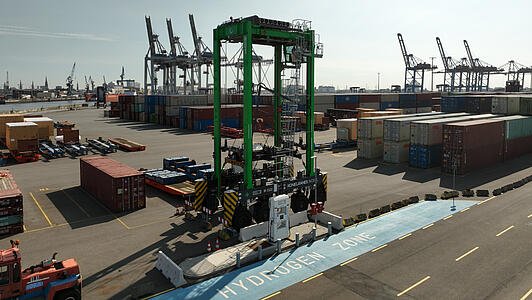
Hamburger Hafen und Logistik AG (HHLA) is making some serious waves over at their Container Terminal Tollerort with a brand-new trial. They’re rolling out a Konecranes Noell straddle carrier that’s powered only by hydrogen fuel cells. This isn’t just a prototype—it’s designed on the modular D200 platform, complete with a robust system from the innovative Dutch company zepp.solutions. This machine is fully integrated into the Clean Port & Logistics cluster, working side by side with reach stackers, tractors, and forklifts in a dedicated hydrogen test field. Early reports show it doesn’t just keep up with diesel-hybrid counterparts in lifting capacity and cycle times; it also cuts out harmful tailpipe emissions like CO₂, NOx, and particulate matter. This is a big step towards decarbonizing port operations.
Since they launched their hydrogen refueling station at the end of 2023, built in partnership with a major industrial gas supplier, HHLA can now refuel their mobile equipment at around 350 bar. The station is cleverly integrated into the test field and uses ionic compression to hit 450 bar, and buffered storage minimizes the time it takes to fuel up. Operators handle refueling using standardized couplers, making it as smooth as the diesel workflows they’re used to, which helps keep everything on track during those multi-shift schedules.
Diving Into the Tech: Fuel Cell Power at Work
Now, let’s get into the nitty-gritty! The straddle carrier stores its hydrogen fuel in high-pressure tanks and uses a polymer electrolyte membrane (PEM) fuel cell stack to condition it. zepp.solutions packs a lot into one module: air supply blowers, thermal management circuits for both the stack and power electronics, humidification controls, and leak detection, all in a single unit. Here’s the cool part: hydrogen reacts with air to generate DC electricity, along with some harmless water vapor and heat—without actually burning anything. This DC power then flows through converters and inverters straight into the carrier’s electric traction motors, making the performance mimic that of a diesel generator set in Konecranes’ EHY hybrid architecture.
Safety isn’t an afterthought, either. The design includes reinforced shielding around the tanks, emergency shutdown valves, and constant monitoring of the fuel cell stacks, all up to snuff with port-specific regulations. Plus, the embedded control software keeps everything running efficiently across different loads, ensuring the machine can operate continuously for thousands of hours a year with minimal wear and tear.
Flexible Design on the D200 Platform
Konecranes has made its D200 modular power platform adaptable; it standardizes structural connections and control algorithms. This means operators can easily swap out diesel-hybrid, battery-electric, or hydrogen fuel cell modules on the same carrier frame. For this Hamburg trial, the technicians removed the hybrid genset, popped in the fuel cell module, and set up high-pressure tanks in place of the old diesel ones. The lifting capacity—around 50 tonnes, along with stacking heights—stays the same, and travel speeds are kept at about 24–30 km/h. This common framework means that future upgrades or on-the-spot conversions could take just days instead of requiring full unit replacements.
Strategic Importance for Decarbonizing Ports
Bringing in zero-emission straddle carriers tackles one of the biggest culprits of CO₂ emissions in port operations. Some studies show diesel-powered carriers can account for up to 70% of cargo-handling emissions at certain European terminals. Shift to hydrogen fuel cells, and you’re left with just water vapor as a local emission. This trial supports HHLA’s larger climate neutrality ambitions and aligns perfectly with the European Union’s sustainable fuel goals under the TEN-T program.
Building a Hydrogen Ecosystem
Hamburg is seeding demand for hydrogen-powered equipment through initiatives like the Hamburg Green Hydrogen Hub, which plans to install a 100 MW electrolyzer to produce about 10,000 tonnes of green hydrogen annually. They’re eyeing a pipeline network of about 40–60 km within the port and local refueling sites to ensure a steady supply. Early commitments from straddle carriers and heavy machinery create predictable volume loads, which help make the case for these significant infrastructure investments.
From zepp.solutions’ perspective, this trial takes advantage of their modular fuel cell systems, which range from 50 to 150 kW, targeting a foothold in heavy-duty port applications. This project emphasizes how compact, high-power-density modules fit neatly into tight spaces—a key selling point for terminals weighing retrofit costs against new equipment purchases.
The Green Hydrogen Landscape
Looking across Europe, you’ll see several ports testing hydrogen solutions for cargo handling. For instance, the Port of Valencia has experimented with fuel cell reach stackers and terminal tractors, while Antwerp is incorporating dual-fuel hydrogen-diesel straddle carriers, aiming to blend in around 70% hydrogen. However, Hamburg’s approach sticks to hydrogen-powered machines only, showcasing a zero-emission straddle carrier in a bustling environment, providing solid proof of operational reliability, refueling cycles, and safety validation.
Regulatory and Economic Perspectives
The EU is backing projects like the Clean Hydrogen Partnership, which offers grants and co-financing to help develop safety standards, performance metrics, and refueling protocols. Of course, ports will need to navigate regulations around hydrogen storage and the permitting process for gas stations. Hamburg’s testing grounds serve as a sandbox to hone emergency response drills, sensor calibrations, and training for staff. Though hydrogen modules may currently carry a premium over diesel systems, future projections suggest we’ll see total cost of ownership parity in heavy-duty applications as hydrogen infrastructure grows and fuel cell production ramps up.
A Glimpse into the Future
If Hamburg’s trial continues to hold its own compared to diesel-hybrid units, we might see a quicker shift toward zero-emission gear in ports worldwide. For those with limited grid capacity or stringent air quality regulations, hydrogen fuel cells could be a smart partner for battery-electric vehicles. As the production of green hydrogen increases, operators might explore seasonal buffer storage or even liquid hydrogen imports to better balance production with demand.
This pilot project is putting Hamburg on the map as a leader in industrial decarbonization. It’s showcasing how hydrogen fuel cell technology is transitioning from an abstract idea to a dependable part of daily port operations. By anchoring green hydrogen use in real-world scenarios, HHLA, Konecranes, and zepp.solutions are lighting the way toward a cleaner future for heavy-duty transport, keeping global trade moving while cutting down on carbon footprints.