Exploring Natural Hydrogen Wealth: Mantle8's Groundbreaking Initiative in Ras Al Khaimah
Mantle8 embarks on a pioneering natural hydrogen exploration programme in Ras Al Khaimah, UAE, employing advanced geophysical techniques to assess hydrogen resource potential.
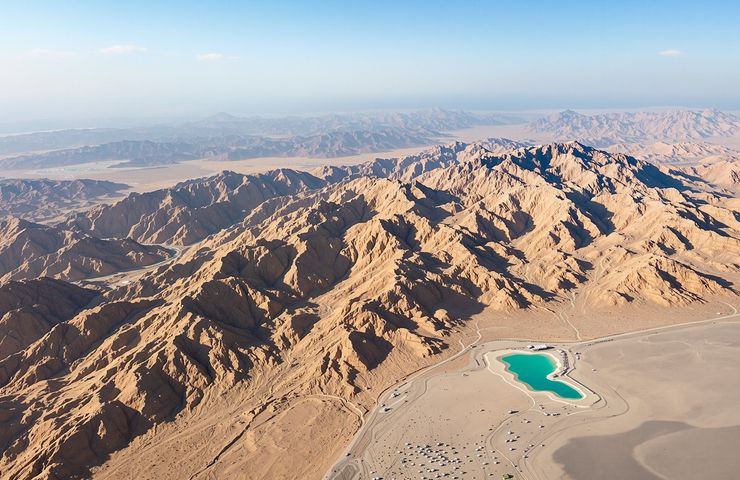
Mantle8 has officially launched fieldwork for a natural hydrogen exploration programme in Ras Al Khaimah, United Arab Emirates. The French company holds an exclusive right to negotiate an exploration contract for the region's Block 7, marking a significant step in the pursuit of clean energy resources. This initiative is aimed at assessing the potential for naturally occurring hydrogen, a resource that could enhance the Emirates' energy portfolio.
This exploration project is expected to unfold over a span of 24 months, employing cutting-edge techniques that integrate more than 1,000 passive seismic sensors. Those sensors will be deployed across selected areas to record subtle ground motions. In parallel, teams will collect gas, water, and rock samples and re-evaluate existing subsurface data. The goal is to investigate whether the local geology can effectively generate, migrate, and accumulate hydrogen in commercially viable quantities. If the data point in the right direction, the study will provide the basis for targeted drilling and a sequence of technical decisions that could follow.
Why Focus on Ras Al Khaimah?
Ras Al Khaimah, one of the seven emirates, is renowned for its unique geological features, including the Hajar Mountains and the Semail Ophiolite, a segment of exposed oceanic crust. These are not incidental details. They shape the subsurface conditions and influence how fluids and minerals interact at depth. This geological landscape presents favorable conditions for the generation of hydrogen through a process known as serpentinization, which involves chemical reactions between water and iron-rich minerals in ultramafic rocks. In short: the geology that creates the scenery here also creates the chemical environment that could produce natural hydrogen.
Key Players in the Initiative
Emmanuel Masini, the founder and CEO of Mantle8, emphasizes that the Ras Al Khaimah programme will combine geological modeling, passive geophysical imaging, and geochemical assessment before moving to drilling phases. He frames the effort as methodical: build the dataset, test the models, and then decide whether to progress to the higher-cost stage of drilling. His comments outline a staged approach that prioritizes data quality and risk reduction.
His vision is mirrored by the recent appointment of Jean-Valery Garcia as the Regional Director for the Middle East, who is tasked with guiding operations and partnerships in this strategically important region. Garcia's role, as described in company material, is to coordinate local activity and to liaise with partners and regulators while Mantle8 advances through its technical programme. That combination of technical leadership and regional management is intended to keep the work focused and responsive to on-the-ground conditions.
This effort is supported by the Ras Al Khaimah Department of Energy, which serves as the regulatory authority overseeing the agreement with Mantle8. While the department has granted Mantle8 the exclusive rights to negotiate exploration, it has not yet formalized any production licenses or commercial extraction agreements. Those distinctions matter: exclusive negotiation rights allow the company to conduct the field programme, but any move toward extraction would still require additional approvals and formal licensing from the authorities.
Benefits of this Exploration
The implications of successfully tapping into natural hydrogen extend far beyond local energy supply. If the exploration proves fruitful, it may significantly lower hydrogen production costs by providing this resource without the energy-intensive methods typically associated with hydrogen manufacturing—such as green hydrogen, produced through electrolysis powered by renewable sources. That potential cost advantage is the central economic argument behind many natural hydrogen initiatives: source the gas directly from subsurface processes rather than manufacture it at the surface.
- This approach could help the UAE meet its ambitious goals to become a leading producer of low-emission hydrogen, as outlined in its National Hydrogen Strategy 2050.
- The initiative could attract specialized expertise to the region, support energy diversification efforts, and position Ras Al Khaimah as a center for innovative hydrogen technology.
- Furthermore, the technology employed—such as the proprietary HOREX 4D passive seismic imaging and GeoLogix for geological screening—could serve as models for future hydrogen exploration projects globally.
Looking Ahead
As Mantle8 embarks on this exploration journey, the potential for discovering a sustainable energy source that can complement the UAE's green and blue hydrogen initiatives is promising. The programme will be judged first on its ability to deliver clear, interpretable subsurface images and robust geochemical results. Only then can stakeholders weigh the technical feasibility against regulatory and commercial considerations.
The next steps depend heavily on the success of the data collection phase, determining whether sufficient geological conditions exist to support a working hydrogen system. If signals in the seismic data align with geochemical indicators from sampling, the company would have a stronger case for moving toward drilling and further assessment. If they do not, the project could be scaled back or redirected without entering a higher-cost development phase.
The key question remains: Can the geological indicators suggest the existence of a commercially viable source? Only time will tell as Mantle8 gathers evidence from its early-stage assessments.
This project exemplifies the intertwining of innovation and sustainability in the quest for clean energy, making the exploration of natural hydrogen not only a scientific endeavor but also a strategic goal for the future of energy in the Emirates.