Plug Power’s Two-Track Strategy Combines GenDrive Refresh and Asset Monetization
Plug Power is combining a multiyear GenDrive refresh for over 20,000 units with $275 million in asset sales to reach positive EBITDA by Q4 2026.
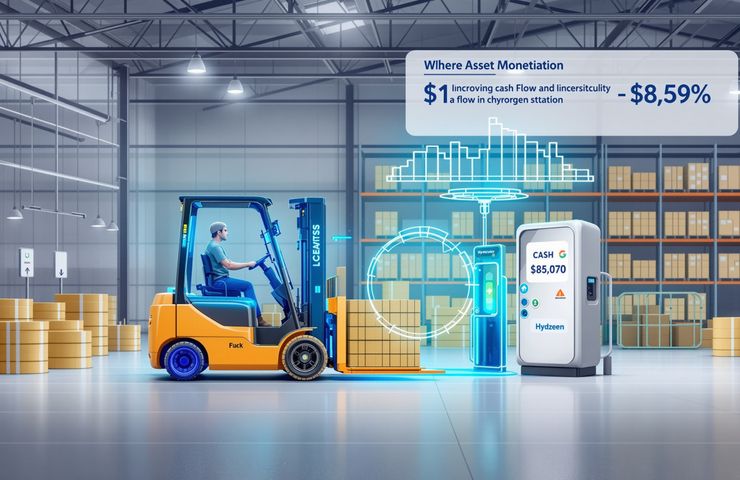
Plug Power is implementing a dual-track approach to align its technological deployment with financial sustainability. One track leverages a substantial installed base of more than 70,000 GenDrive hydrogen fuel cell systems by planning a multiyear replacement cycle for over 20,000 units at key logistics customers. The other track focuses on strategic infrastructure optimization, converting non-core assets into immediate cash through sales to data-center operator Stream Data Centers. Together, these initiatives underpin Plug’s public goal of achieving positive adjusted EBITDA (EBITDAS) in the fourth quarter of 2026 and reaching full corporate profitability by 2028.
The GenDrive Replacement Cycle
Plug Power originally built its business around stationary fuel cells but pivoted in the 2010s to the material-handling sector, where its GenDrive line replaced traditional lead-acid batteries in forklifts and automated vehicles. This strategic shift established one of the first commercially viable markets for hydrogen-powered warehouse equipment, validating the value proposition of faster turnaround and consistent uptime.
Today, more than 70,000 GenDrive units are operating in distribution centers and logistics hubs worldwide. After roughly ten years of service life, these first-generation units are due for replacement. According to company communications, two of Plug’s largest material-handling customers plan to refresh more than 20,000 hydrogen fuel cell units over the next three years, with about 2,000 slated for 2026. Earlier collaborations with Amazon and Walmart—instituted almost a decade ago—form the backbone of this refresh program.
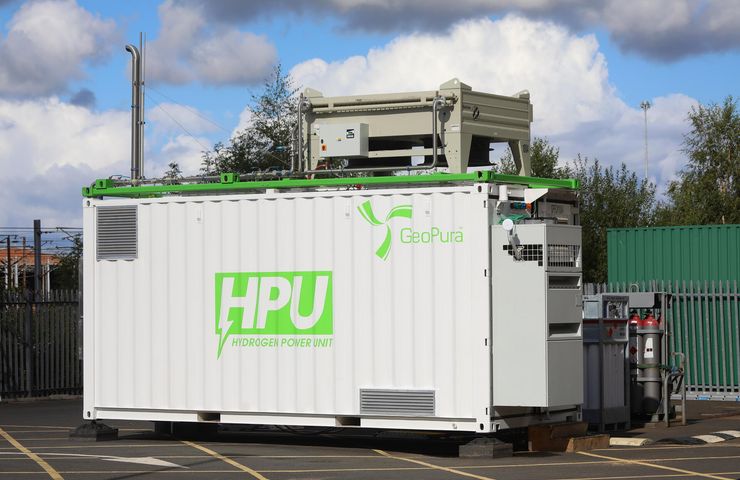
If you’ve ever wondered how do hydrogen fuel cells work in such settings, each GenDrive system fits into a standard battery compartment and combines a proton exchange membrane (PEM) fuel cell stack with high-pressure hydrogen storage. At specially installed hydrogen refueling stations, operators refill in 2–3 minutes rather than waiting hours to recharge batteries. This process delivers constant power throughout a work shift and has driven case-study gains in picks per hour of over 100%, according to customer reports.
Beyond initial equipment sales, Plug’s installed base also supports a growing service and parts business. Maintenance contracts, spare parts, and fueling agreements contributed about 27% margin in service offerings as of mid-2026. Plug expects multiyear refresh programs to generate recurring revenue streams and improve overall gross margin on its material-handling portfolio.
Strategic Infrastructure Optimization
On the financial front, Plug Power has launched a strategic infrastructure optimization initiative to improve near-term liquidity. This program targets more than $275 million through the monetization of non-core hydrogen project assets and the release of restricted cash. Central to this effort are two definitive agreements with Stream Data Centers.
The first agreement covers Plug’s Project Gateway site in upstate New York, where land and electrical interconnection assets are expected to yield at least $132.5 million in gross proceeds. The second involves a Graham, Texas, project with potential cash proceeds up to $90.5 million. Plug has already secured a $6 million deposit and further payments—such as $40 million noted in regulatory filings—as closings have occurred.
While these power-ready sites were initially intended to support Plug’s own green hydrogen production and hydrogen storage ambitions, divesting them converts long-term infrastructure into immediate funds. The company can now redeploy capital toward core hydrogen fuel cell operations and reduce maintenance obligations tied to large-scale electrolyzer and liquefaction assets.
Financial Roadmap and Outlook
These operational and financial tracks underpin management’s revised guidance. Plug has reiterated a target of reaching positive adjusted EBITDA (EBITDAS) in Q4 2026, followed by positive operating income in 2027 and full profitability by 2028. Its Q2 2026 results illustrate incremental progress: revenue reached $178 million, gross margins broke even, and net cash usage fell to around $61 million for the quarter.
Full-year revenue growth guidance was raised to 15–16%, reflecting confidence that equipment sales, fueled by the GenDrive refresh cycle, and higher service margins will drive a roughly 40% revenue uplift in the second half of 2026. Management also emphasizes cost-control measures and efficiency gains in its electrolyzer manufacturing and hydrogen production methods as crucial to sustaining margin improvements.
Broader Implications for Green Hydrogen
Plug Power’s two-track strategy offers broader lessons for the hydrogen sector. Material handling remains one of the most mature hydrogen infrastructure applications, where the economics of hydrogen fuel cell vs battery electric solutions have been proven in high-throughput operations. By contrast, regional hydrogen hubs and utility-scale green hydrogen production often contend with higher capital intensity and longer lead times.
The decision to sell power-related assets to a data-center developer highlights a flexible financing approach, whereby specialized sites can find alternate uses while project sponsors focus on their core competencies. This model may become more common as companies seek to manage balance-sheet risk and forge hydrogen project financing offtake agreements.
Policy incentives like the U.S. Inflation Reduction Act’s hydrogen production tax credits are likewise essential to improving competitiveness. Plug cites these credits as a key enabler for break-even fuel margins, which would complement equipment and service profitability in its GenDrive installed base.
Conclusion
In the evolving landscape of hydrogen news and green hydrogen news, Plug Power is staging a high-stakes experiment. Its planned refresh of over 20,000 GenDrive units at anchor customers, combined with the monetization of non-core infrastructure, creates a clear runway toward positive EBITDA by late 2026. A successful execution would offer a compelling proof point for the viability of large-scale hydrogen ecosystems. On the other hand, any shortfall could bolster skepticism over whether clean hydrogen news initiatives can deliver sustainable returns without continuous capital support. The coming months will be critical in shaping perceptions of hydrogen’s role in decarbonizing heavy logistics and beyond.