France Advances Natural Hydrogen Exploration with 3.7 km PTH-2 Well in Lorraine
FDE drilled the PTH-2 well to 3,655 m in Lorraine, recording dissolved-hydrogen concentrations up to 49.6 percent; flow tests with SYSPROG and resource certification are the next critical steps.
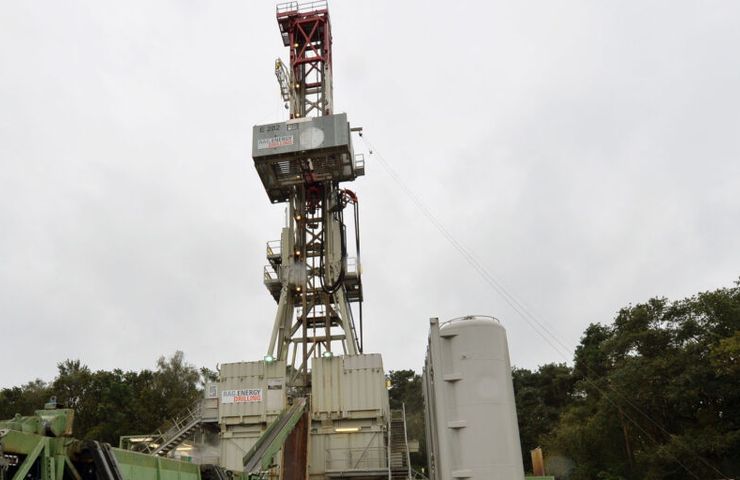
La Française de l’Énergie recently drilled the PTH-2 exploration well to approximately 3,655 metres in the Moselle basin of Lorraine, reporting dissolved-hydrogen concentrations of 36.1 percent at 2,242 metres and 49.6 percent at 2,426 metres, according to the company. Those readings represent the principal data points returned from the borehole so far. They were recorded during the campaign that targeted deep formations beneath the former coal-mining district. The company has framed the results as an early indicator of hydrogen enrichment at depth, while noting that further work is required to characterise the resource and its behaviour over time.
This deep-borehole effort is part of the REGALOR II programme under the Trois-Évêchés exclusive exploration permit, which covers about 2,254 square kilometres in the Grand Est region, according to market disclosures. The permit area spans multiple structural domains within the Grand Est. REGALOR II is the operational banner for the drilling, sampling and follow-up testing planned by the company in Lorraine.
Technical Dive: Deep Sampling with SYSMOG
FDE deployed its proprietary SYSMOG membrane-separation probe to detect and sample dissolved hydrogen under high-pressure, high-temperature conditions, the company says. The probe uses a selective membrane to extract gas directly from formation water, delivering concentration measurements in situ. In practice, that means gas is separated and measured while still downhole rather than only after fluids return to surface. SYSMOG confirmed unusually high hydrogen enrichment near 3,000 metres. Independent validation of probe performance and sampling accuracy remains pending. Until such validation is completed, the in‑situ concentration figures are best read as provisional and subject to confirmatory measurement.
Flow Testing with SYSPROG
Recognising that concentration data alone cannot prove commercial viability, FDE plans to deploy SYSPROG flow-measurement technology later this year, according to company releases. The company has described SYSPROG as a tool intended to move beyond point‑measurements and gauge dynamic behaviour inside the reservoir. SYSPROG is designed to measure dissolved-hydrogen movement through the rock matrix, which will help quantify potential deliverability, reservoir connectivity and sustained flow rates—key metrics for any future production scenario. Those metrics will determine whether the hydrogen can be produced at rates and durations relevant to supply contracts, local infrastructure or industrial use.
Geological and Scientific Context
Natural hydrogen generation may involve water-rock reactions such as serpentinisation or radiolysis, but the dominant mechanism in Lorraine is still under study, researchers at GeoRessources Laboratory and CNRS indicate. The PTH-2 well penetrates the Carboniferous formations of the former coal-mining basin, where BRGM provides structural mapping and fluid-geochemistry expertise, according to project documentation. Those institutions are examining both the petrology of the host rocks and the chemical signatures of formation fluids to better understand the source and migration pathways of the gas. An earlier survey at Folschviller recorded around 15 percent hydrogen at roughly 1,093 metres, supporting the observed increase in concentration with depth. That prior result is often cited inside the project as a comparative baseline for interpreting the deeper PTH-2 measurements.
Funding and Strategic Backing
The European Union’s Just Transition Fund granted €8.8 million to support REGALOR II, complemented by regional funding from the Grand Est Region, according to FDE’s filings. Project paperwork lists the EU contribution as a principal public backer of the programme’s technical phases. Technical partnership with Solexperts covers downhole instrumentation, while a feasibility study with Terega Solutions is examining potential production-facility designs and integration into local hydrogen infrastructure. Those commercial and technical links are intended to bridge the gap between field characterisation and any future production scheme, should the data justify moving forward.
Next Steps and Uncertainties
FDE expects independent resource certification to begin in 2027 and cites a production target of late 2028 or early 2029, pending favourable flow-test results, regulatory approvals and environmental impact assessments. The company frames certification as a multi-stage process that will rely on both the SYSPROG flow work and third-party assessment. Critical unknowns include sustainable flow rate, reservoir pressure maintenance, recharge dynamics, operating cost and groundwater protection. Those factors remain central to whether a commercial development is practical and acceptable to regulators and stakeholders. Regulatory authorisation for commercial extraction under the exploration permit remains conditional on comprehensive environmental and social reviews. In short: more data, and formal reviews, must slot into place before any extraction licence can be granted.
Strategic Implications
If the Lorraine system delivers sustained hydrogen flow, naturally occurring hydrogen could offer a potentially lower-carbon supplement to electrolytic or reformer-based hydrogen, aligning with France’s drive for domestic clean-energy sources. Domestic supply would change certain supply-chain calculations for local industry and for regional decarbonisation plans, should volumes and rates prove sufficient. However, until flow measurements, certification and permitting are complete, the PTH-2 well stands as a significant research milestone rather than a proven commercial deposit. The project team and its partners characterise the current phase as exploratory: promising, but not yet decisive.