Vema Hydrogen and SAF+ to Produce Sustainable Aviation Fuel in Quebec
Vema Hydrogen and SAF+ International Group plan co-located facilities in Thetford Mines, Quebec, to produce sustainable aviation fuel by combining natural hydrogen extracted from iron-rich rocks with captured CO₂ via KHIMOD power-to-liquids technology. The pilot-stage project highlights a novel hydrogen production method and aims to decarbonize long-haul aviation through drop-in synthetic fuel.
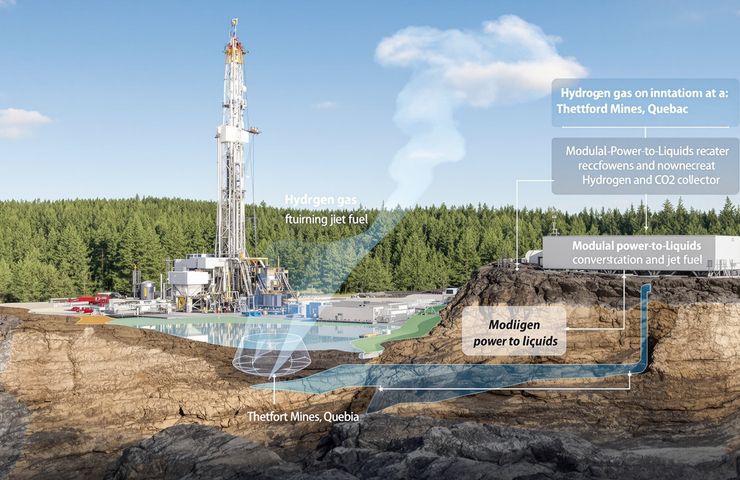
In recent hydrogen news, Vema Hydrogen, a Houston-based developer of engineered mineral hydrogen projects, announced a memorandum of understanding with SAF+ International Group, a Montreal specialist in power-to-liquids sustainable aviation fuel (SAF). The deal aims to explore how to turn low-carbon natural hydrogen trapped in iron-rich rocks at Thetford Mines, Quebec, into drop-in synthetic aviation fuel, using KHIMOD technology to blend hydrogen with captured CO₂. It’s also a headline in clean hydrogen news, shedding light on green hydrogen production methods. In addition, energy stakeholders and policy makers who follow hydrogen energy news will be watching closely, since success here could reshape aviation’s low-carbon roadmap.
Partnership Overview
Under the MoU, Vema Hydrogen will manage upstream extraction of geologic hydrogen while SAF+ International Group focuses on downstream fuel synthesis. Vema’s plan taps into naturally generated hydrogen flows—no electrolysis or steam methane reforming required—by injecting water into iron-rich rock formations. The generated hydrogen is then captured via wells, processed, and piped to the SAF+ facility. There, captured CO₂—ideally from biogenic or industrial sources—is introduced into compact reactors using KHIMOD’s catalytic processes to yield longer-chain hydrocarbons, including synthetic kerosene. This joint venture is one of the first to marry natural hydrogen extraction with power-to-liquids conversion, offering a fresh take on hydrogen production methods and power-to-liquids technologies for the aviation sector.
Geologic Hydrogen Extraction
Natural or geologic hydrogen forms underground when water reacts with iron-bearing minerals in rock, a process known in geology but rarely harnessed at scale. Vema Hydrogen is betting that the right catalyst can speed up these water–rock reactions in Thetford Mines’ iron-rich formations, where decades of mining have mapped extensive mineral layers. The concept involves injecting water or an aqueous solution into subsurface fractures. The catalyst—deployed in wellbore assemblies or reagent injections—lowers the activation energy needed for hydrogen generation, mimicking processes such as serpentinization but on engineered timetables. As hydrogen bubbles off within the rock matrix, it migrates toward lower-pressure zones and is captured through production wells, then routed to surface facilities for drying and purification.
Unlike conventional electrolysis, which demands high levels of electricity—often sourced from renewables to qualify as green hydrogen—this natural hydrogen route aims to leverage in situ reactions with minimal external power. Proponents claim lifecycle emissions could be lower if grid or onsite renewable energy underpins drilling and pumping. Critics, however, point out uncertainties around long-term reservoir behavior, potential groundwater impacts, and the sustainability of reaction rates. Initial pilot wells will be critical to demonstrate stable flows of millions of cubic meters of gas per year—enough to supply the envisioned SAF facility. If Vema can prove tens of thousands of tonnes of hydrogen extraction annually, it could offer an attractive complement to electrolysis-centric green hydrogen projects.
Power-to-Liquids SAF Process
SAF+ International Group brings its power-to-liquids expertise and airline partnerships to the table. The company plans to process about 4,000 tonnes of hydrogen per year in the first phase, converting it into roughly 7,000–8,000 tonnes of synthetic jet fuel. This fuel is chemically indistinguishable from conventional kerosene, making it a drop-in solution for existing aircraft and fueling infrastructure. Using KHIMOD’s modular reactors, CO₂ and H₂ are first converted to carbon monoxide under catalytic and thermochemical conditions, then synthesized into longer-chain hydrocarbons via a Fischer–Tropsch-like route. Final fractionation yields a kerosene blend that meets jet fuel specifications, while side streams can be refined into diesel or naphtha.
The economics depend heavily on technology efficiency and scale. Early estimates suggest synthetic SAF currently costs three to five times more than fossil jet fuel—a gap SAF+ hopes to close through learning curves, modular reactor economies, and clean hydrogen offtake agreements. Indeed, Air Transat has a binding offtake deal, and Air France-KLM holds a letter of intent for future volumes. These agreements not only validate offtake demand but also support project financing discussions by providing revenue certainty. Even so, achieving competitive pricing will likely require policy support, carbon credit markets, or blending mandates, all of which are in varying stages of development across North America and Europe.
Regional Context in Quebec
Thetford Mines sits south of Quebec City in a region historically known for chrysotile asbestos mining. As regulatory shifts and health concerns phased out asbestos extraction, the city has grappled with economic transitions and environmental legacies. Now, the same iron-rich geology that once hosted asbestos veins is seen as a resource for natural hydrogen. Quebec’s abundant hydropower, which already supplies low-carbon electricity to the grid, can backstop the modest power needs for drilling and hydrogen processing, ensuring a low-carbon profile. Meanwhile, emerging Quebec and Canadian strategies for hydrogen infrastructure and sustainable aviation fuel offer technical guidance, permitting frameworks, and potential incentives aimed at de-risking innovative projects.
Economic and Environmental Impacts
On the economic side, the Vema–SAF+ project could create dozens of skilled jobs in drilling engineering, subsurface geology, catalyst science, reactor operations, and maintenance. Local service providers—from equipment suppliers to transport firms—could see new business, while research institutions may partner on monitoring and optimization studies. If the site eventually scales to produce tens of thousands of tonnes of hydrogen and corresponding SAF output, it might become a nucleus for a regional clean fuels cluster, attracting additional investment and talent.
From an environmental standpoint, synthetic aviation fuel made from low-carbon hydrogen and biogenic CO₂ can slash lifecycle greenhouse gas emissions—SAF+ projects claim up to a 90 per cent reduction compared to conventional jet fuel. That figure, though compelling, stems from company life cycle assessments and has not yet been independently verified for this specific configuration. Regulatory agencies will likely require transparent reporting and third-party audits to validate the carbon savings. Subsurface operations also carry risks—potential groundwater contamination, induced seismicity, and unanticipated reservoir depletion. Rigorous environmental monitoring and contingency planning will be crucial to balance innovation with ecosystem protection.
Policy and Market Dynamics
Policy frameworks are evolving to support both hydrogen and SAF. In Canada, federal and provincial strategies include tax incentives, research grants, and carbon pricing mechanisms designed to close the cost gap between clean alternatives and fossil fuels. Quebec’s hydrogen strategy outlines targets for green hydrogen production and infrastructure build-out, while federal consultations on SAF blending mandates could create guaranteed offtake volumes for domestic airlines. Internationally, Europe’s Renewable Energy Directive II and CORSIA program under ICAO push airlines to adopt low-carbon fuels, creating import markets for North American SAF suppliers.
Market dynamics hinge on airline sustainability commitments, carbon credit prices, and fuel blending requirements. Early movers like Air Transat and Air France-KLM are signalling willingness to pay premiums for certified SAF. Their clean hydrogen offtake agreements help developers secure hydrogen project financing, but financiers will still demand transparent cost breakdowns, technology validation, and scale-up roadmaps before committing to multi-billion-dollar investments.
Outlook and Challenges
We’re still at the demonstration phase. Vema plans pilot wells to quantify hydrogen flow rates and reservoir behavior, while SAF+ is finalizing design parameters for its co-located facility. Regulatory approvals, community engagement, and financing arrangements remain ongoing. The core challenge will be proving technical feasibility and economic viability in parallel: can natural hydrogen extraction deliver steady gas volumes at a competitive cost, and will modular power-to-liquids systems achieve the efficiency needed to narrow the price premium on synthetic jet fuel?
If those pieces come together, the Vema–SAF+ initiative could light a path for a new category of green hydrogen production projects—ones that tap underground reservoirs rather than rely solely on electrolysis. Success here might spur similar efforts in other iron-rich regions, diversify the hydrogen supply mix, and accelerate the scale-up of sustainable aviation fuel. For the aviation industry, already grappling with its decarbonization dilemma, such dual-front innovations could be a game changer, filling a yawning gap in high-density, drop-in fuels needed for long-haul flights.