1 MW Dragonfly Electrolyzer Commissioned in Sardinia
De Nora and Maffei Sarda Silicati have commissioned a 1 MW Dragonfly electrolyzer at a Sardinian industrial site to produce up to 50 tons of green hydrogen annually, marking a practical advance in industrial decarbonization under Italy’s recovery framework.
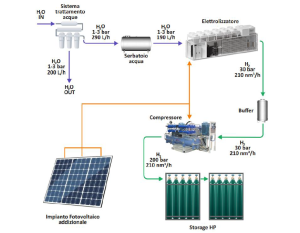
In a significant step for industrial decarbonization, De Nora, an Italian supplier founded in 1923 and listed on Euronext Milan, together with Maffei Sarda Silicati, part of the Minerali Industriali Group, have brought a 1 MW Dragonfly electrolyzer online at a mineral processing site in Sardinia. The modular system is rated to produce up to 50 metric tons of green hydrogen each year for on-site operations, offering a concrete example of how compact electrolyzer technology can integrate into existing industrial footprints under Italy’s post-recovery framework.
Project Overview
After a development period spanning roughly two years, the plant in the Florinas area of Sassari province has completed installation, testing and commissioning phases. The project was first unveiled in late 2024, when De Nora announced plans to build a green hydrogen plant on a decommissioned industrial site in Ossi. Company statements now place the electrolyzer in Florinas, which lies nearby, suggesting a location refinement or updated boundary. According to the press release, the unit arrived pre-assembled from a dedicated production facility, was connected to local utilities and certified before handover. Rather than creating a standalone energy hub, the plant is embedded within Maffei Sarda Silicati’s raw-material processing operations, which supply minerals for ceramics and glass manufacturing. This reflects a deliberate strategy to retrofit brownfield sites with clean hydrogen production, one of the priorities under the national recovery and resilience plan.
Technical Details
The system is based on mature alkaline water electrolysis, a method in which an electric current passes through water containing an alkaline solution to split molecules into hydrogen and oxygen. At the cathode, water molecules are reduced to generate hydrogen gas, while at the anode, hydroxide ions produce oxygen. Its reliability and cost-effectiveness at industrial scale make it a popular choice for projects with stable power inputs. The Dragonfly electrolyzer itself is designed as a modular 1 MW platform, allowing for prefabrication and rapid on-site integration. According to statements by the supplier, this unit is among the first to be designed, assembled and tested at the company’s newly commissioned electrolyzer production facility.
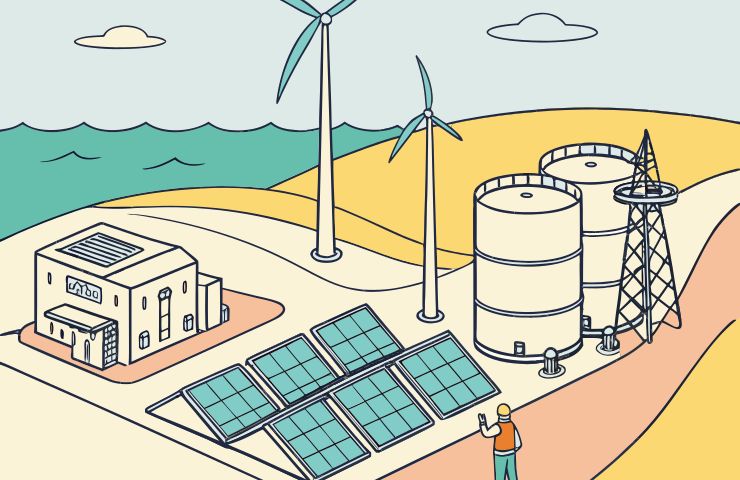
While the immediate announcement focuses on commissioning, earlier project descriptions indicated a plan to source renewable electricity in part from on-site photovoltaic arrays. Although detailed operational data on electricity sourcing have not been published, the concept aligns with Italy’s requirement for renewable hydrogen under recent transposition of EU rules. In practice, linking the electrolyzer to solar generation helps ensure that the hydrogen produced meets regulatory thresholds for clean labeling and reduces the facility’s carbon footprint compared to grid power alone.
Industrial and Policy Context
Choosing Sardinia for this pilot reflects both opportunity and challenge. The island region has abundant renewable resources and a long history of mineral and mining activities, including sites operated by Minerali Industriali Group in areas such as Florinas and Ossi. At the same time, Sardinia has experienced legal disputes over renewable energy permitting, with regional authorities imposing temporary freezes on new installations. Some of those restrictions were recently overturned by court rulings, clearing the way for green projects to move forward. Against that backdrop, the completion of a hydrogen plant signals that policy support, industrial demand and supplier readiness can align, even in contested environments.
Nationally, Italy has woven hydrogen production into its recovery plan, directing funding and incentives to projects that can demonstrate measurable cuts in industrial emissions. These measures are backed by mechanisms such as RED III, which set binding targets for renewable hydrogen use. Embedding an electrolyzer within an existing factory delivers hydrogen directly to process loads that have historically relied on fossil fuels for heating or reduction reactions. For ceramic and glass raw materials, hydrogen can substitute gas in calcination or other thermal steps, lowering site emissions.
Significance and Implications
This project illustrates several trends converging in the hydrogen economy. First, equipment suppliers like De Nora are moving from demonstration-scale stacks to commercially sized modules that can operate continuously at industrial sites. The compact, gigafactory-built approach promises lower installation risk and faster commissioning. Second, end users such as Maffei Sarda Silicati are seeking internal solutions for decarbonization, rather than outsourcing hydrogen supply. Having on-site production can improve flexibility and reduce transport challenges, especially in island contexts where infrastructure is limited.
If the plant runs as rated, the production of 50 metric tons per year will offset a portion of the site’s fossil-fuel consumption. While the actual climate benefit depends on operating hours and the exact power mix, the arrangement sets a reference case. Other brownfield locations across Italy and Europe may look to replicate the model, combining modular electrolyzers, local renewables and targeted policymaking. For equipment vendors, each successful commissioning builds credibility; for policy makers, it justifies further incentives; for industrial operators, it demonstrates a path toward lower emissions and potential cost stability.
Looking Ahead
Although this is a modest installation by scale, its successful handover underlines the practical viability of distributed hydrogen production. The immediate focus will be on ramping up operations, monitoring performance and securing offtake integrations with site processes. Over time, data on availability, efficiency and lifecycle emissions will help refine future projects. We can expect that sites with similar energy demands—cement, steel, glass and chemicals—will watch closely to see whether compact electrolyzer platforms can deliver reliable hydrogen at competitive cost.
In a sector often dominated by large central facilities and long-term promises, this 1 MW plant in Sardinia stands out as a hands-on pilot. It brings together a century-old electrochemistry specialist, a seasoned minerals processor and a supportive policy environment. Together, they have turned green-hydrogen policy into a real industrial asset, not just a plan on paper.