Global Consortium Launches Real-World Hydrogen Emission Study Using Breakthrough Detection Tech
A landmark collaborative study is using cutting-edge sensors to measure real-world hydrogen emissions across infrastructure in the Netherlands and the US. Findings may reshape global hydrogen policy and investments—especially as current emission estimates range drastically.
A groundbreaking international project is now underway to answer a question that could reshape the future of green hydrogen: just how much of it is leaking into the atmosphere?
Real-World Testing Begins as Trillions Flow Into Hydrogen
Starting in March 2025, a global team of 12 organizations from five different countries rolled out large-scale field tests to track hydrogen emissions across its entire lifecycle—from production and transport to how it’s ultimately used. With testing focused on key hydrogen hubs like Rotterdam and the US Northeast Corridor—which alone contains more than 40% of the nation’s hydrogen infrastructure—this initiative runs through early 2026 and stands to fill a crucial climate data gap.
Why does it matter? Because hydrogen leaks could quietly erode the very climate benefits the fuel promises. According to newer estimates based on post-2021 IPCC research, hydrogen’s indirect global warming potential could be up to 11 times higher than CO2 over a 100-year span. And with current leak-rate estimates ranging anywhere from 1% to 20%, the uncertainty is too big to ignore—especially as the world heads toward a projected $2.3 trillion hydrogen buildout by 2040.
Cutting-Edge Tools Hit the Ground
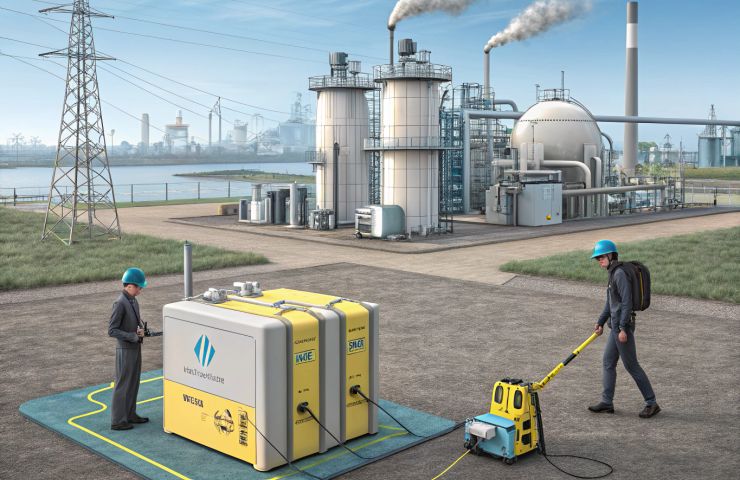
This isn’t lab theory—it’s boots-on-the-ground science. The teams are using two standout technologies to capture real-world hydrogen emissions:
- Aerodyne H2-2025 Analyzer: A brand-new hydrogen sensor with ultra-high sensitivity (down to 0.1 ppm). It works by converting hydrogen to water vapor using catalytic oxidation, then measures it using laser absorption at super-fast speeds (10Hz).
- Tracer-Release Methodology: Borrowed and tweaked from methane studies, this approach releases a known quantity of an SF6 tracer gas to help nail down actual leak rates from real-world hydrogen systems.
The beauty? These tools work out in the field—not just in controlled lab settings—giving us much-needed data from the conditions hydrogen tech actually operates in. First results are expected by September 2025.
Collaboration Across Borders and Sectors
This isn’t just a science project—it’s a climate coalition. The team includes major players like Air Liquide (France), Shell (Netherlands), Utrecht University (Netherlands), Aerodyne Research (USA), and Cornell University (USA). They’re backed by organizations like the Environmental Defense Fund and cutting-edge climate consultants. What makes this $18 million effort unique? It’s entirely funded by philanthropy, which means it’s untethered from commercial or regulatory bias. Individual facilities stay anonymous, but the data will break down emissions by infrastructure type—think pipelines versus electrolyzers.
What This Could Change
This study has the potential to rewrite the rulebook for green hydrogen. Depending on what the measurements show, the ripple effects could hit everything from policy to technology, and even open up new markets:
- Infrastructure Standards: Got consistent leaks? That could mean future pipelines will need stricter sealing or 24/7 emissions monitoring.
- Technology Shakeups: If some production tech (like steam methane reforming) leaks more than others, it may get sidelined in favor of cleaner options like electrolysis.
- Big Business in Leak Detection: Demand for accurate leak monitoring could explode into a $4 billion industry by 2027.
The study could also steer policies inside major climate frameworks like the EU’s Fit for 55 and the US’s Inflation Reduction Act, where hydrogen tax incentives hinge on accurate emissions reporting.
Zooming In: Rotterdam and the US Northeast
Europe’s testing ground? Rotterdam—a mega-port with deep fossil fuel roots that’s now becoming a hub for clean hydrogen, backed by groups like Hydrogen Europe. Meanwhile, across the Atlantic, the US Northeast Corridor—stretching from Rhode Island to West Virginia—offers a unique mix of history and innovation. It was once home to NASA’s early fuel cell programs and now hosts cutting-edge hydrogen efforts supported by the Department of Energy.
Hydrogen’s Moment of Truth
This isn’t just another emissions study. It's a make-or-break moment for hydrogen’s climate credibility. Every ton that escapes into the atmosphere dents its low-carbon reputation. And now, with the green hydrogen economy booming, the world can’t afford to turn a blind eye.
“The climate math changes completely depending on how much H2 goes unburned. This project will give us ground truth,” said one of the scientists on the team.
In short, the hydrogen industry’s not just being watched—it’s holding the magnifying glass to itself. And the results could define its role in industrial decarbonization for decades to come.