Geological Hydrogen Exploration Expands with H2Au’s Kansas Drilling
H2Au’s new drilling program in Kansas marks a surge in geological hydrogen exploration, building on Mali’s Bourakébougou demonstration and USGS mapping—but commercial viability remains unproven.
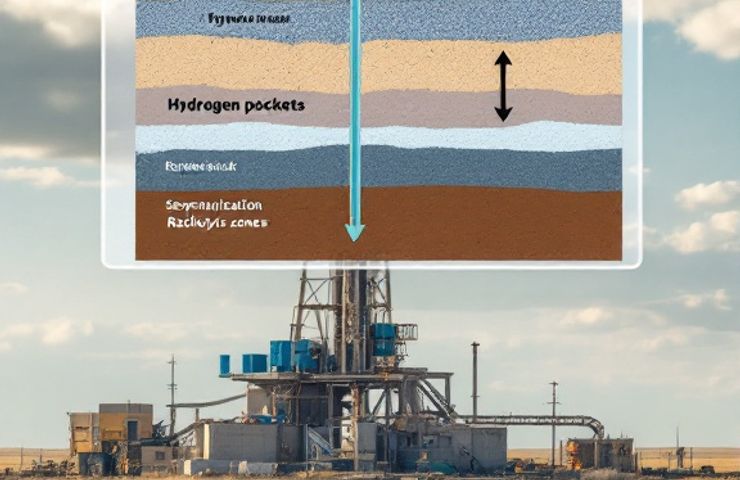
H2Au has kicked off exploratory drilling in Kansas this month, diving into the intriguing world of natural hydrogen that's hiding beneath our feet. Based in Epsom, UK, this company is joining a growing group of explorers testing whether geological systems can produce hydrogen in volumes and flow rates that are actually workable—without the need for the typical electrolysis approach.
Now, here’s the deal: unlike green hydrogen, which is produced through electrolysis powered by renewable electricity, geological hydrogen forms naturally over millions of years due to various subsurface processes. The idea here is pretty exciting—by tapping into hydrogen that’s already stashed underground, we could save on the energy-intensive water-splitting methods, which might help reduce both operational costs and emissions. Of course, it’s not a walk in the park. There’s a fair bit of work involved in finding those sweet spots where hydrogen has migrated from rock-water reactions or even radiation and accumulated in porous formations sealed off by impermeable layers. Until we can establish consistent flow rates, purity, and longevity of these wells, geological hydrogen remains more of a hopeful promise than a guaranteed game-changer compared to the tried-and-true green hydrogen production.
One promising spot that’s being closely watched is the Bourakébougou field in Mali, which is home to a pilot project run by Hydroma. Back in 1987, a routine water well there hit gas that, upon testing, turned out to be around 98% hydrogen mixed with a bit of nitrogen and methane. Since 2012, a generator powered by this well has been supplying energy to a nearby village, making it one of the only long-standing examples of clean hydrogen news put into action. While the reservoir studies are getting pretty detailed, covering aspects like shallow traps and microbial behavior, experts caution that what works in Mali might not easily replicate elsewhere, and the high volumes of hydrogen may not always be recoverable.
Mapping Prospectivity
When it comes to understanding where geological hydrogen might be hiding, the U.S. Geological Survey is leading the charge. They’ve created a prospectivity mapping method that takes a variety of factors into account, like the potential for serpentinization, radiolysis rates, and the structure of the underlying rock. The result? A probabilistic map showcasing regions across the continental U.S. that might be worth a closer look. But it’s worth noting that while some areas score high, that doesn't automatically mean there's a proven deposit waiting to be tapped—many promising spots could be too deep, offshore, or just not big enough for cost-effective extraction.
Kansas offers a unique opportunity for this exploration thanks to decades of oil and gas drilling history that’s left behind a lot of useful subsurface data. Companies like H2Au and their partners, including 45-8 ENERGY, are dusting off old wells, hoping to find promising concentrations of hydrogen indicated in gas logs. Other players, like HyTerra with its Nemaha project and Koloma with their unbranded wells, are taking aim at areas identified through seismic surveys and gas sampling. None have hit the jackpot with commercial-grade hydrogen flows yet, but each new hole drilled is refining geological models and paving the way for smarter future placements.
Under the Hood: Formation and Trapping
So, how does natural hydrogen actually form? It mostly comes from two processes: serpentinization and radiolysis. During serpentinization, water interacts with iron-rich rocks—think peridotite—transforming minerals and releasing hydrogen gas in the process. Radiolysis, on the other hand, happens when isotopes of uranium, thorium, and potassium decay in continental shields, emitting particles that break water molecules apart and free hydrogen. Both methods need a good flow of water, reactive rocks, and enough time to gather a solid amount of hydrogen.
But once the hydrogen is generated, extracting it is another challenge. It involves navigating through fractures or porous rocks that can trap the gas and keeping it sealed by caprocks above. Geological hydrogen isn’t just sitting around waiting to be collected; it’s a bit like a wily rabbit that can escape through microfractures, be gobbled up by microbes, or bond with minerals to form water again. To successfully collect it, you need the complete petroleum system playbook—source, migration, reservoir, and seal—adapted for the quirks of hydrogen's chemical behavior.
Globally, there’s a buzz about exploring natural hydrogen in places like Mali’s sandstone traps and South Australia’s cratonic basins. In South Australia, companies led by Gold Hydrogen are drilling at Ramsay project site, uncovering subeconomic hydrogen shows that are fueling academic research. Over in France, the Grand Rieu project is a collaboration between 45-8 ENERGY and Storengy, focusing on the exploration of deep carbonate reservoirs. Even the northern parts of Canada, with its old Precambrian rocks, are part of the exploration maps, though specifics remain vague. This shows that geological hydrogen is drawing attention from all corners of the globe.
Investment, Risk and Industry Momentum
Looking at the financial side, venture capitalists have poured nearly half a billion dollars into geological hydrogen initiatives since the early 2020s. Governments and research organizations, including the International Energy Agency, are jumping in too, trying to carve out a clear role for geological hydrogen in the clean energy mix. But let’s be honest—funds aren’t distributed evenly, and drilling comes with a hefty risk: many wells may not yield a concentration or flow rate that’s worth the investment. Investors and operators are keeping a close eye on early drilling results because success could trigger a rush similar to the shale gas or offshore oil booms we’ve seen in the past.
Also, drilling isn’t cheap. The costs associated with well construction, seismic studies, and specialized gear can stack up quickly. Explorers need to prove sustained production rates—looking at flow rates, pressure changes, and purity—before they can confidently move forward with any final investment decisions. Without credible third-party verification and clear reporting, market confidence in geological hydrogen is likely to stay on shaky ground.
Regulation, Technology and Next Steps
As for regulations, the standards for geological hydrogen are still finding their footing. Permitting practices, environmental assessments, and safety protocols vary widely, with many places lacking dedicated rules for hydrogen wells. Concerns about groundwater contamination, land impacts, and emissions that could escape complicate things further—hydrogen’s properties can speed up corrosion or change subsurface chemistry. Establishing clear guidelines for monitoring and maintaining well integrity, along with ensuring community buy-in, is key as this sector matures.
On the tech front, service companies are modifying drilling fluids, logging tools, and separation equipment to deal with hydrogen’s lighter, more diffuse nature. Advanced sensors designed to gauge hydrogen concentration and isotopic signatures will help verify sources. And processing systems on the surface need to efficiently remove nitrogen or methane impurities to meet quality standards for fuel cell applications or industrial use. If these technological advancements come to fruition, existing oil and gas infrastructure—rigs, pipelines, treatment facilities—could easily pivot to support geological hydrogen initiatives.
Looking down the road, the proof of concept for geological hydrogen is in progress but it’s not quite there yet. In Kansas and South Australia, more wells are set to be drilled over the coming years, pushing the boundaries of our knowledge about natural hydrogen systems. If these ventures succeed, we could see integrated projects popping up that combine geological hydrogen with green hydrogen production, paving the way for hybrid hubs balancing resource reliability with eco-friendliness.
For now, the world of geological hydrogen sits at the intersection of high potential and high uncertainty in the clean energy landscape. The next moves for the industry hinge on gathering robust field data, conducting transparent evaluations of reservoirs, and achieving clear regulations. If everything aligns just right, natural hydrogen might soon stand shoulder to shoulder with fuel cell technology and renewable electrolysis as essential components of a fortified, zero-emission energy economy.