DEWA-Germany Clean Hydrogen Alliance Set to Boost UAE’s Energy Transition and Export Prospects
DEWA partners with German hydrogen leaders to merge Dubai's solar dominance with advanced European hydrogen tech, aiming to build a regional hydrogen export hub and fast-track the UAE's 2050 net-zero goals.
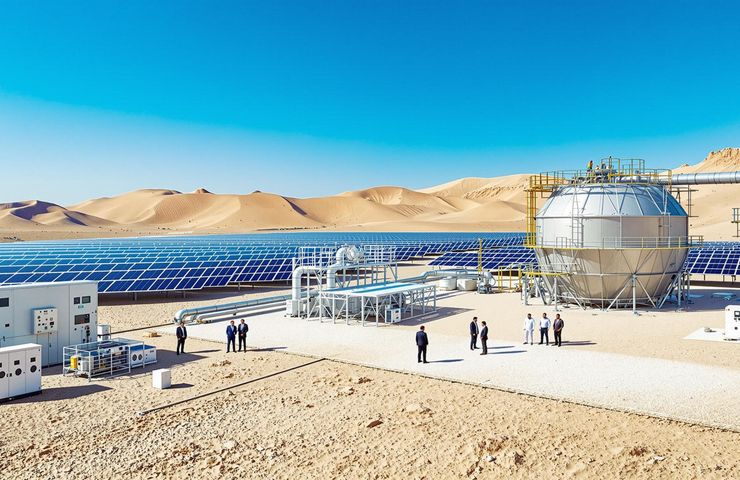
Dubai Electricity and Water Authority (DEWA) is doubling down on its clean energy ambitions by forging deeper partnerships with some of Germany’s top-tier hydrogen and energy technology pioneers. The goal? Accelerate the rollout of a robust green hydrogen infrastructure in the UAE. This bold collaboration blends Emirati solar power muscle with advanced German hydrogen innovations—creating a clean energy platform that’s not just regional, but global. Think zero-emission backbone for the UAE and brand-new export routes spanning Europe to Asia.
Powering Up: Where Solar Meets Hydrogen
DEWA, the utility titan behind the world’s largest single-site solar park, is now teaming up with German heavyweights like FEV Group, MAN Energy Solutions, and Hexagon Purus. These companies bring critical know-how in combustion engine tech, electrolyzers, and high-pressure hydrogen storage—the core pieces needed to bring green hydrogen production to life.
- Location: Dubai, with its blazing sun and vast deserts serving as the perfect stage for hydrogen scalability.
- Timeline: Key project phases are locked in for 2026–2027; the partnership has been ramping up since May 2025.
- Purpose: To help the UAE hit its net-zero by 2050 goal while pushing German tech deeper into MENA markets.
The joint play is to match low-cost solar PV with cutting-edge hydrogen capture and compression systems, setting the stage for industrial-scale hydrogen output. Just from solar alone, the country has already sidestepped a staggering 6.5 million tonnes of CO2. And there’s more to come: another 3,400 MW of solar is on the horizon—enough juice to drive large-scale green hydrogen for industries and even global shipping.
Bright Ideas: Key Technologies in Action
Here are the game-changing innovations being rolled out under the DEWA-Germany alliance:
- PV Bifacial Tracking Systems – These smart solar panels rotate to snag both direct sun and reflected light, unlocking up to 27% more power than old-school fixed panels.
- Giga-Scale Battery Storage – A monster 1,000MW/6,000MWh lithium-ion setup designed to keep the grid in check and feed hydrogen production even when the sun’s not shining.
- Type IV Hydrogen Tanks – Lightweight, high-pressure carbon-fiber tanks (700-bar) set to handle storage and transport for everything from local industry to international shipping and exports.
Big Picture: Strategy Meets Sustainability
This partnership plays right into Germany’s long-term strategy to lock in green hydrogen imports from sun-rich regions. Through the German Emirati Joint Council and others, Berlin is boosting tech transfer and supply chain collaboration as part of its pivot toward sustainable energy leadership.
For the UAE, diving into hydrogen is a natural next chapter. After launching nuclear in 2006 and slashing solar costs post-2015, the country laid out its national hydrogen roadmap in 2023. The target? Lock down 25% of global low-carbon hydrogen market share by 2030.
FEV Group, MAN Energy Solutions, and Hexagon Purus aren’t just handing over technology—they’re building what could be a full end-to-end green hydrogen ecosystem. From production to storage to real-world use cases like transport, desalination, and synthetic fuel creation, the pieces are falling into place.
Fueling the Future: Exporting Hydrogen at Scale
This isn't just about meeting local decarbonization goals. DEWA and its German partners have their eyes on turning Dubai into a next-gen hydrogen export hub. Concepts for new shipping lanes, hydrogen transport corridors, and even ammonia synthesis plants near ports are already under discussion.
And there’s another strategic twist—this initiative could shake up the current dominance of Chinese tech across Gulf energy infrastructure. By bringing in more localized ecosystems with high-tech European input, the region could gain more control and long-term value from its own renewable assets.
The tech is moving fast. With rapid improvements in electrolyzer efficiency and hydrogen-ready engines, wide-scale deployment may hit sooner than many expect—especially as transportation and storage costs start to fall. As one Berlin energy advisor summed it up: “The UAE has the sun, Germany has the tech. Put them together, and you get a green hydrogen economy built for global export.”
What’s Next: Eyes on 2026–2027
With the 6th and 7th phases of the Mohammed bin Rashid Solar Park on track for completion by 2027, and stepped-up cooperation between Berlin and Dubai, the DEWA-led initiative is turning into one of the Middle East’s boldest clean energy plays yet.
As the world races to clean up heavy industry, shipping, and supply chains, alliances like this—between high-sun nations and high-tech innovators—may end up rewriting the global energy rulebook for decades to come.