Coumarin-Linked COF Boosts Hydrogen Production in Photocatalytic Water Splitting
CAS researchers unveil a coumarin-linked COF that prolongs charge separation by ~1,000× and achieves up to 531 mmol g⁻¹ h⁻¹ hydrogen evolution, pointing to new routes in solar hydrogen production.
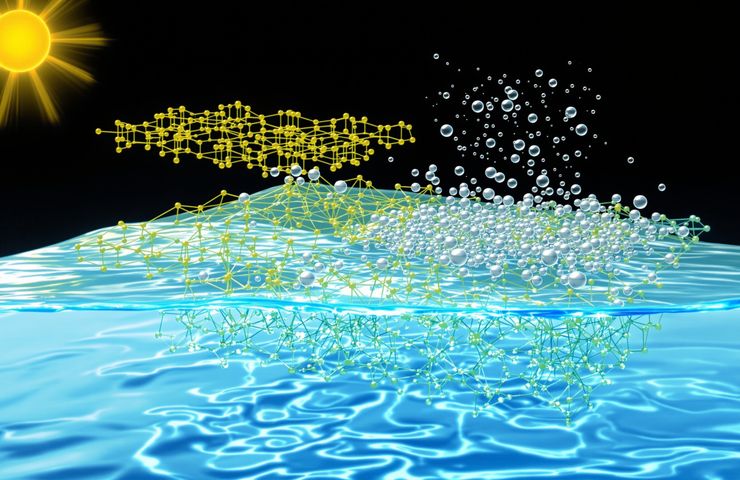
Researchers at the Chinese Academy of Sciences in both Zhejiang and Beijing have made an exciting breakthrough with a new coumarin-linked covalent organic framework. This innovation promises to significantly extend the lifespan of photo-generated charges, boosting hydrogen production rates well beyond what's possible with traditional imine-linked models in photocatalytic water splitting. Their findings, published in Nature Synthesis, showcase a smart materials-design strategy that could propel clean hydrogen production through solar photocatalysis to new heights.
Covalent organic frameworks (COFs) have recently emerged as some pretty promising contenders for solar hydrogen production. They’re metal-free, have tunable porosity, and allow for modular synthesis, all while boasting adjustable electronic properties. One major hurdle, though, has been the rapid electron-hole recombination that holds back their efficiency under visible light. But instead of just tweaking post-synthetic modifications or relying heavily on metal cocatalysts, this team took a deep dive into linkage chemistry to tackle the problem right at the molecular level.
Design Innovation
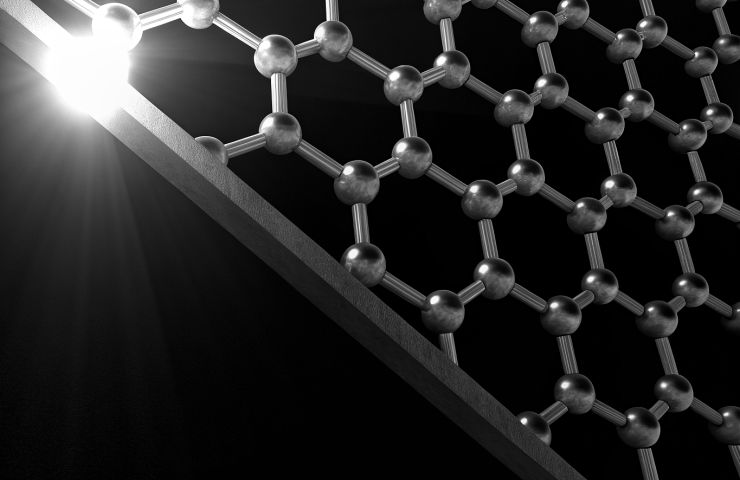
The real game-changer here is the replacement of the more flexible imine linkages with a rigid, flat coumarin bond within the 2D COF structure. Thanks to coumarin's fused-ring structure, π-electron delocalization across the framework sees a significant boost, which helps reduce those troublesome structural fluctuations that can trap charges. The research team, including notable names like Yuxiang Zhao, Xu-Bing Li, Tao Zhang, Juan Li, and Junyi Han, undertook the synthesis and characterization of this promising material at the Ningbo Institute of Materials Technology and Engineering and the Technical Institute of Physics and Chemistry.
Performance under Irradiation
In lab tests conducted under blue-light illumination, this coumarin-linked COF showcased a charge-separated-state lifetime that was nearly 1,000 times longer than that of the imine-linked version, which is a huge factor behind its enhanced reactivity. Under 440 nm light, the material clocked in a hydrogen evolution rate of 531 mmol g⁻¹ h⁻¹, and under visible light at over 420 nm, it performed at a rate of 166 mmol g⁻¹ h⁻¹. An apparent quantum yield of 37.95% at 405 nm really highlights the improved photon-to-hydrogen conversion potential here.
Role of Cocatalyst
To make it easier for protons to be reduced, the team added platinum nanoparticles onto the COF surface as a cocatalyst. Reports suggest that photo-generated electrons can transfer to the platinum sites in mere picoseconds, speeding up the hydrogen-evolution reaction. While platinum isn’t exactly cheap, its presence here shows that with optimized charge separation, we might not need as much metal, improving overall catalyst efficiency.
Why Charge Separation Matters
The success of hydrogen production really hinges on the ability to separate and direct electrons and holes before they recombine. In many organic photocatalysts, these fast recombination rates limit the number of charges that can actually reach the catalytic sites. By extending the electron lifespan, this coumarin-based COF design makes sure a larger portion of photoexcited carriers get involved in the water-splitting chemistry. This shows that smart linkage engineering can sort out a major performance bottleneck in solar-driven hydrogen production.
Historical Context in COF Photocatalysis
Ever since COFs made their debut as porous, crystalline organic semiconductors, they've really captured the spotlight for photocatalysis. In the early days, most COFs relied on imine or boronate ester linkages, which didn’t do much for visible-light absorption or charge mobility. Reviews over the last few years have pointed to donor-acceptor architectures and stronger π-conjugation as pathways to better performance. This coumarin-linked strategy builds on that foundation, demonstrating that smart selection of a robust, planar junction can lead to significant improvements in charge separation and hydrogen evolution.
Comparison with Inorganic Photocatalysts
While inorganic materials like TiO₂ and CdS have been the go-to for photocatalytic water splitting due to their stability and well-documented properties, they also require rare or toxic elements and have complicated synthesis processes. The coumarin-linked COF provides a metal-free alternative with customizable band gaps and porosity. Though inorganic catalysts can achieve quantum yields over 50% under ideal conditions, their costs and environmental impact can hinder widespread adoption. With further design tweaks, organic frameworks could bridge that gap.
Scaling and Sustainability Challenges
Transitioning from small-scale production to larger, more economically viable quantities calls for scalable, high-yield reactions using inexpensive precursors. Coumarin itself is relatively easy to source, but embedding it within a COF takes precise conditions and solvents. We also need to think about lifecycle assessments, considering things like solvent recovery, energy usage, and future recycling options. Creating a net-positive environmental impact involves not just greening the material’s synthesis but also improving reactor engineering. Collaborative efforts across catalysis, chemical engineering, and industry partners will be crucial here.
Industry Implications
These lab findings, while still in the early stages, open up exciting avenues for developing affordable, low-metal or metal-free photocatalysts for green hydrogen. If researchers can scale up the coumarin-linkage concept into effective synthetic methods and robust reactors, we could see a drop in hydrogen production costs by reducing material expenses and enhancing photon utilization. These advancements would tie in nicely with broader hydrogen infrastructure and industrial decarbonization efforts, aligning perfectly with the growing buzz around clean hydrogen news and sustainable energy markets.
Policy and Market Outlook
On a global scale, there's a growing focus on green hydrogen as a cornerstone for industrial decarbonization. In China, national strategies are backing research into cost-effective catalysts and innovative reactor designs. Europe’s Hydrogen Strategy is on the same wavelength, concentrating on breakthroughs that can push production costs down to under US$2 per kilogram. Innovations like the coumarin-linked COF are right in line with these goals, paving the way for cost-competitive and genuinely sustainable hydrogen production. As clean hydrogen news continues to emerge, advances in materials will shape which technologies get the green light for pilot-scale investment and deployment.
Key Laboratory Metrics
- Charge-separated-state lifetime: ~1,000× longer than imine-linked COF
- Hydrogen evolution rate: 531 mmol g⁻¹ h⁻¹ at 440 nm
- Visible-light rate (>420 nm): 166 mmol g⁻¹ h⁻¹
- Apparent quantum yield: 37.95 % at 405 nm
Research Outlook
Looking ahead, the next steps will include tests for long-term stability, scaling up synthesis, and evaluations under simulated solar conditions. Integrating the coumarin-linked COF into photoelectrochemical cells or hybrid reactors could offer insights into the material's performance under actual operating conditions. Researchers will also be diving into other rigid, planar linkers and donor-acceptor motifs to further boost charge mobility and visible-light absorption. This study really opens up a toolbox for design that could spur progress across various hydrogen production methods in both academic and industrial realms.
As the hydrogen economy continues to grow, innovations like this coumarin-linked COF remind us why molecular engineering is so crucial for achieving practical solar-to-fuel conversions. By honing in on the electronic lifespan at the linkage level, researchers are paving the way for next-gen organic photocatalysts that could really transform clean hydrogen production. The next big challenge is getting from lab breakthroughs to pilot-scale demonstrations, because that’s where the real-world impact starts to kick in.