Ballard and Solaris Announce the Series Production of FCmove-SC Hydrogen Fuel Cell for Transit Buses
Ballard Power Systems has confirmed its FCmove-SC hydrogen fuel-cell engine will debut in the Solaris Urbino 12 hydrogen transit bus, marking a significant step in sustainable public transport.
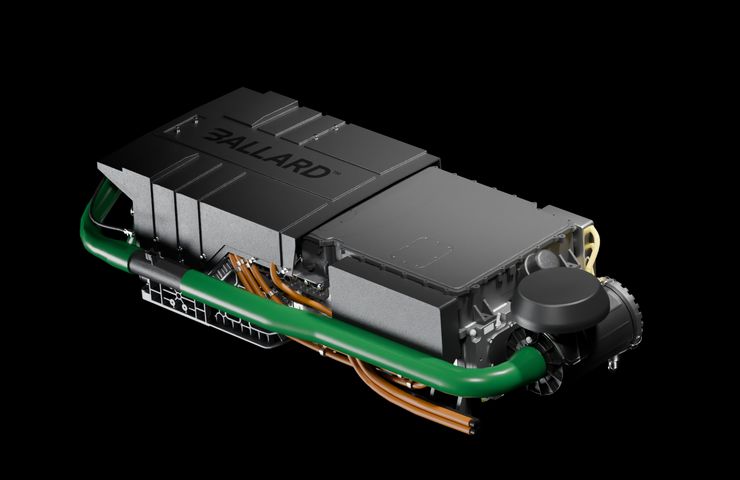
Ballard Power Systems has confirmed that its FCmove-SC fuel-cell engine will debut in series production within the new-generation Solaris Urbino 12 hydrogen transit bus. The announcement formalises a commercial step that many had anticipated since early demonstrations; it moves the FCmove-SC from development status toward routine deployment. This strategic collaboration between Ballard, a Canadian pioneer in proton-exchange-membrane (PEM) fuel-cell technology, and Solaris, a Polish manufacturer of innovative city buses, signifies a significant advance in sustainable public transport solutions aimed at reducing urban emissions.
The FCmove-SC engine is designed for transit applications, delivering up to 80 kW of rated power with a peak efficiency of 57 percent. Those specifications place the unit squarely in the powerband that many city operators seek for medium-duty transit routes. The new engine boasts a specified operational life exceeding 25,000 hours, making it a potentially reliable option for metropolitan transit systems. It supports freeze-start operation down to −30°C, a capability operators in colder climates will note. In addition, the system integrates diagnostic capabilities, providing operators with crucial maintenance data to minimise downtime.
The announcement occurred within the broader context of sustainability-focused transport policies across Europe, which are increasingly stringent regarding emissions. Against that regulatory backdrop, vehicle manufacturers are diversifying their portfolios. In recent years, Solaris has expanded its range of hydrogen-powered public transport solutions, introducing the Urbino 12 hydrogen in 2019, along with the articulated Urbino 18 hydrogen model. The new-generation Urbino 12, equipped with Ballard's engine, is intended to enhance operational efficiency while accommodating the evolving requirements of urban mobility.
Technical Integration and Operation
The hybrid electric architecture of the Urbino 12 hydrogen involves a centrally mounted traction motor, with a 250 kW motor facilitating propulsion. Power for the drivetrain is generated by the FCmove-SC fuel cell, while a supporting battery handles short-duration power peaks and captures energy through regenerative braking. That combination allows the fuel cell to supply steady baseline power and the battery to smooth transient loads. The arrangement aims to ensure a consistent power supply during normal operations and to optimise the vehicle's efficiency without compromising performance.
Integrators emphasise packaging and serviceability. The FCmove-SC's dimensions and service access points were designed with transit maintenance in mind, and Solaris has tailored its vehicle architecture to house the fuel cell alongside batteries and hydrogen tanks. Regenerative braking contributes to energy recovery. Meanwhile, the battery provides torque fill for acceleration and absorbs peak loads, allowing the fuel cell to operate nearer its optimum efficiency more of the time. The result is a system designed for daily duty cycles typical of urban bus operations.
As noted by industry analysts, the shift towards hydrogen fuel-cell technology is not without challenges. A reliable supply chain for hydrogen, competitive refuelling infrastructure, and addressing ongoing operational costs relative to battery-electric buses remain key hurdles. Hydrogen does present specific advantages, particularly for longer routes or overnight operations, where quick refuelling and energy density can matter. However, lifecycle assessments often reveal that battery-electric solutions currently offer lower total costs of ownership in many scenarios.
Strategic Implications for Ballard and Solaris
For Ballard, this relationship deepens its foothold in the European transit market. The integration with Solaris facilitates recurring demand for fuel-cell engines, which are crucial in scaling operations and enhancing revenue streams. The companies have recently extended their agreement to supply fuel-cell engines through 2029, indicating an ongoing commitment to advancing hydrogen technology in public transport. That multi-year horizon gives both parties a runway to refine integration, improve service networks and gather operational data.
On the other hand, Solaris' choice of the FCmove-SC engine aims to leverage the engine's compactness and serviceability, separate from the industry's broader movements toward electrification. The carrier of that choice is clear: Solaris is betting on multiple zero-emission pathways rather than a single technical solution. It is notable that while hydrogen has unique benefits, it must compete vigorously against well-established battery-electric technologies which are continuously evolving in terms of efficiency and infrastructure support. Fleet planners will need to weigh those trade-offs when setting long-term procurement strategies.
Long-Term Outlook
The recent announcement does not mark the end of challenges but instead heralds the beginning of a crucial phase in the development of hydrogen-fueled transportation. Operators will be watching for real-world performance metrics: uptime, refuelling cadence, maintenance intervals and total operating costs. As public transport systems align with regulatory frameworks aimed at achieving emissions targets, the viability of hydrogen buses will increasingly depend on overcoming hurdles associated with hydrogen production costs, availability, and infrastructure deployment.
In conclusion, Ballard's FCmove-SC is set to play a pivotal role in Solaris's next-generation urban buses, reflecting a growing trend towards adopting cleaner energy solutions in public transport. Industry stakeholders will be watching closely to see how operational data unfolds and reinforces the strategic positioning of both companies in the rapidly evolving hydrogen transportation market. The coming months and years should reveal whether the technology achieves the reliability and cost metrics operators require for broader scale adoption.