Airbus and MTU Partner on Hydrogen Fuel Cell Technology for Aviation
Airbus and MTU Aero Engines plan a joint venture to develop a hydrogen fuel-cell propulsion system for cleaner aviation, set for operation in 2027.
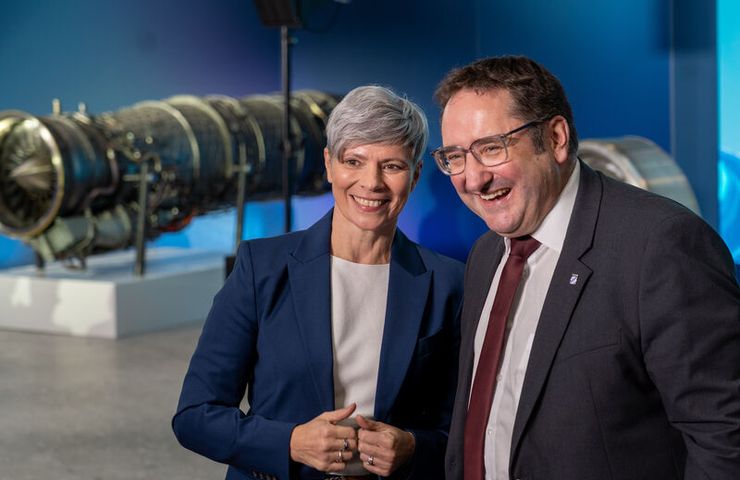
Airbus and MTU Aero Engines have announced plans to establish a non-binding joint venture to develop and commercialize a fully electric hydrogen fuel-cell propulsion system for aviation. The partners present the move as a targeted effort to enable cleaner regional and short-to-medium range air travel, at a moment when pressure to decarbonize the aviation sector is growing. By combining aerospace manufacturing scale with specialist propulsion know-how, the companies aim to tackle one of the industry’s most persistent challenges: reducing emissions without compromising range, weight or reliability.
The joint venture follows a memorandum of understanding signed in June 2025 and is expected to begin operations in 2027, subject to regulatory approvals and employee-consultation processes. That schedule anchors the collaboration to a clear near-term timeline while leaving formal clearance dependent on outside authorities. Airbus brings broad aircraft systems experience; MTU contributes propulsion engineering and fuel-cell development expertise. Together, they say, the partnership will move beyond research into a pathway for industrialization and commercialization.
At the heart of the project is a hydrogen fuel-cell system designed to generate electricity through the electrochemical reaction of hydrogen and oxygen. The electrochemical reaction produces water at the point of use, while upstream emissions and other system effects depend on hydrogen production, storage, and aircraft integration. This chemical pathway allows aircraft to produce onboard electric power without the combustion-related emissions associated with conventional engines. It is an approach that shifts the problem from combustion control to energy storage and system integration.
Technically, the design centres on storing liquid hydrogen in insulated cryogenic tanks and feeding that fuel to state-of-the-art fuel cells. Those cells convert hydrogen into usable electrical energy to drive electric motors and turn propellers. The modular architecture under discussion seeks to integrate fuel cells, tanks, power electronics and controls into a package suitable for regional aircraft. Still, major engineering questions remain, notably the mass and volume penalties of cryogenic storage and how to maintain system reliability across flight regimes.
Beyond engineering, the undertaking highlights the broader infrastructure needs that accompany hydrogen aviation. Liquefaction facilities, secure transport and airport refuelling systems are required at scale. Each of those elements represents a non-trivial cost and logistical challenge. Airports, fuel suppliers and regulators would need to coordinate to make refuelling routine rather than exceptional.
What It Means
For the aviation landscape, the partnership signals a step toward establishing standardized hydrogen infrastructure and, potentially, reducing the industry's carbon footprint. If the venture moves from demonstrator to production, it could offer airlines an alternative propulsion pathway for regional routes that are currently difficult to decarbonize. Airbus and MTU are framing their operational plans around producing a fuel-cell propulsion system; in doing so, they position themselves to shape standards, supplier chains and certification pathways should the technology scale.
The significance goes beyond a single product. Standardization could lower costs and ease the integration of hydrogen systems across multiple aircraft types. That outcome depends on industrial uptake, regulatory alignment and the emergence of reliable supply chains. Each step will require sustained investment and coordination among manufacturers, airports and energy providers.
The Bigger Picture
Both firms are leveraging existing concepts such as MTU’s Flying Fuel Cell, which packages fuel cells, hydrogen storage, electric motors and controls into a modular layout for regional aircraft. The concept is intended to reach Technology Readiness Level 4 and to provide a scalable model that can evolve toward commercial applications. Reaching TRL 4 would indicate system validation in a relevant environment, a key milestone on the path to flight testing and certification.
European research and funding structures are already involved. The Clean Aviation Joint Undertaking is cited as reinforcing the project’s alignment with EU goals for cleaner flying, and the HEROPS project (Hydrogen-Electric Zero Emission Propulsion System), financed by the EU, aims to deliver a demonstrator. That demonstrator represents a concrete step toward validating how a hydrogen-electric propulsion chain behaves under controlled conditions before any airborne trials are attempted.
Coordination with EU-backed programmes can help bridge research to industry, but it does not remove the remaining hurdles. Technical validation must be followed by supply-chain development, manufacturing scale-up and a robust certification pathway tailored to hydrogen powertrains.
A Critical Analysis
Despite the positive framing, the road to hydrogen aviation is uncertain. Local government backing in Bavaria positions Munich favorably as a potential headquarters, yet no final decision has been publicized regarding the joint-venture location. That lack of resolution complicates planning for regional investment, workforce training and the siting of production facilities. Companies and public authorities will need to reconcile competing regional priorities before construction or hiring plans can proceed.
Cost is another major variable. Achieving large-scale hydrogen production at a competitive price remains a significant hurdle. Unless production, distribution and liquefaction costs fall appreciably, hydrogen will struggle to compete with existing jet fuels on a total-cost basis. Any credible pathway to adoption therefore requires a full lifecycle assessment — from production through distribution, storage and in-flight use — to confirm that emissions reductions are real and not simply shifted elsewhere in the energy system.
Operational considerations also deserve scrutiny. Airports would need new safety protocols, crew training and handling procedures for liquid hydrogen. Supply logistics would have to adapt, with secure, predictable refuelling windows to support airline schedules. These adjustments would affect not only aircraft manufacturers but also ground handlers, fuel suppliers and regulators.
Looking ahead, a substantial push for hydrogen-powered flights could ripple beyond aerospace. It may accelerate investment in hydrogen infrastructure, including airport refuelling systems, and prompt changes in the logistics of hydrogen production and transportation. Suppliers to the aviation industry, and to related sectors such as energy storage and cryogenics, could see new demand patterns emerge. Ultimately, the partnership’s impact will depend on how quickly technical milestones are met, how economically hydrogen can be produced and moved, and how governments and industry align on standards and incentives. If those pieces fall into place, the collaboration between Airbus and MTU may help lay the foundation for a different model of sustainable transport.