Atlas Copco Declares Hydrogen Infrastructure Tech 'Deployment-Ready' for Scalable Mobility Solutions
Atlas Copco signals green light on its hydrogen compression and liquefaction tech, calling it 'deployment-ready' for mobility-scale rollouts and decarbonization goals.
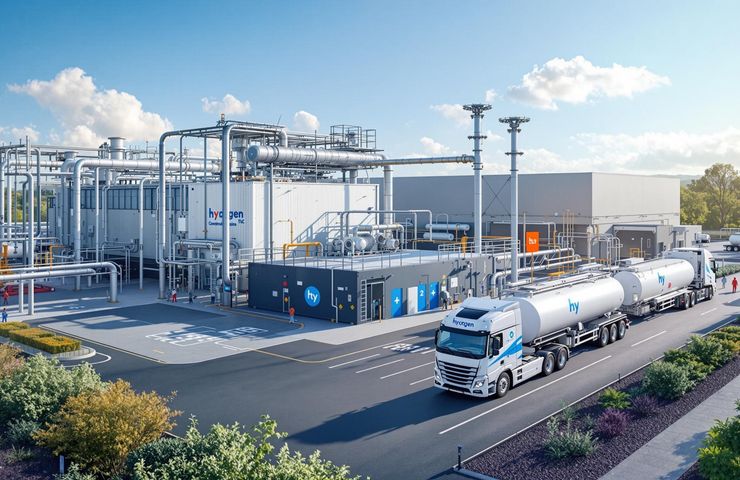
Hydrogen infrastructure has always been seen as the missing puzzle piece in the clean energy picture—but not anymore. On July 2, 2025, Swedish tech giant Atlas Copco announced that its entire line of hydrogen compression and liquefaction systems is all set for global deployment. What does that mean? The roadblocks that once stalled hydrogen mobility may finally be a thing of the past.
Cracking the Code on Compression and Liquefaction
Here’s the deal: while fuel cell tech and electrolyzers have been making headlines, the heavy lifting behind the scenes—namely, hydrogen infrastructure—has struggled to keep pace. But according to Daniel Patrick, Market Segment Manager for LNG & Hydrogen, and Alfonso Peschiera, VP of Gas and Process at Atlas Copco, that’s changing fast. Their fully tested, scalable, and modular systems are ready for real-world action—and built with transport and industrial sectors in mind.
- H2Y and H2P hydrogen compressors built for fast vehicle fueling and high-grade industrial use
- Centrifugal compressors and turboexpanders for high-volume liquefaction jobs
- BOG (Boil-Off Gas) recovery units to keep stored hydrogen from going to waste
Every piece of equipment meets global safety standards and runs with rock-solid uptime—an absolute must if we’re serious about taking hydrogen out of the lab and onto roads, rails, and shipping lanes.
From LNG to Hydrogen: Tweaking What Already Works
Atlas Copco didn’t start from scratch. Drawing on decades of experience in industrial gases and liquefied natural gas (LNG), the company fine-tuned existing tech to meet hydrogen’s unique challenges—like its tendency to leak and its super-lightweight molecular profile. The result? Compact, powerful systems built for serious work, featuring cutting-edge touches like magnetic bearings and closed-loop cooling. In Peschiera’s words: “Efficiency and reliability aren’t obstacles anymore—they’re selling points.”
Why Hydrogen Mobility’s Moment Might Be Now
The world’s scrambling to meet decarbonization goals, and clean transportation is a major hurdle—especially for heavy-duty sectors like trucking, shipping, and rail. These vehicles need fast refueling, long range, and high energy output. That’s where hydrogen mobility shines. The real kicker? Until now, the lack of backbone infrastructure made scaling impossible. But with Atlas Copco's gear ready to roll, that bottleneck may finally be cleared.
Their plug-and-play systems—delivered in compact, containerized packages—make setup times faster and simpler, especially in areas that have been tough to reach. From production to the pump, this tech lines up the whole supply chain.
Big Picture: What This Means for the Industry
This isn’t just about hardware—it’s about a ripple effect across the entire green energy landscape:
- Speeds up the rollout of hydrogen fueling stations, crucial for commercial fleets
- Supports industrial decarbonization through grid injection and hydrogen supply chains
- Reduces losses during storage with advanced BOG recovery systems
- Encourages investment across upstream and downstream hydrogen tech
Still, it’s not plug-and-play across the board. As Patrick points out, “Each component solves a piece of the puzzle, but the real win comes when everything works together.” Challenges like regulatory grey zones, workforce training, and plugging all this into existing power grids still need attention.
The Chicken-and-Egg Problem Might Be Solved
Let’s face it—hydrogen mobility has been stuck in a loop: no vehicles without infrastructure, and no infrastructure without vehicles. But that loop might just be broken. Atlas Copco believes we’ve crossed a threshold: the technology is here, it works, and it’s ready to scale. This could be the kickoff point for serious infrastructure expansion—built from the ground up and aimed straight at a zero-carbon future.
As countries race to hit net-zero targets, whoever can deliver real-world, industrial-grade solutions fastest—may ultimately guide the pace of decarbonization more than any policy or auto manufacturer.
“This isn’t R&D anymore. It’s ready,” said Peschiera. “That’s the real news.”
About the Company
Atlas Copco, founded in 1873 and based in Sweden, is a global leader in engineering technologies for compression, vacuum systems, and industrial applications. Through its Gas and Process division, it delivers high-performance solutions for both hydrogen and LNG systems across more than 180 countries, backed by a vast support and service network.