NTU artificial leaf advances green hydrogen production from seawater while tackling hydrazine contamination
A team at NTU has developed an artificial leaf that uses sunlight to produce hydrogen from seawater and simultaneously degrades toxic hydrazine using a perovskite photocathode and oxide catalyst.
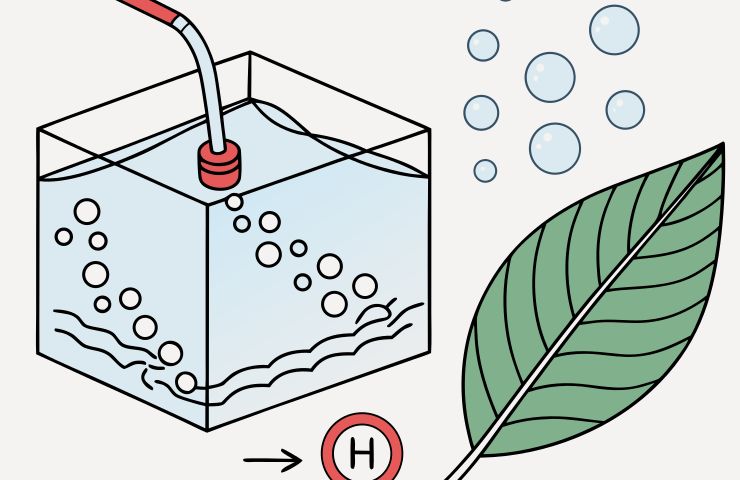
Researchers at Nanyang Technological University in Singapore have introduced an innovative self-powered artificial leaf that harnesses sunlight to generate hydrogen from electrolytes found in seawater, all while breaking down hydrazine, which is a toxic industrial chemical. This clever little device combines photoelectrochemical technology—a lead-halide perovskite photocathode paired with an iron-cobalt-chromium oxide catalyst—into one sleek module that tackles both green hydrogen production and wastewater treatment in a single swoop.
What’s cool about this system is that it doesn’t need an external power source; it gets its energy directly from sunlight. When sunlight hits the perovskite photocathode, it kicks electrons into high gear, sending them racing to the cathode-electrolyte interface where they work their magic to convert water into hydrogen gas. At the same time, those “holes” left behind in the photocathode drive oxidation at the anode, but instead of the usual energy-guzzling oxygen evolution reaction, this nifty device goes for hydrazine oxidation. This clever move not only reduces energy needs but also sidesteps the harmful chlorine production that often messes things up in direct seawater electrolysis.
Lessons from natural photosynthesis
The idea of creating an artificial leaf dates back to the groundbreaking discovery of light-driven water splitting back in the 1970s by Fujishima and Honda, using a titanium dioxide photoanode alongside a platinum cathode. Since then, research has focused on finding materials that can absorb more light, operate more efficiently, and do so without needing bias. In the last few years, perovskites have emerged as rock stars in photovoltaic and solar-fuel applications because they can be fine-tuned and absorb visible light like champs. The team at NTU aims to overcome the traditional weaknesses of perovskites—like their susceptibility to water and salt—by using advanced encapsulation techniques and corrosion-resistant catalysts.
Innovative dual-function design
Under the guidance of Professor Lydia Helena Wong and lead author Mahmoud G. Ahmed, the NTU team has crafted an iron-cobalt-chromium oxide catalyst that not only promotes hydrazine oxidation into nitrogen and extra hydrogen but also detoxifies this probable carcinogen (commonly used in aerospace and chemical domains). By merging pollutant oxidation with solar hydrogen generation, the device offers a stellar two-for-one option that could prove incredibly valuable at industrial sites where hydrazine waste is common and sunlight is abundant.
Lab-scale performance highlights
In tests conducted under ideal conditions with one-sun illumination, this artificial leaf showed a consistent photocurrent density of 25 mA cm−2 and held its ground for three full days. An upscaling trial even managed to drop hydrazine levels from 0.5 M to below 1 ppb in about 30 hours, outdoing many conventional treatment methods. Other reports highlight a hydrogen evolution rate of roughly 466 μmol cm−2 h−1, although we’re still waiting for the fine print on solar-to-hydrogen efficiency and gas purity to come out.
Direct seawater challenges
Of course, working directly with seawater isn’t without its hurdles. Chloride ions can wreak havoc, forming corrosive chlorine or hypochlorite, which can mess up catalysts and degrade membranes. Plus, seawater often comes with its own collection of suspended solids and pesky organisms, and real-world industrial waste can introduce a mix of unpredictable contaminants. NTU’s design helps mitigate some of these issues by steering the anodic reaction towards hydrazine oxidation, but they’ll need to run continuous-flow tests with actual wastewater to really prove how it holds up over time.
Stability and sustainability considerations
Keeping the perovskite stability intact in salty conditions is absolutely key. Since lead-based semiconductors can break down in the presence of moisture, it’s crucial to make sure that hermetic encapsulation is in place to stop any lead from leaking into the environment. The NTU team plans to embark on multi-week studies to check for any lead leaching and conduct lifecycle assessments to ensure that the materials used don’t negate the environmental perks of pairing hydrogen generation with pollutant cleanup.
Strategic context in Singapore’s energy transition
Singapore’s national hydrogen strategy is all about boosting innovation in green hydrogen production, with an emphasis on solar energy and coastal resources. Given the city-state’s limited freshwater reserves, desalination and water purification can get pricey, so solutions that can tap into seawater are particularly appealing. While this artificial leaf is still in the proof-of-concept stage, it aligns perfectly with the government’s vision to create modular hydrogen supply chains and establish hydrogen refueling stations for maritime and industrial applications.
The Energy Research Institute @ NTU (ERI@N) is exploring potential partnerships with government and industry players to transition toward pilot-scale reactors. Although no formal commercialization agreements are in place yet, this research fits squarely into NTU’s broader efforts to push clean energy forward.
Bridging lab and market
To turn this innovation into a commercially viable product, NTU is chatting with chemical and maritime businesses about designing pilot reactors for on-site hydrogen production, particularly in chemical parks or shipyards. These modular setups could link right into developing hydrogen infrastructure, supplying fuel to coastal vessels or local hydrogen-powered data centers. Of course, rolling out this technology will demand thorough field testing, clear service protocols for regenerating catalysts, and compliance with regulations around hydrazine handling and any lead-based components.
Economic and regulatory outlook
The global hydrogen scene is changing fast. With electrolyzer costs dropping and the expansion of renewable grids, green hydrogen prices are becoming more accessible. However, coastal areas face an extra challenge due to their lack of abundant purified water supplies. Integrated systems that convert seawater to hydrogen while also treating wastewater could create new revenue opportunities by turning waste into fuel. Regulators, particularly in port areas, will need to update discharge and safety standards to allow for these dual-function devices, finding a balance between strict pollution controls and incentives for on-site clean hydrogen generation.
Road to industrial decarbonization
Combining wastewater treatment with hydrogen fuel creation is a shining example of a broader trend in industrial decarbonization: turning liabilities into valuable assets. As hydrogen fuel cells gain popularity in sectors like heavy-duty transport, shipping, and backup power, the demand for low-carbon hydrogen and sustainable cleanup technologies will surely rise. Integrated devices like NTU’s artificial leaf could find niche markets—think remote coastal chemical facilities or offshore platforms—where leveraging seawater for electrolysis and remediating pollutants can yield both environmental improvements and operational benefits.
Moving from lab work to an industry staple will involve navigating material science, engineering scalability, financial modeling, and the regulatory maze. Ongoing research will need to focus on enhancing catalyst durability, perfecting the encapsulation of perovskites, and developing continuous-flow reactors that can keep performing well for extended periods. Pairing these systems with hydrogen storage and separation technologies will be vital for capturing, compressing, and delivering hydrogen for downstream uses, like hydrogen fuel cells or ammonia production.
NTU’s artificial leaf shines a light on the potential of photoelectrochemistry—not just for generating hydrogen but also as a platform for transforming waste into something useful. With ongoing engineering efforts, lifecycle assessments, and strategic collaborations, this technology may well become a cornerstone of the emerging hydrogen infrastructure, offering a vision of a decentralized, zero-emission future where clean energy generation and environmental restoration go hand in hand.