Hydrogen news
New law in Germany to tighten fracking restrictions
Hydraulic fracturing will be permitted only in certain areas of the European nation. While fracking has not yet been fully banned in Germany, under a new law, the controversial mining practice will be heavily restricted and banned in certain regions of the country in order to protect the environment, health, and drinking water and would also lead to overall stricter rules for conventional oil and gas production. Hydrofracturing would be banned in national parks and nature reserves. In addition to national parks and nature reserves, the draft laws would also prohibit the use of fracking at dep…
Hydraulic fracturing will be permitted only in certain areas of the European nation.
While fracking has not yet been fully banned in Germany, under a new law, the controversial mining practice will be heavily restricted and banned in certain regions of the country in order to protect the environment, health, and drinking water and would also lead to overall stricter rules for conventional oil and gas production.Hydrofracturing would be banned in national parks and nature reserves.
In addition to national parks and nature reserves, the draft laws would also prohibit the use of fracking at depths lower than 3,000 meters (10,000 feet). Hydrualic fracturing (commonly called fracking) is a drilling process utilized to extract oil or shale gas by injecting a high-pressured mixture of water, chemicals, and sand below the ground to breakup rocks to obtain the hydrocarbons between rock layers.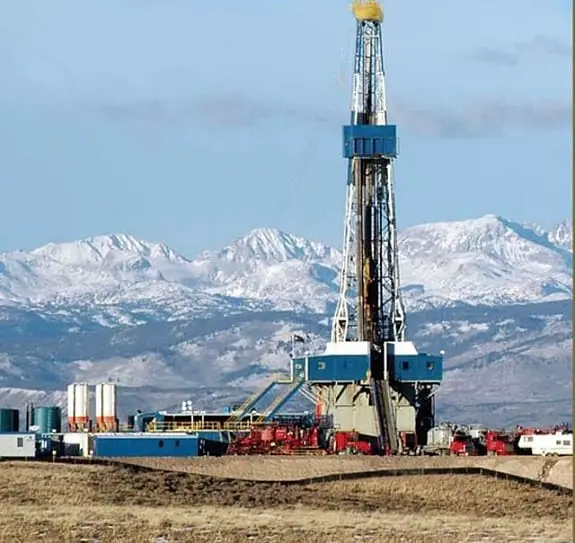 According to Steffen Seibert, a government spokesperson, the law will not allow anything that was forbidden in the past, but will prohibit much that was previously possible.
Even though fracking has never been used in the country in clay rock, shale, coal, and marl despots at depths shallower than 3,000 meters, until the draft law, hydraulic fracturing in Germany has been mostly unregulated.
According to Steffen Seibert, a government spokesperson, the law will not allow anything that was forbidden in the past, but will prohibit much that was previously possible.
Even though fracking has never been used in the country in clay rock, shale, coal, and marl despots at depths shallower than 3,000 meters, until the draft law, hydraulic fracturing in Germany has been mostly unregulated.
The primary goal of the new fracking law is to protect the environment and health.
Barbara Hendricks, the environmental minister, stated that she was happy that regulations have finally been decided for previously unregulated hydraulic fracturing practices and that the law will allow for “circumscribe fracking so that it no longer represents a danger to people or the environment. As long as the risks cannot be fully evaluated, fracking will be banned.” Additionally, Sigmar Gabriel, the Energy and Economy Minister, commented on the cabinet decisions and said it would provide “legal certainty” for both the industry and people. Gabriel explained that “Fracking can only be used in very restricted exceptional cases and only when the risks are controllable and answerable.” For months, Germany’s current coalition government under Angela Merkel has been working on drawing up the proposed rules for fracking. However, before it is signed into legislation, the draft law must first go before parliament where it is expected to cause notable debate.How was this article?
Thanks for the feedback!