HYScale Project Demonstrates PFAS-Free Electrolysers for Scalable Green Hydrogen Production
HYScale has demonstrated the first industrial-scale PFAS- and CRM-free electrolysis stack for green hydrogen, achieving critical cost and sustainability benchmarks for next-gen EU energy systems.
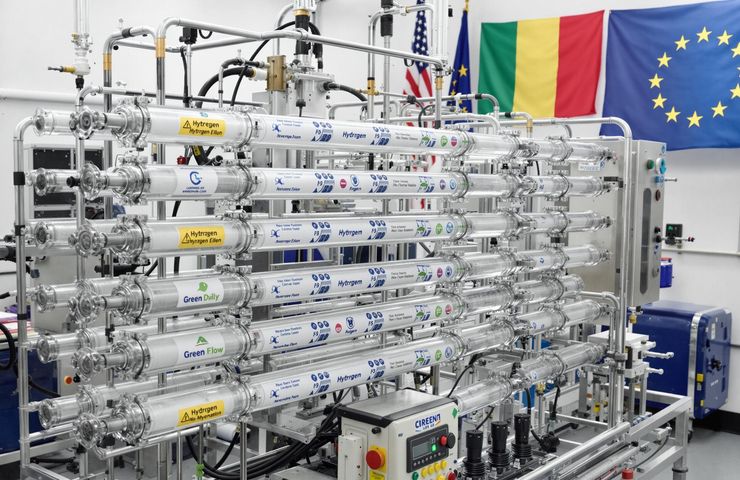
Major Milestone for European Green Hydrogen
Big news out of Europe: HYScale, a team effort backed by the EU, has just hit a game-changing milestone for green hydrogen. They’ve pulled off something that’s been out of reach—developing an industrial-scale PFAS-free electrolyser that ditches both critical raw materials (CRMs) and harmful PFAS chemicals. Their 100 kW single-stack prototype has now been successfully tested under conditions that mirror real-world industry. This isn’t just lab magic—it’s the kind of breakthrough that pushes clean hydrogen production closer to everyday reality and keeps Europe right on target with its climate-neutral vision.
With support from the Clean Hydrogen Partnership and under the umbrella of REPowerEU, the HYScale project is directly addressing the big stuff: lowering costs, reducing reliance on scarce or risky materials, and slashing environmental impact. And here’s the kicker: by kicking PFAS and CRMs to the curb, they’ve hit a major cost target—getting production costs down to just €400/kW. That’s a pretty big deal when you’re thinking about ramping this tech up across an entire continent.
AEM Electrolysis Without the Usual Trade-Offs
What made this leap possible? It’s all about the underlying tech—specifically CENmat’s AionFLX™ membrane platform. This innovation is not only PFAS-free, it's also made from recycled and bio-based materials. Tested in 0.1M KOH for over 1,000 hours, the membrane proves you don’t need to sacrifice performance to go green. It delivers high conductivity and solid durability in smaller, more efficient stacks. And with a simpler design—fewer machining steps, no flow fields—the tech is faster and cheaper to produce, making large-scale deployment a much smoother ride.
Key project partners like Bekaert, DLR, and CNR have played major roles in pushing this forward. Bekaert’s team, for instance, managed to swap out pricey nickel layers in their bipolar plates for more budget-friendly materials. Meanwhile, DLR is streamlining the cell assembly process—both moves that are helping HYScale reach the high readiness levels needed for commercial-scale deployment.
From Lab to Real-World Integration
The real value of HYScale goes beyond fancy hardware—it’s about making this technology work, reliably, at scale. Their stack has shown high-current performance of over 2 A/cm², keeping those results consistent all the way from lab testing to full-stack systems. That kind of performance continuity is rare in the AEM water electrolysis world and marks a huge step forward for scaling things up throughout Europe.
More than just a one-off success, HYScale is laying the groundwork for deployment in hard-to-abate industries like steel, chemicals, and transport—places that still lean heavily on traditional, fossil-fuel-based hydrogen. The project also supports the EU’s Green Deal roadmap and aims to reinforce Europe’s energy independence by making its hydrogen supply chain more local, more sustainable, and easier to scale.
Strategic Implications: Cost, Security, and Climate
- Cost Competitiveness: Getting rid of PFAS and CRMs—often costly imports from unpredictable markets—not only makes the devices cheaper but also strengthens Europe’s supply chain independence.
- Environmental Benefit: Breaking free from PFAS isn’t just eco-friendly, it’s strategic. These substances are facing tighter EU regulations, so skipping them now avoids headaches down the road.
- Deployment Speed: With fewer rare materials and a lighter manufacturing process, this tech can scale faster—and without the usual supply hiccups.
Europe’s clean-tech players are paying close attention. As green hydrogen scales up through REPowerEU, HYScale is helping position European innovators as frontrunners in cost-efficient, clean, and scalable electrolysis systems.
What Comes Next?
So, what’s the next chapter? While this 100 kW prototype proves a lot, the big goal is to stretch that performance to industrial grades—multi-megawatt or even gigawatt scales. There are still real-world tests ahead to confirm just how durable and competitive this tech will be, especially when stacked up against cheaper fossil-produced hydrogen, which still has a price edge in some markets.
But make no mistake—by dropping outdated materials and cracking the cost problem wide open, HYScale isn’t just a research project. It’s a blueprint for the future. Expect to see pieces of this platform popping up in major EU demonstration projects soon—and very likely making their way to global markets where industrial players are craving scalable AEM water electrolysis solutions.
No, this isn’t the final stop on the road to clean hydrogen production. But it’s a giant leap forward—and it just made the destination feel a whole lot more within reach.