Hydrogen news
This multinational tech giant will use hydrogen fuel powered warehouse vehicles
The company believes that H2 will provide a sustainable option for keeping its forklifts running. Amazon is developing a strategy for the production of hydrogen fuel at its fulfillment and warehouse centers in order to power the forklifts used in those locations. The ecommerce and tech company has entered into a partnership with Plug Power for H2 production. Amazon and Plug Power have partnered so the latter company would install electrolyzer units at the fulfilment and warehouse center locations. The first unit will be installed for hydrogen fuel production at Amazon’s Aurora, Colorado locat…
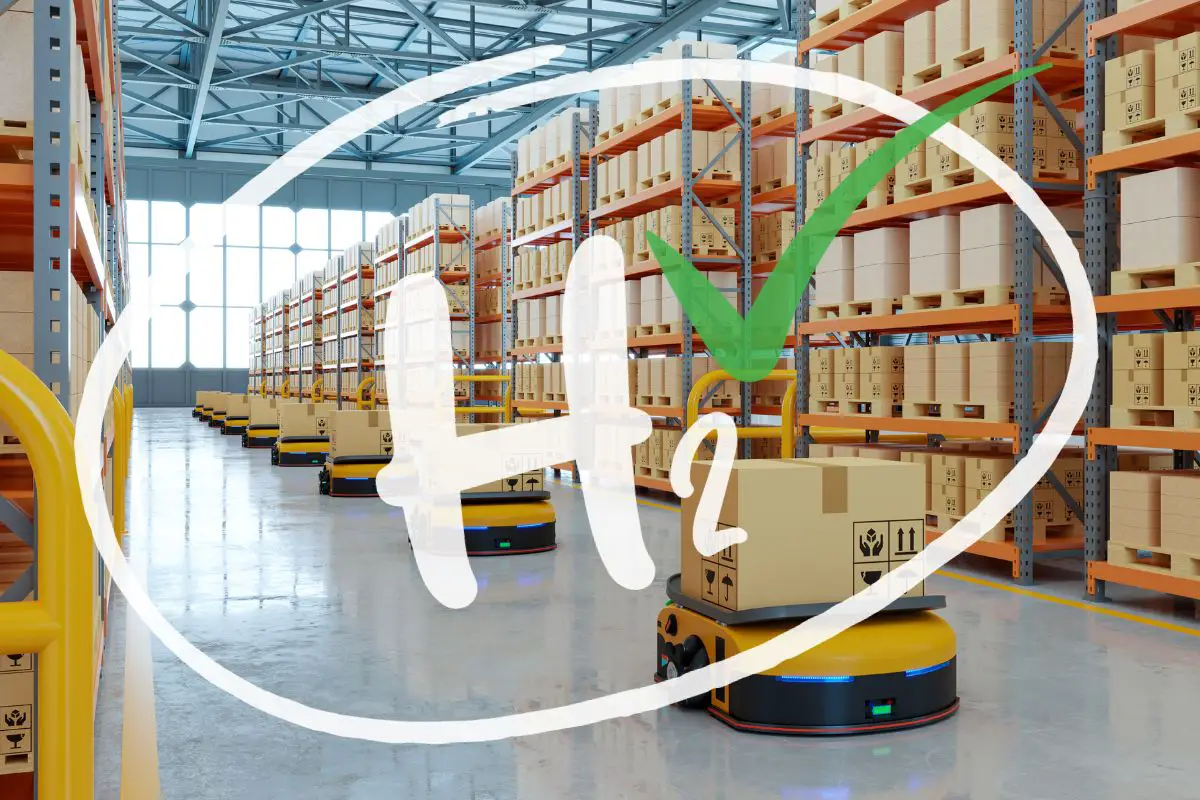
The company believes that H2 will provide a sustainable option for keeping its forklifts running.
Amazon is developing a strategy for the production of hydrogen fuel at its fulfillment and warehouse centers in order to power the forklifts used in those locations.The ecommerce and tech company has entered into a partnership with Plug Power for H2 production.
Amazon and Plug Power have partnered so the latter company would install electrolyzer units at the fulfilment and warehouse center locations. The first unit will be installed for hydrogen fuel production at Amazon’s Aurora, Colorado location. The H2 will be used for powering forklifts operating at the locations. At the Aurora location, there will be 225 H2-powered forklifts. That said, according to Plug Power, its electrolyzer has the capacity to power as many as 400 of the site’s fuel cell forklifts. Moreover, it expects to install the equipment at other locations as well. “On-site production will make the use of hydrogen even more energy efficient for certain locations and types of facilities,” said Amazon director of global hydrogen economy Asad Jafry in a recent news release on the subject. “Hydrogen is an important tool in our efforts to decarbonize our operations by 2040.”Amazon is choosing hydrogen fuel as an important component of its decarbonization efforts.
The reason is that H2 is used without producing any carbon emissions. Instead, it releases only water vapor. That said, to make it a truly clean option, it must also be produced without greenhouse gas emissions, as is the case when using an electrolyzer powered by renewable energy such as solar or wind. [caption id="attachment_62207" align="aligncenter" width="1422"] Credit: Photo by depositphotos.com[/caption]
Still, the environmental benefits remain difficult to measure. Furthermore, the benefits – and the extent to which the technology will be used in the first place – will be deeply reliant on the way policymakers and other large companies establish a hydrogen fuel supply chain.
Among the largest challenges to be overcome by companies like Amazon aiming to use H2 to decarbonize is in being able to obtain it in the first place. Among the biggest issues in this area is that a distribution infrastructure for H2 does not exist. Therefore, when quantities are needed at scale, it must be produced onsite. This is particularly true when the intention is to use green hydrogen, as most of the H2 currently produced uses fossil fuels, such as natural gas.
Credit: Photo by depositphotos.com[/caption]
Still, the environmental benefits remain difficult to measure. Furthermore, the benefits – and the extent to which the technology will be used in the first place – will be deeply reliant on the way policymakers and other large companies establish a hydrogen fuel supply chain.
Among the largest challenges to be overcome by companies like Amazon aiming to use H2 to decarbonize is in being able to obtain it in the first place. Among the biggest issues in this area is that a distribution infrastructure for H2 does not exist. Therefore, when quantities are needed at scale, it must be produced onsite. This is particularly true when the intention is to use green hydrogen, as most of the H2 currently produced uses fossil fuels, such as natural gas.
Plug Power provides electrolyzers
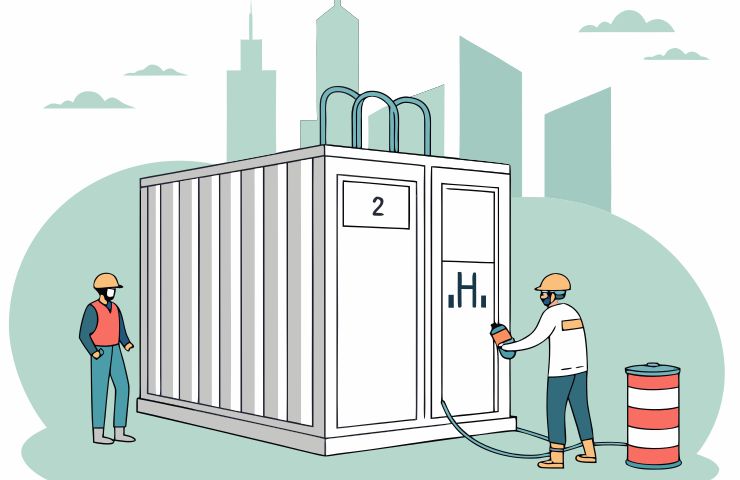
Plug Power is working to overcome the supply chain challenge associated with the use of H2 by installing electrolyzers that split water molecules into H2 and oxygen. From there, the key is to power this process using wind or solar energy so the resulting product will be clean. While that method is believed to be effective in decarbonizing energy, it remains a strategy that is more expensive than the production of hydrogen fuel that results in greenhouse gas emissions. It is for this reason that the widespread use of this type of energy production remains limited and will be highly reliant on policymakers and methods they implement for reducing the associated cost. For instance, the Biden administration is attempting to use tax incentives and billions in federal funding dollars for clean H2 production hubs in order to reduce the cost associated with green hydrogen fuel production and use. By choosing to produce the hydrogen fuel on site, Amazon, through Plug Power, the companies not only provide themselves with the opportunity to produce energy in as clean a method as they want (Amazon has chosen to power the electrolyzers with renewables), but also avoid the additional need for delivery that would have been the case if it was produced elsewhere. Plug Power has already delivered 17,000 fuel cells for forklifts since 2016. These deliveries have been made to more than 80 fulfillment centers across North America. It delivers most of those units via truck. Ready to test your knowledge on the most abundant element in the universe? Take our fun and engaging Hydrogen Quiz now! [forminator_quiz id="58712"]How was this article?
Thanks for the feedback!