Hydrogen news
Electric Vehicles and The H2 Battle to be Included in the Family
Navigating the Alphabet Soup of Vehicle Technology The term “Electric Vehicles” (EV) is so ubiquitous that one might lose the perspective that there are at least two types of EVs – EV-Bs (batteries) but also EV-FCs (fuel cells) that use hydrogen. Keep in mind that all EVs are ZEVs – which are “Zero Emission Vehicles” although there is also the HICEV – which has yet to be acknowledged as a ZEV and is not an EV. It is a Hydrogen Internal Combustion Engine Vehicle. So all EVs are ZEVs and all ZEVs are EVs but HICEVs have yet to be included as a ZEV. Got it? It seems we need a little ZEV equ…
Navigating the Alphabet Soup of Vehicle Technology
The term “Electric Vehicles” (EV) is so ubiquitous that one might lose the perspective that there are at least two types of EVs – EV-Bs (batteries) but also EV-FCs (fuel cells) that use hydrogen. Keep in mind that all EVs are ZEVs – which are “Zero Emission Vehicles” although there is also the HICEV – which has yet to be acknowledged as a ZEV and is not an EV. It is a Hydrogen Internal Combustion Engine Vehicle. So all EVs are ZEVs and all ZEVs are EVs but HICEVs have yet to be included as a ZEV. Got it? It seems we need a little ZEV equity to allow the HICEV to be considered part of the family even if ZEV purists might consider the HICEV to be the crazy uncle of this family.Let’s take a look at the real EV options here. There will be a test!
To help review the options, let’s first define EVs. All EVs – battery and fuel cell – are driven by electric motors. Yes - fuel cell vehicles are electric vehicles. How EVs supply the electricity to run those motors is where they differ. Most car makers now offer at least one model of electric vehicle that gets it's energy from a battery (EV-B). Disregarding the demand on the supply of electricity, as in California where owners are sometimes asked to not charge their car to help reduce the severity of brown outs. As well as disregarding environmental impact during the mining of the elements needed to produce the large electric vehicle battery. The electric vehicle that is powered by a battery is quiet, and during the time one is driving it, environmentally friendly. But is the electricity that charged the battery generated with 100 percent Green generators?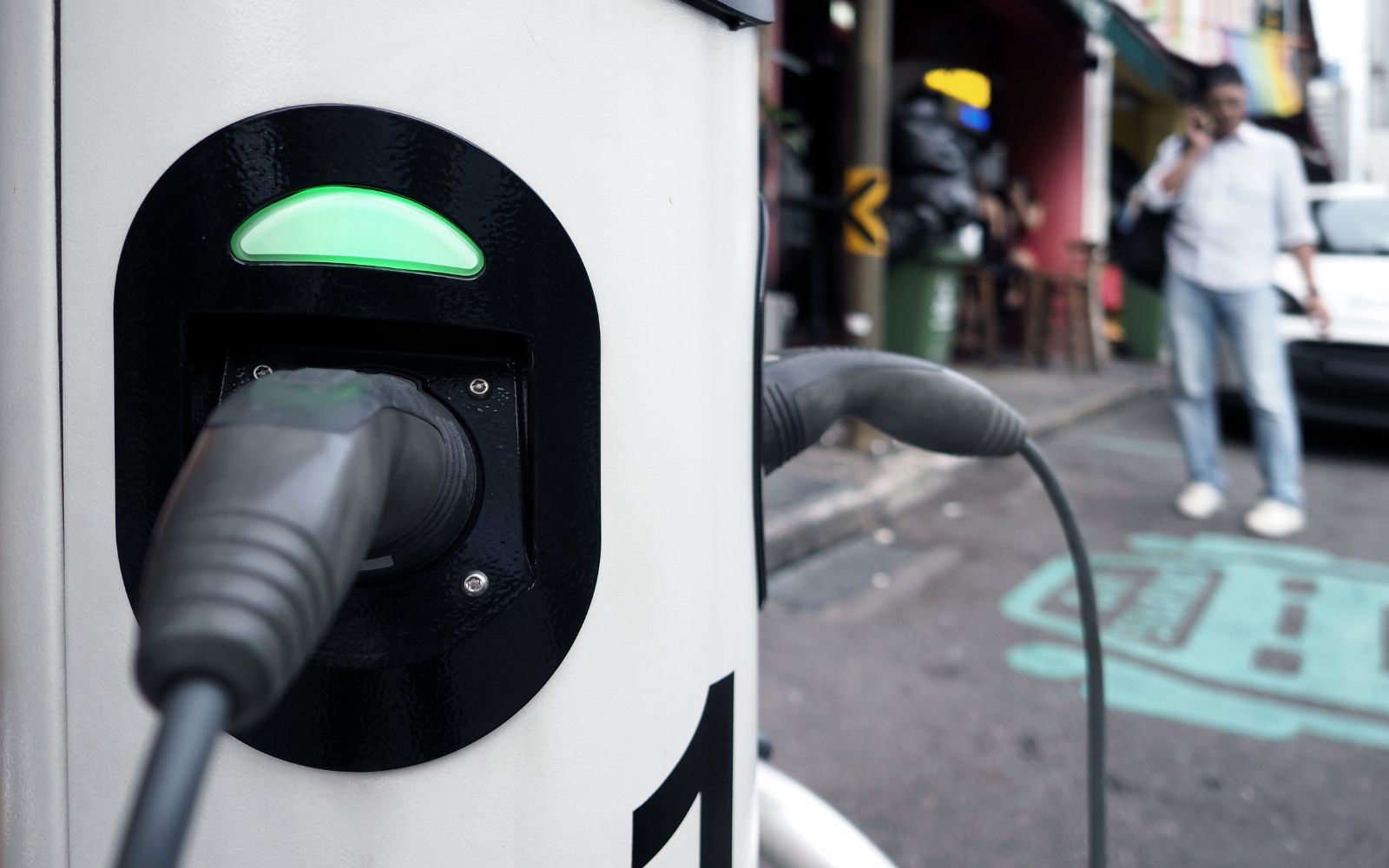
Do you know where that electricity has been?
Other than on the West Coast, most electricity is generated by burning fossil fuels. EV-Bs also have to be charged overnight, often with a home charging station that can run in excess of $1000 and if additional amperage service is needed at the residence – then add fee for the electrician. Add to that the economic and national security aspects of becoming even more dependent of foreign materials and suppliers. Additionally, recent studies has compared the costs of owning and operating an EV-B compared an internal combustion engine and the results seems to be, if not a toss-up, that its less expensive to own a “legacy” vehicle. All things considered, the EV-B might be a choice, but perhaps not the best choice.The ”other” EV – the EV-FC (fuel cell) - The basic science behind it
Fuel cells generate electricity through a chemical reaction between hydrogen (H2) and oxygen (O). If that chemistry sounds familiar – H2 and O, that’s because a few years ago we all learned that combining H2 and O makes water. Hydrogen is often referred to as “H2” because hydrogen is a “diatomic” element, meaning it requires two atoms to make up one stable hydrogen molecule. As the chemical reaction in the fuel cell produces electricity by combining the two (H2 and O), it also produces a by-product - water. Most will remember grade school experiments during which two electrodes separated water into two parts – hydrogen and oxygen. The fuel cell reverses that chemical process.
So, how does the EV-FC compare to the EV-B?
The EV-FC fuel cell is less than half the weight of the EV-B battery. Since most trips in private vehicles are less than 30 miles round trip, it seems only 10% of the battery charge of the 1000 lb battery is being utilized on most trips. The EV-B is always towing a barely utilized 1000 lbs weight to the grocery store with it, which is rather inefficient. The EV-FC requires about five minutes to refuel…about the same time as we now need to ‘fill-er-up” with gasoline. This is in comparison to the often overnight requirement to charge the EV-B battery. And EV batteries are almost exclusively made outside the U.S. or more specifically almost completely by China or Chinese companies.Why aren’t there more EV-FCs available?
There are at least two currently on the market in the U.S., one from Toyota – the Mirai, and another from Hyundai – the Nexo. Honda is launching a second attempt at an EV-FC in their 2023 lineup. But try and find one outside California. Not likely. The reason is access to hydrogen fueling stations. In order to drive a vehicle without a “Flux-Capacitor” processing a banana peel, one must have a more familiar fuel. With gasoline, one can usually gas-up within a few blocks in the city. And electric charging stations can usually be found somewhere in a city, although you may have to camp out in your car while charging. But no hydrogen.Some have suggested that the problem is a classic example of the chicken and the egg. This is not only incorrect, but too simplistic.
It is not an “either/or” conundrum but a response that requires an “And” – supply AND demand concurrently. Access to hydrogen - the “Supply” - is needed in order for anyone to use a EV-FC which requires that hydrogen. The EV that uses hydrogen must be present to show “Demand”. Only when both are present will the EV-FC be bought, and filled-up so it can be operated. EV-FC auto makers should be a prolific partner in this process to help offer greater opportunities to buy an EV-FC creating the “Demand” for hydrogen, and indeed partner with those who build hydrogen filling stations to provide the “Supply. By doing so, the public would see the EV-FC as the vehicle of choice and know they can fill-er-up with hydrogen fuel. This is not hard. But it does require a vision...investment for the hydrogen filling stations…and a set of keys to a new EV-FC. Learn More About the Coolest Concept Hydrogen Cars ... https://youtu.be/92B_IHbcb4IHow was this article?
Thanks for the feedback!