Kawasaki Heavy Industries and Transgaz Forge Strategic Hydrogen Partnership
Kawasaki Heavy Industries and Romania’s Transgaz have signed an MOU to explore hydrogen transport via pipelines, showcasing potential advancements for energy infrastructure in Europe.
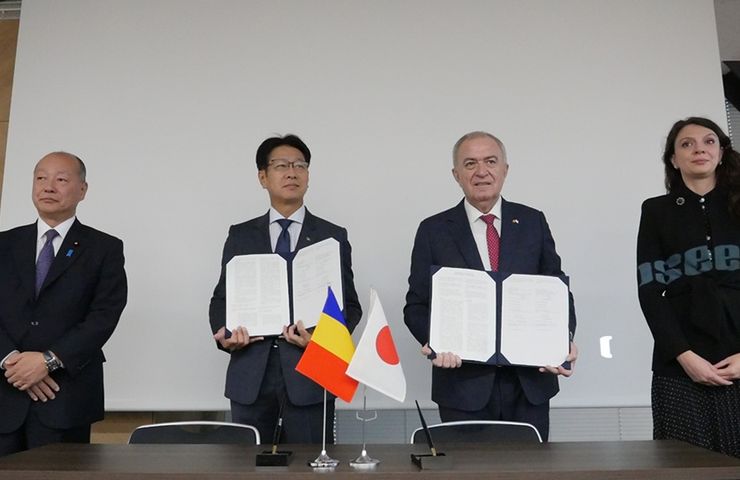
Kawasaki Heavy Industries (KHI) and Romania’s Transgaz have officially signed a memorandum of understanding (MOU), paving the way for a transformative step in hydrogen energy. The agreement sets out to explore the feasibility of transporting gaseous hydrogen through pipelines in Romania, a practical test of whether existing infrastructure can be adapted for a low-carbon fuel.
Hydrogen is widely promoted as a clean energy source. Yet it faces significant infrastructure challenges. Current methods of storing and transporting hydrogen can be complex and costly, raising concerns over efficiency and safety. KHI’s proposed answer is the KM Comp-H2 centrifugal hydrogen compressor, a design specifically tailored for pure hydrogen transport. The compressor’s capability to compress hydrogen efficiently could enable pipeline-based distribution at scales that have so far proved difficult to achieve.
What This Means for the Future
The implications are broad. Enabling hydrogen transport via pipelines will not only enhance energy autonomy for Romania but may also establish it as a regional hub for hydrogen distribution across Central and Eastern Europe. That shift would change logistics: instead of relying solely on trucked or shipborne delivery, producers and users could be connected by networked infrastructure.
If the hydrogen carried in those pipelines is produced from renewable sources, the move also aligns with global decarbonization goals. Industries that run on fossil fuels today could see a pathway to lower carbon footprints. At the same time, municipal and industrial planners would gain a new option for meeting energy needs without fully rebuilding supply chains.
The Technology: The Magic Ingredient
At the centre of the technical case is the KM Comp-H2 compressor. Utilizing high-speed impellers, the compressor can effectively increase the pressure of hydrogen gas, making it suitable for efficient pipeline transport. That capability matters because compression is a fundamental step in preparing gas for long-distance movement.
Engineering refinements in compressors are one way to make pipeline transport more practical for hydrogen. KHI’s design builds on previous research and demonstrations completed in Japan, and now it is headed to Romania to be tested in real-world conditions. Those demonstrations provide a technical foundation; the next phase will be about adapting the innovation to local networks, operating conditions and regulatory frameworks.
Strategic Partnerships and Insights
KHI is not venturing into this alone. The collaboration with Transgaz, Romania’s recognized operator of the National Gas Transmission System, brings vital infrastructure expertise and local knowledge to the project. Transgaz has already analysed various methods of integrating hydrogen into their existing gas pipeline systems, indicating active consideration of how hydrogen might fit alongside or within current operations.
This MOU is also backed by a public funding framework. Japan’s Ministry of Economy, Trade and Industry (METI) supports this initiative, reflecting a coordinated approach in which governmental programs underwrite experimental deployments alongside private-sector technology suppliers. That kind of support reduces financial barriers to pilot projects and helps move technical concepts into operational trials.
Zooming Out: The Bigger Picture
Beyond the immediate technical tests, the partnership touches on economic, political and environmental dimensions. For Romania, successful implementation of hydrogen transport could attract investment in production facilities and create job opportunities. Companies involved in construction, operations and maintenance could find new lines of business.
For Kawasaki, the project offers a chance to validate their technology in a new market. Proven performance in a European pipeline network could, in time, support broader commercial uptake and potentially increase sales of hydrogen compressors. That commercial validation is an important step for any equipment maker seeking to move from demonstration to market scale.
The initiative also corresponds with broader EU directives aimed at creating dedicated hydrogen infrastructures. Those directives seek to enable the seamless integration of renewable energy sources into existing frameworks. At the same time, the partnership admits its limits. The effectiveness of pipeline systems for hydrogen transport is yet to be fully tested on such a scale, and the commercial viability remains to be seen.
There are practical questions to resolve in pilots: how existing assets perform with hydrogen blends or pure hydrogen, how costs compare with alternative transport modes, and what regulatory adjustments are required. The MOU lays the groundwork for those tests but does not yet answer them.
Final Shot: A Path to Disruption
This initiative is more than an equipment trial. It creates pathways to change how energy is moved across borders and how regional supply chains are organised. As hydrogen grows in prominence as an energy vector, Romania’s efforts could serve as a case study for other nations contemplating similar transitions.
Taking proactive steps now may position countries better to meet future energy demands with cleaner options. The MOU between Kawasaki Heavy Industries (KHI) and Transgaz is an early, concrete move in that direction—one that will be measured in technical results, regulatory choices and commercial outcomes rather than rhetoric.