Spain greenlights Mantle8’s natural hydrogen exploration in the Pyrenees
Spain’s energy authority approved Mantle8’s Aralar I and II non-invasive natural hydrogen investigation permits across 960 km² in Navarra and the Basque Country, leveraging advanced geoscience tools to assess hydrogen production potential while navigating regulatory hurdles.
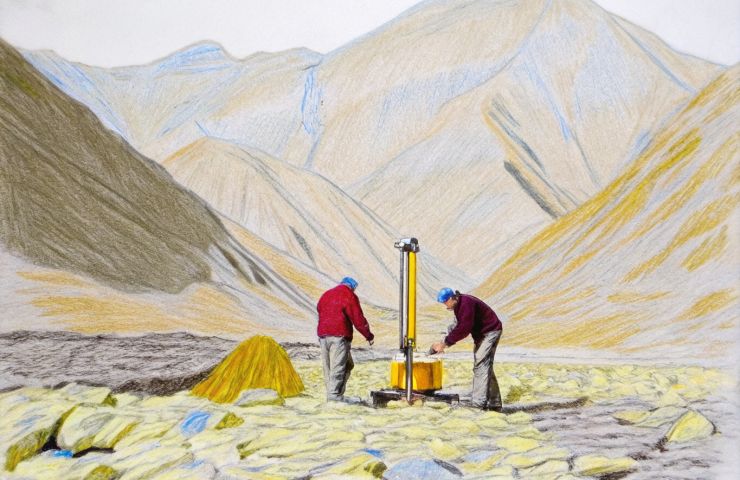
So, it looks like Spain is stepping up its game in the hunt for low-carbon energy. They've just handed over a couple of non-invasive investigation permits to Mantle8, a company based in Grenoble, for the Aralar I and II projects, which cover around 960 km² in Navarra and the Basque Country. This is exciting because it brings Europe a step closer to testing how we can produce hydrogen underground—without even having to drill a single well. It's kind of like a regulatory test lab that could really change the game for hydrogen infrastructure, especially on the southern side of the Pyrenees.
Quick take
With these new permits, Mantle8 has the green light to explore natural hydrogen and helium flows in areas that share a similar geology with their French operation in Comminges. Spain's energy directorate has done some creative thinking, adapting existing hydrocarbon regulations to allow for these low-impact surveys. Mantle8 plans to utilize its GeoLogix, HOREX, and APoGeH platforms to map out where these resources might be. At this stage, they’re not allowed to drill—just good old geophysical and geochemical surveys, along with some modeling work.
Tech at play
Now, let’s talk tech! GeoLogix combines seismic lines, well logs, and fault maps to create 3D models that pinpoint spots where hydrogen can be generated through a process called serpentinization. Then, there’s HOREX, which adds a time element, stitching together surface surveys to create 4D images of gas plumes moving around. As for APoGeH, it runs simulations on factors like seal integrity and trap capacity to minimize exploration risk—even before the first meter is drilled. It’s all about getting the lay of the land before making any big moves.
Regulatory gamble
This is where things get interesting. Spain's 2021 climate law put a stop to new hydrocarbon production, but it left a little wiggle room for hydrogen. By issuing these non-invasive permits, the Dirección General de Política Energética y Minas is testing the boundaries of those regulations without facing backlash. Mantle8’s permits represent one of the first attempts to treat natural hydrogen within a hydrocarbon framework, carefully treading the line to avoid any immediate environmental issues or legal headaches that usually come with drilling.
Strategic angle
The permits span across Navarra and the Basque Country, two regions buzzing with heavy industry and renewable energy initiatives, all connected to major markets. If Mantle8 manages to find stable hydrogen deposits, these areas could become hot spots for pilot production hubs to support sectors like steel, chemicals, and transport—all of which are eyeing clean hydrogen solutions. The company is shooting for appraisal wells by 2028 and aiming for commercial flows by 2030—assuming all goes well with surveys and regulations.
Context check
Now, let’s not kid ourselves—natural hydrogen exploration isn’t just some pie-in-the-sky idea. Early signs of it were spotted in places like Mali, Russia, and the U.S., although not many licenses followed. France took the lead in Europe with its pilot permits in Comminges, and now Spain’s cautious approach suggests an increasing acceptance that hydrogen fuel cells and geological exploration can play nice under strict climate regulations. That said, we still haven’t seen any large-scale wells proven in Europe, which keeps the tension alive.
Analyst’s take
To be honest, while Mantle8’s technology is cool, the real challenge ahead isn’t just about imaging. It’s going to be about demonstrating consistent hydrogen flows and sealing off-take deals. Sure, natural hydrogen could dodge some costs associated with electrolysis and grid limitations, but it'll still face project-finance hurdles similar to those facing green hydrogen. Investors are going to expect solid resource estimates and clear pathways for permits to set up production wells. Sure, Spain’s move for non-invasive licenses is a clever play, but we’ll need to see some hard data before we can claim this as a breakthrough in Europe’s clean hydrogen scene.
Whether these Aralar permits end up being major milestones in the industry or just footnotes in academic journals will depend on what's hiding underground. If sustainable hydrogen flows are confirmed, the southern Pyrenees could transform into a cross-border hub for clean hydrogen. If not, it’s likely that regulators will tighten their grip and halt any plans to expand into full exploration licenses. The upcoming survey results will be crucial in determining if this natural hydrogen venture was a smart move or another misstep down a blind alley.