Hydrogen News: Deutsche Edelstahlwerke’s Krefeld Plant Trials Green Hydrogen in Steel Furnaces
DEW’s Krefeld plant is piloting green hydrogen in reheating furnaces through EU-backed Hydreams and federally funded H2-HotRoll projects, testing impacts on steel quality and infrastructure to support industrial decarbonization.
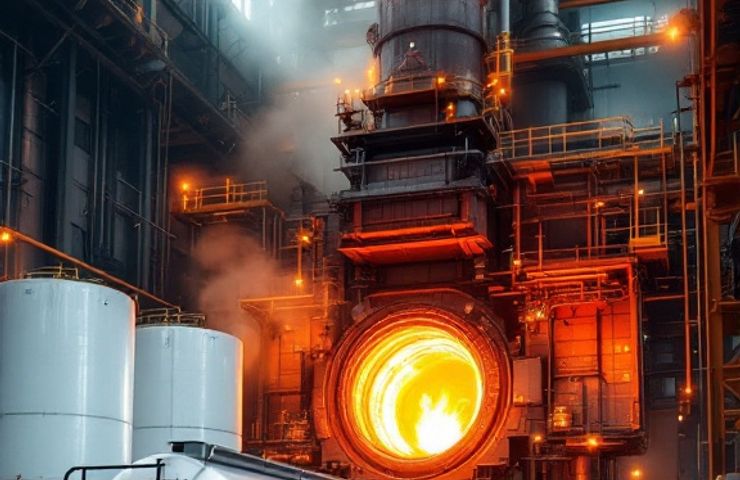
With the spotlight on decarbonizing heavy industry, the Deutsche Edelstahlwerke (DEW) plant in Krefeld has stepped up as a real-world testing ground for hydrogen-based heating since early 2023. Two exciting research efforts—Hydreams, funded by the European Union, and the federally backed H2-HotRoll initiative—are diving into how green hydrogen and hydrogen-natural gas blends impact steel quality and furnace performance in everyday conditions.
Part of the Swiss Steel Group, DEW is well-known for its high-grade stainless and engineering steels. The Krefeld site has been at the forefront of stainless steel production for over a century and is now kicking off some trailblazing pilot projects as part of Swiss Steel’s green steel strategy. This move aligns with a wider push across Germany and Europe to explore hydrogen production, storage, and infrastructure for industrial decarbonization.
EU-Funded Hydreams Focuses on Material Quality
Under the Hydreams program, researchers are putting hydrogen combustion to the test in a specially designed furnace to see how it affects the microstructure, surface condition, and mechanical properties of steel. Recently, they've been experimenting with different mixes of pure hydrogen and hydrogen-natural gas blends. DEW reports that hydrogen burns completely at high temperatures without harming surface quality or leading to unwanted hydrogen uptake, though they do caution that more analyses are still needed to fully confirm these promising findings.
H2-HotRoll Tackles Furnace Hardware
On the other hand, the H2-HotRoll project, part of Germany's 7th Energy Research Program, is teaming up DEW with the VDEh-Betriebsforschungsinstitut (BFI) to upgrade an existing reheating furnace. This furnace, carrying a load of about 2 MW, now operates using green hydrogen sourced from on-site tanks. The goal here is to create a comprehensive catalog of upgrades required for burners, valves, and control systems to accommodate high hydrogen shares.
Since there’s not yet a dedicated hydrogen pipeline, the fuel is currently delivered by truck and stored in two large tanks at the Krefeld facility. This temporary supply setup highlights the logistical hurdles that come with scaling up hydrogen production and distribution in industrial areas lacking mature infrastructure.
Early tests show that fueling the furnace with up to a 50:50 hydrogen-natural gas mix produces flames similar to those in traditional operations. However, using higher hydrogen ratios leads to shorter, hotter flames that place additional stress on burner components, possibly necessitating some redesign of the furnace chamber and measurement systems.
Each project has its budget in mind. The H2-HotRoll initiative received just over €1 million in funding, with about half of that covered by the federal program. While the exact funding details for Hydreams aren’t entirely clear, the support from the EU highlights its role in facilitating cross-border knowledge exchange.
Policy and Market Context
Germany's national hydrogen strategy, launched in 2020, aims for hydrogen to replace natural gas in areas where direct electrification is tough to pull off. Steel production stands out as a key candidate for this shift. But not everything’s smooth sailing; a recent audit from the Federal Court of Auditors revealed that several large-scale projects are either delayed or scaled down, raising concerns about whether we’ll meet the anticipated hydrogen demand. That’s where Krefeld’s pilot tests come into play, offering valuable insights that could shape policy and funding priorities.
Despite the tech's promise, green hydrogen is still pricier than natural gas. Factors like uncertain electrolyser capacity, renewable power availability, and competing uses—from refineries to heavy transport—complicate the landscape. Some steel manufacturers are even considering imported direct-reduced iron as a different route to cut domestic emissions.
Focusing on reheating furnaces in Krefeld is more of a step-by-step retrofit approach compared to traditional ironmaking processes like hydrogen-based direct reduction. This strategy leverages existing rolling mills and forging lines rather than investing in entirely new plants. This could be an attractive option for operators looking to achieve immediate emission reductions without breaking the bank on massive capital expenditures.
Krefeld boasts a rich industrial history. The city’s roots trace back to a steelworks founded around 1900, backed by August Thyssen and merging into Deutsche Edelstahlwerke in 1927. It has since transitioned from textiles to advanced stainless production. The current hydrogen trials continue this spirit of industrial innovation while actively engaging the local workforce in a low-carbon transition.
For the Swiss Steel Group, the success of the Krefeld trials could pave the way for broader implementation across its European facilities. Creating a detailed catalog of technical measures and cost estimates would help other steel plants as they look at incorporating hydrogen combustion into their reheating processes and could really kickstart the green steel market.
Looking to the future, securing a stable supply of green hydrogen through dedicated pipelines or regional hubs will be essential. Infrastructure investors, energy utilities, and policymakers need to team up to ensure there’s enough electrolyser capacity and transport networks in place. The outcomes of Krefeld’s projects might greatly influence those investment decisions by clarifying what modifications are necessary for industrial furnaces.
In the long run, the Krefeld experiments embody both the potential and the complexities of integrating hydrogen into steel production. They highlight how focused, smaller-scale research can help mitigate risks associated with larger transformations, paving a practical pathway for industrial decarbonization even as the sector grapples with issues like cost, infrastructure, and regulations.