Hydrogen Infrastructure Enhanced by Air Liquide's Australian Road Tankers
Air Liquide is strengthening its hydrogen infrastructure in Australia by partnering with Marshall Lethlean and CIMC Trailers Australia to deploy certified hydrogen road tankers for safe, scalable transport.
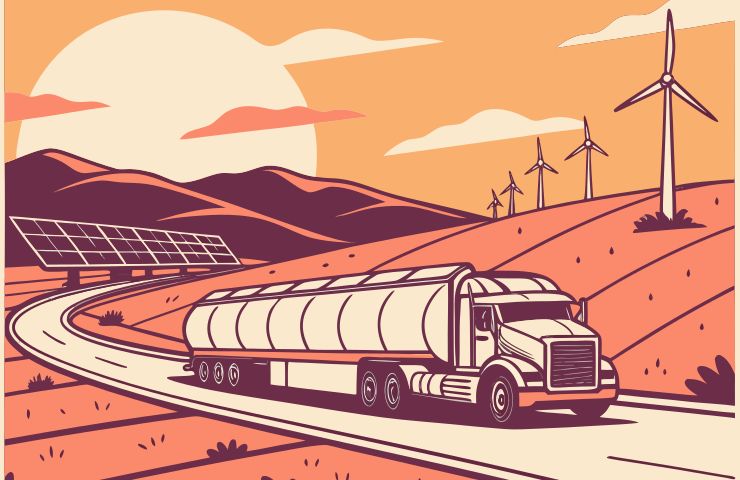
Have you ever thought about how green hydrogen gets from remote production sites to places like industrial plants and refueling stations when there aren't any pipelines around? Well, in the latest hydrogen news, Air Liquide is stepping up to the plate with a pretty straightforward answer: trucks! They’ve teamed up with Marshall Lethlean and CIMC Trailers Australia, and they’re all in on investing in a fleet of specially designed road tankers to ramp up hydrogen infrastructure across Australia. This isn't just about trucks, though. It highlights the vital role logistics play in shaping a clean energy future.
Turning Rigidity into Mobility
Transporting hydrogen as a compressed gas is no walk in the park. It requires trailers that not only comply with tough dangerous goods regulations but can also handle high pressure. That’s where Marshall Lethlean comes in. They’ve rolled out an Australian-certified road transport solution featuring high-pressure hydrogen tube trailers tailored for local conditions. These trailers are no joke; they store hydrogen at pressures of 200 to 300 bar, with robust frames and safety systems to prevent leaks. At loading sites, hydrogen gets pumped into these cylinders, and at delivery points, it’s offloaded through smart metered valves, either into storage or right into hydrogen refueling stations.
Bridging Production and Demand
Let’s face it: Australia’s vast distances and scattered energy hubs mean pipelines are a distant dream for many of the new green hydrogen production sites popping up. You’ve got megawatt-scale electrolysers in areas rich with solar or wind energy that can pump out hydrogen efficiently—but only if it can actually make it to the end users. Enter road tankers, the flexible heroes linking production facilities with heavy industry, curious hydrogen data centers, and even the fledgling fleets of hydrogen vehicles. Think of each tanker as a mobile connector in the supply chain, enabling projects to move forward without waiting for permanent infrastructure to catch up.
Local Manufacturing, Global Ambition
By partnering with a local specialist like Marshall Lethlean, backed by CIMC Trailers Australia, Air Liquide isn’t just ticking off compliance boxes; they’re tapping into regional expertise. This ensures the trailers are designed to handle everything from dusty outback roads to coastal humidity swings. It’s part of a bigger trend where global players in the hydrogen space are increasingly leaning on domestic manufacturers to provide equipment that meets both regulatory standards and real-world challenges. For Australia, this means new jobs in trailer design, fabrication, and maintenance, all while pushing forward national hydrogen goals.
Pivoting Around Pipelines
While there are long-term plans for pipelines and hydrogen corridors being talked about, trucks remain an essential bridge for now. Even in Europe, where Air Liquide has made significant investments in large electrolyser projects and trucking networks, tankers are crucial for developing the early market. In Australia, the need for road transport is amplified by the sheer scale of the country—coastal cities, inland regions rich in resources, and remote industrial zones can be hundreds of kilometers apart. By ramping up tanker fleets today, hydrogen producers can build customer trust and entice the investment they’ll need for bigger infrastructure down the line.
A Focus on Safety and Standards
When it comes to moving high-pressure hydrogen, safety is a top priority—no exceptions. The turn-key solution from Marshall Lethlean includes all the safety bells and whistles: vacuum-jacketed frames to guard against impacts, pressure relief systems to handle any buildups, and certified materials that can take the strain of hydrogen’s tiny molecules. Operators receive specialized training, and every trailer is rigorously audited according to local dangerous goods laws. These precautions not only cut down on risks but also streamline the regulatory approval process, allowing clients like Air Liquide to hit the ground running.
Scaling the Supply Chain
As more hydrogen hubs start to emerge, whether in Queensland’s renewable energy zones or Western Australia’s export facilities, demand for transport is bound to soar. Road tankers, in combination with other hydrogen storage methods—like salt caverns or high-pressure vessels—provide that essential last-mile delivery where pipelines or fixed infrastructure are missing. Incorporating digital monitoring tools, like GPS tracking and pressure and temperature sensors, makes sure that those loads are safe and sound. This tech isn’t just about safety; it sets the groundwork for a smart hydrogen infrastructure that could one day include advanced distribution networks.
Beyond Bulk: Supporting Mobility
While industry will likely take the lead in initial hydrogen volumes, the potential for mobility applications is huge. Trials are already in full swing, testing how hydrogen fuel cells can power long-haul trucks. Those road trailers carrying hydrogen essentially become the lifeline for these fleets, delivering clean fuel to depots and hydrogen refueling stations. With governments pushing for zero-emission targets, a reliable supply chain is more critical than ever. Each tanker that hits the road not only supports hydrogen production but also bolsters the entire community of hydrogen vehicles and fuel cell technology.
As we grapple with climate urgency and the need for industrial decarbonization, it’s easy to focus solely on production methods and renewable energy sources. But logistics deserve some love too—after all, what good is a low-carbon molecule if it can’t get from point A to point B? By pouring resources into local manufacturing partnerships and reliable tanker technology, Air Liquide is proving that a strong clean hydrogen infrastructure goes beyond just pipes and plants. It’s all about trailers, training, regulations, and adapting solutions to fit real-world conditions. These road tankers are more than just a stopgap; they’re a testing ground for operational data that will inform future pipeline projects and hydrogen corridor strategies.
Looking ahead, the success of these road tankers in Australia may just serve as a blueprint for other markets. Places around the globe—whether it’s North America, Europe, or Asia—facing similar logistical hurdles can learn from this, using local partnerships and modular equipment to speed up initial adoption. In the end, a combination of road, rail, and pipeline transport will likely weave a comprehensive distribution tapestry supported by lessons from initiatives like this one as regulatory frameworks evolve.
About Air Liquide
Air Liquide is a top-tier global industrial gases company based in Paris, with more than a century of experience supplying oxygen, nitrogen, hydrogen, and other gases. They’re committed to decarbonizing industry and mobility through strategic investments across the entire hydrogen value chain, from electrolysis to hydrogen storage and distribution.