Hydrogen news
Honda’s hydrogen fuel truck concept wows at ACT Expo
The automaker used the event to place the spotlight on its new H2 vehicle Honda has long been invested in clean transportation, and as a part of that strategy, it recently unveiled its hydrogen fuel truck concept at the ACT Expo. The company has been among the automotive industry leaders in H2 The first prototypes of H2 vehicles the company debuted were back in the late 1990s, when it launched the third low-volume production model fuel cell vehicle that was based on its popular CR-V SUV. That said, it wasn’t until extremely recently that the automaker turned its attention to hydrogen fuel tr…
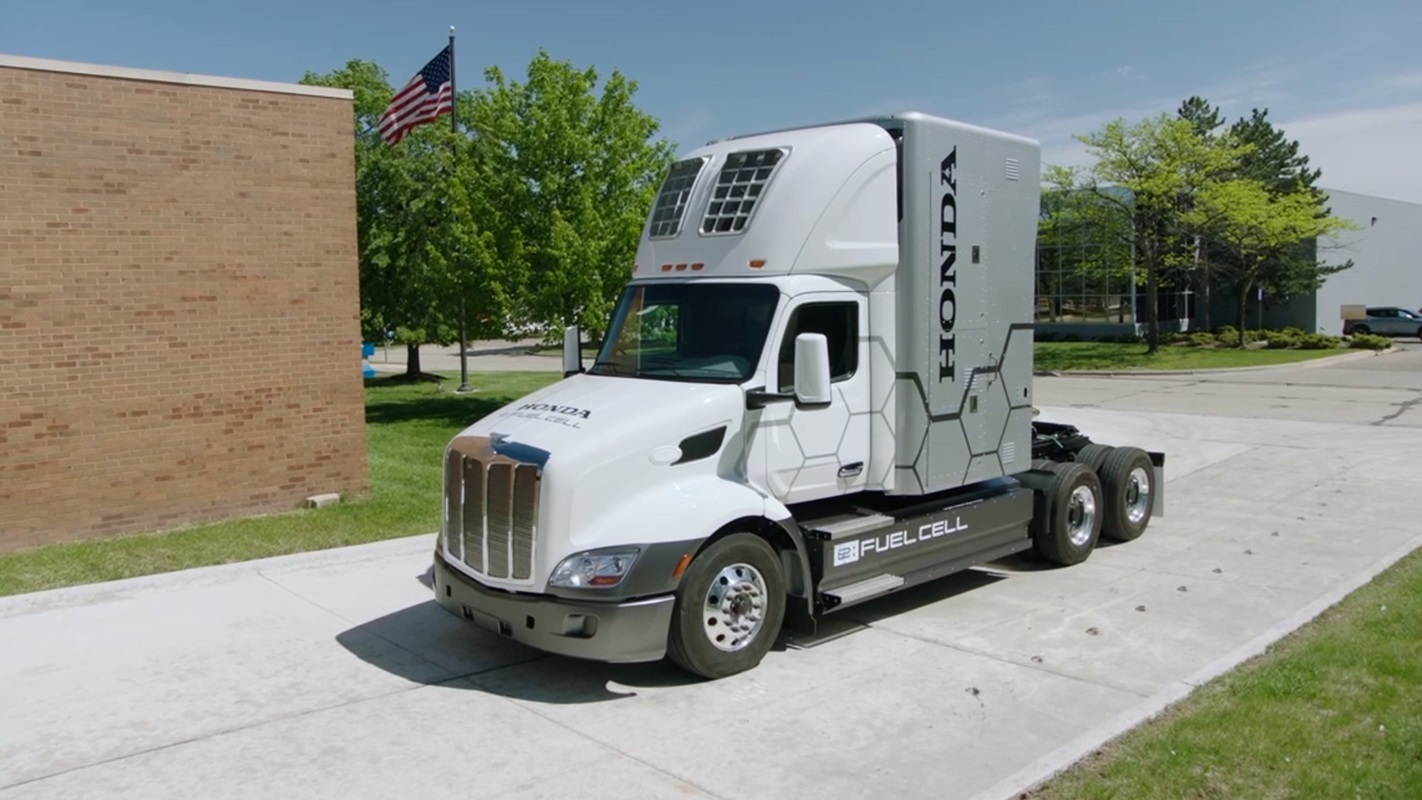
The automaker used the event to place the spotlight on its new H2 vehicle
Honda has long been invested in clean transportation, and as a part of that strategy, it recently unveiled its hydrogen fuel truck concept at the ACT Expo.The company has been among the automotive industry leaders in H2
The first prototypes of H2 vehicles the company debuted were back in the late 1990s, when it launched the third low-volume production model fuel cell vehicle that was based on its popular CR-V SUV. That said, it wasn’t until extremely recently that the automaker turned its attention to hydrogen fuel truck technology. Now, it’s clear that Honda has been serious about its investigation into an H2 propulsion system for heavy duty trucks. At the ACT Expo, the company chose to debut its concept of a Peterbilt semi powered by fuel cell modules co-developed by the automaker and General Motors.Not the only player in the hydrogen fuel truck market
Though Honda is definitely aiming for a leadership position in the hydrogen fuel truck market, it’s hardly alone. Toyota and Kenworth have had a collaboration going for years for developing semis powered by H2. More recently, other automakers have also created their own development programs for that type of vehicle, including Daimler Truck, Hyundai, Traton, and Volvo Group. Nikola is already well established in this arena. https://youtu.be/sL_Y3ShEUyk There are many reasons that fuel cells have become a popular strategy among vehicle makers in recent years. Primary among them is the global effort to decarbonize long-haul freight operations. Though Tesla has drawn the spotlight to semis powered by battery electric propulsions systems, the general consensus is that those work best only on short- to medium-range routes. Batteries are heavy and their range is limited using current technologies. Furthermore, the charging time is notably longer than what diesel trucks require for refueling.Fuel cells for long-haul
On the other hand, hydrogen fuel trucks have advantages in terms of range and refueling time, among other things. Their range is usually considered comparable to that of diesel-powered trucks, as is the amount of time needed to refuel, which is around 10 minutes or so for a range of 400 miles or more. [caption id="attachment_64907" align="aligncenter" width="1140"]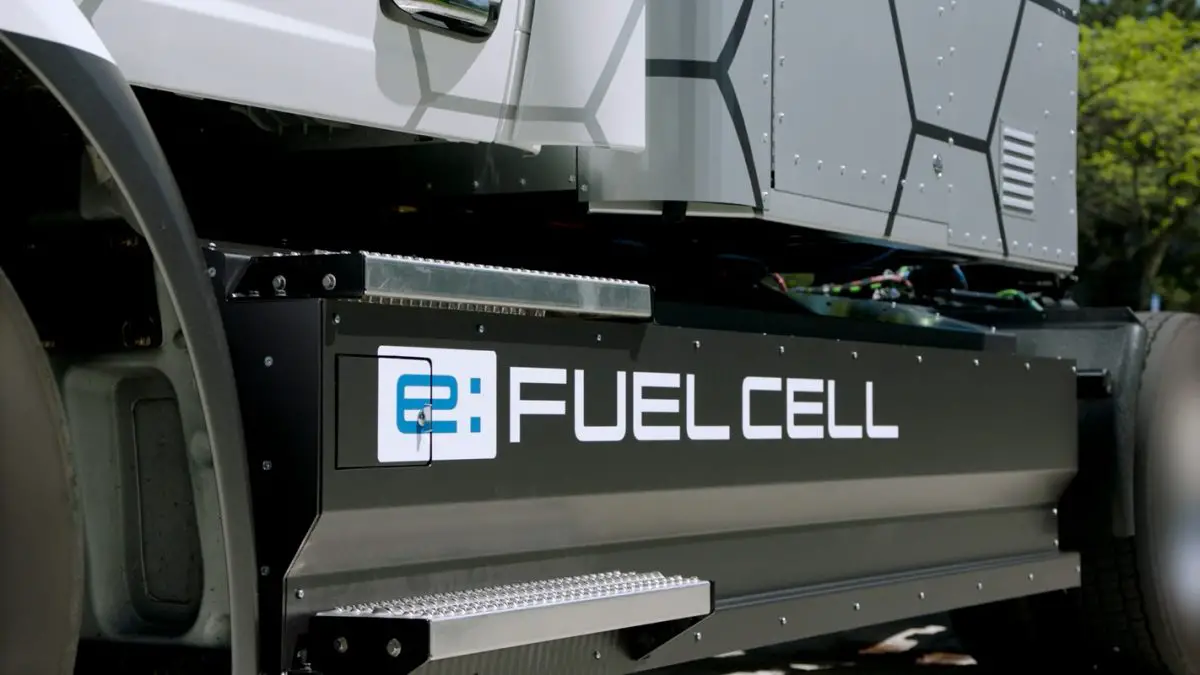 Honda Class 8 Hydrogen Fuel Cell Truck Concept - Image Source: Honda[/caption]
On top of that, the weight of the vehicles is also about the same as their diesel-powered counterparts. All these similarities help to make for a more seamless transition for fleets to decarbonize their operations.
Honda Class 8 Hydrogen Fuel Cell Truck Concept - Image Source: Honda[/caption]
On top of that, the weight of the vehicles is also about the same as their diesel-powered counterparts. All these similarities help to make for a more seamless transition for fleets to decarbonize their operations.
Challenges to the use of long-haul hydrogen fuel truck fleets
There remain challenges that must be overcome before it will be possible for widespread transition to H2 for trucking fleets. For instance, the refueling infrastructure simply isn’t available at the moment. There are currently 56 public H2 stations in the United States, and they are all located in California. Moreover, those stations have been struggling with downtimes due to issues such as supply chain barriers. For fleets to be confident enough to dump old reliable technology – polluting as it is – in favor of zero-emission transport, the infrastructure will need to be in place in a reliable way. Many in the industry believe that installing stations along major highway transport routes will rapidly overcome that barrier, Moreover, many also state that fewer stations will be needed than what consumers frequently expect, provided they are strategically placed and reliably supplied with H2 so hydrogen fuel truck and other vehicle drivers can depend on them. This is considered easier for long-haul routes than for passenger vehicles, simply because the routes that will be taken by hydrogen fuel truck fleets is notably more predictable. Trucking companies tend to need to use the same roads on a regular basis.How was this article?
Thanks for the feedback!