Hydrogen fuel cell vs battery electric: Life-cycle analysis of zero-emission heavy-duty trucks
University of Michigan analysis finds both battery-electric and hydrogen fuel cell heavy-duty trucks can slash lifetime emissions if powered by low-carbon energy.
Have you ever thought about the impact heavy-duty trucks have on our carbon emissions? It’s surprising, but even though there aren’t tons of them on the road, these beasts guzzle millions of gallons of diesel, racking up a hefty bill in terms of CO₂, NOₓ, and particulate emissions over their lifetimes. A recent life-cycle analysis from the University of Michigan digs deep into this issue, comparing conventional diesel trucks against battery-electric and hydrogen fuel cell options. So, what's the verdict? Both zero-emission choices could cut down greenhouse gas emissions significantly, but only if the energy powering them comes from renewable sources or low-carbon hydrogen. As companies and regulators aim for net-zero targets, understanding green hydrogen production, hydrogen storage, hydrogen infrastructure, and charging capabilities is critical for navigating the future of heavy-duty transport.
Why heavy-duty transport matters
Believe it or not, medium- and heavy-duty trucks contribute a big chunk to the transport sector's emissions, way more than you’d think considering how few there are. They cover long distances, running for hours on end each week while hauling heavy loads, which means their tailpipe CO₂ really adds up. And it’s not just about what comes out of the exhaust; the emissions trail starts from upstream fuel production, continues through manufacturing, and even extends to disposal. Keeping this wider view in mind is essential for true industrial decarbonization. By ditching diesel for greener options, fleets can cut their climate impact, boost urban air quality, and dodge potential penalties from low-emission zones. The Michigan study shows that opting for a zero-emission powertrain isn't simply a matter of changing engines. It’s about reimagining the full energy and logistics landscape.
Understanding the technologies
At first glance, battery-electric trucks might seem pretty straightforward: charge up a hefty battery pack, drive an electric motor, and recapture energy through regenerative braking. But it’s the nitty-gritty details that matter. Those large-format lithium-ion cells add weight and call for a strong charging infrastructure, which means everything from fast chargers at depots to upgrades to the grid as fleets grow. The life-cycle emissions depend heavily on the carbon footprint of the electricity source; if you plug into a clean grid, you’ll see big savings, but if it’s powered by coal, those benefits can take a hit.
Now, hydrogen fuel cell trucks combine electric drivetrains with onboard hydrogen storage tanks. They use compressed hydrogen to power a proton exchange membrane that transforms hydrogen into electricity, with water vapor and heat as the only by-products. Refueling is as quick as filling up a diesel tank, meaning long-haul trips require fewer stops. But here's the catch: the climate benefits hinge on how the hydrogen is produced. Steam methane reforming without carbon capture can undercut the positives, while making hydrogen through renewable energy sources—what we call green hydrogen production—truly unleashes the zero-emission potential. Both routes rely on solid hydrogen infrastructure, which includes centralized production and local refueling stations.
Full life-cycle perspective
Life-cycle assessment (LCA) has become essential for examining the complete picture of carbon emissions—not just the tank-to-wheel aspect but also well-to-tank, vehicle manufacturing, maintenance, and recycling at the end of its life. The Michigan team set up a functional unit (that’s a tonne-kilometre transported) and assessed everything: battery production, steel fabrication, diesel refining, power generation, hydrogen production pathways, and recycling processes. By converting all greenhouse gases and pollutants into a common metric, they could directly compare diesel, battery-electric, and fuel cell systems under real-world conditions.
They then ran sensitivity analyses to explore different scenarios: comparing a low-carbon grid to a fossil-heavy one, looking at green electrolysis versus natural gas reforming, and varying vehicle efficiencies and usage patterns. Across a range of likely futures, both battery-electric and hydrogen fuel cell trucks produced lower lifetime emissions compared to diesel—even though the extent of the reductions varied significantly based on energy sources and operational behaviors. Ultimately, the study highlights that clean energy upstream is just as vital as the drivetrain choice.
The study took a look at end-of-life scenarios, too, including how to recycle batteries, recover steel, and reuse components from fuel cells. By crediting reclaimed materials, they further decreased the net environmental impact. As battery recycling and second-life applications evolve, future LCA updates could also account for new methods like advanced hydrogen storage materials or initiatives focused on the circular economy, emphasizing that material recovery is key to achieving zero-emission goals.
Context-dependent advantages
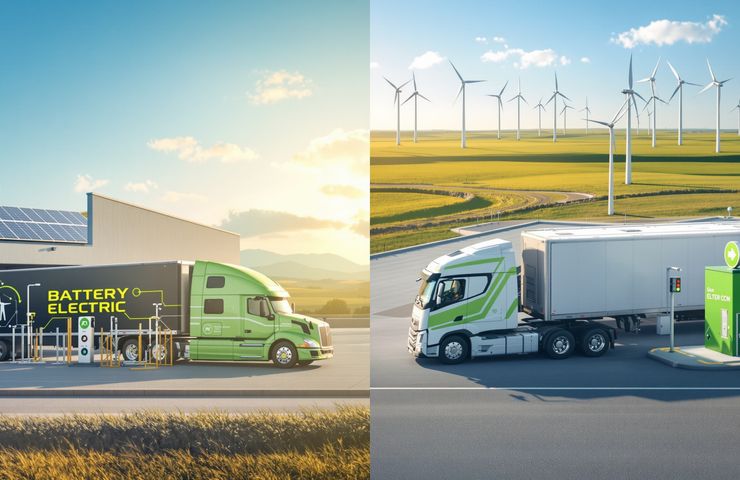
One thing to keep in mind is that there’s no one-size-fits-all winner in the battle for zero emissions. The optimal choice depends on various factors like route length, access to refueling or charging facilities, and the local energy landscape. Battery-electric models tend to shine on shorter, more predictable routes or urban deliveries where overnight charging at depots is practical. Their straightforward plug-and-play setup, combined with high energy efficiency, offers them a distinct advantage for scenarios where charging can be optimized.
On the other hand, hydrogen fuel cell vehicles perform exceptionally well on long-haul routes where downtime can be minimized. The fast refueling times and high energy density make them better suited for cross-country trips that can’t handle lengthy charging stops. Yet, scaling up these vehicles means we need a solid hydrogen infrastructure—think hubs for hydrogen refueling stations, delivery networks, and strategic placement at critical points along the way. Coordination among developers and policymakers is essential to set up enough green electrolyzers, storage solutions, and refueling locations to make this practical.
Business and policy crossroads
From the perspective of a fleet manager, total cost of ownership (TCO) is always more important than just the initial price tag. Fuel and maintenance are the big-ticket items, so cheaper electricity or green hydrogen production can sway the decision over the lifecycle of a truck. Supportive policies, such as incentives for clean hydrogen news projects, carbon pricing, and promoting low-emission zones, all push operators towards investing in electric or hydrogen solutions.
From a policy angle, having clear standards and incentives is key. Governments need to support the development of hydrogen infrastructure alongside charging solutions, making sure to avoid imbalances that could lock in more polluting hydrogen choices. Investing in green electrolyzers and improving the grid are just as crucial as helping with vehicle adoption. And as we move forward with industrial decarbonization, these flexible frameworks can assist fleets in determining the best mix suited to their specific routes and the local energy profile.
Financing options for clean hydrogen news projects and fostering public-private partnerships could speed up the deployment process, reduce financial risks for everyone involved, and support the scaling up of both electrolyzers and refueling networks.
The University of Michigan’s comprehensive life-cycle analysis offers a roadmap for achieving a zero-emission future in the heavy-duty sector. By making the trade-offs clear and highlighting how critical green electricity and hydrogen production methods can be, it equips policymakers, fleet operators, and infrastructure developers with solid data rather than guesswork. The ultimate goal? A diverse fleet where battery-electric and hydrogen vehicles each play to their strengths, working hand-in-hand to cut down emissions. With net-zero targets on the horizon, whether you’re plugging in a battery or fueling up with green hydrogen, those choices could be game-changers for cleaner freight transport.