Hydrogen Fuel-Cell Charging for Heavy Transport Gets a Boost from Navitas and BrightLoop
Navitas and BrightLoop are teaming up to deliver hydrogen fuel-cell charging systems for heavy-duty and agricultural vehicles, combining ultra-efficient silicon carbide semiconductors with high-density power converters.
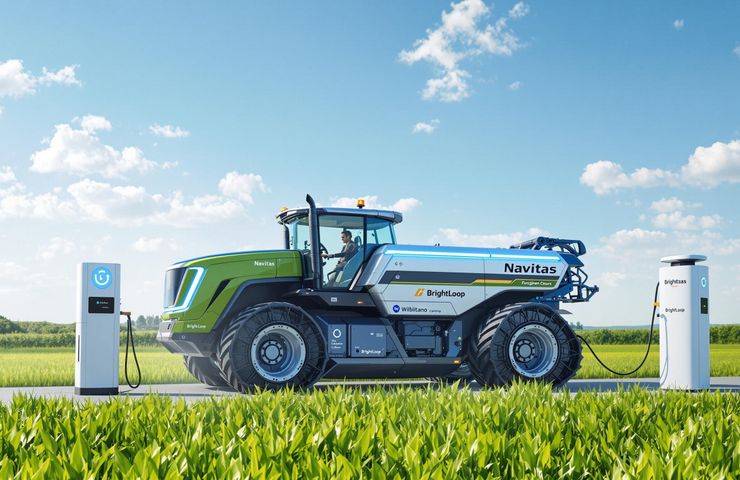
Hydrogen Fuel Cells Get an Upgrade for the Fields and Farms
When it comes to clean energy, electric cars tend to hog the headlines. But there’s a quieter, more rugged revolution taking shape—one built not for highways but for heavy-duty action in the fields, mines, and industrial yards. And now, thanks to a powerhouse transatlantic collaboration, hydrogen fuel cells are getting the kind of high-performance boost they’ve been waiting for.
On June 3rd, 2025, California’s Navitas Semiconductor Corp teamed up with French tech outfit BrightLoop Converters to deliver a major leap forward in hydrogen fuel-cell charging systems. Their focus? Tough, off-road giants like automated harvesters, mining rigs, and freight movers that need serious juice and reliability to get the job done.
The Core Deal: Power Meets Precision
This partnership is all about matching serious muscle with surgical precision. Navitas is bringing its latest Gen 3 ‘Fast’ SiC (G3F) MOSFETs to the table, pairing up with BrightLoop’s cutting-edge multiverters. Sure, that sounds techy—but here’s the punchline: together, they’re achieving more than 98% efficiency, with power densities as high as 35 kW/kg and 60 kW/L. Translation? These systems pack an incredible amount of power in a compact space and can scale up to megawatt levels, putting traditional battery systems on notice.
Hydrogen brings crucial advantages—lightning-fast refueling, long lifespan, and durability under punishing workloads. But up until now, the tech hasn’t always kept up with its promise. This new combo could flip that script, unleashing reliable, mission-ready hydrogen power where it's needed most.
Fueling France's Hydrogen Ambitions
BrightLoop’s home turf, France, is betting big on hydrogen. The government’s pumping billions into hydrogen production and infrastructure, especially in transportation sectors where batteries fall flat—think long-haul freight, rural agriculture, or anything else that operates far from a plug.
BrightLoop’s converters, already proven in high-stakes arenas like Formula 1, aerospace, and national defense, are now being fine-tuned for tractors, trucks, and transport in the dirt and dust. It’s race-day performance, built for real-world grind—the kind of shift that can drive zero-emission technology into some of the toughest corners of the economy.
The Tech Under the Hood
So, what’s actually happening under the casing?
At the heart of it all are Navitas’ G3F SiC MOSFETs. These use trench-assisted planar architecture (yeah, it sounds complicated), but the bottom line is simple—they bleed off less energy, run cooler, and can be synced together effortlessly, which means more power with fewer headaches.
Drop those into BrightLoop’s 250 kW HV-DC/DC multiverters, and you’re looking at a system that runs up to 25°C cooler. That’s a big deal—it means better thermal balance, longer system life, and less need for bulky cooling gear, all without downgrading output.
Topping it all off is BrightLoop’s Power Flow Processor, an energy traffic cop that smartly manages power flows whether you’re dealing with AC or DC environments. With a design that can flex across voltage requirements, this system’s built to adapt—and stay future-ready.
Planting the Seeds of a Broader Hydrogen Economy
This isn’t just a case of cool components—it’s a pivotal step toward widespread sustainable energy adoption. By making hydrogen fuel cells viable for industries dominated by diesel, this tech duo lays the groundwork for broad industrial decarbonization—without waiting for perfect infrastructure to fall from the sky.
Sure, there are still obstacles. Remote hydrogen fueling stations are few and far between, and green hydrogen production needs to catch up to rising demand. But plug-and-play systems like this offer a way forward: deploy the gear that works today, and let adoption—and investment—follow naturally.
More Than a Niche: Why This Matters
Here’s the thing—this isn’t just about high-tech fleets in Europe’s cities. It’s about replacing diesel wherever it lives: on farms, in factories, and across freight corridors. If hydrogen is going to live up to the hype, it needs hardware that can take a beating and still deliver.
And that’s what this partnership offers. It’s not just high-efficiency tech—it’s gear that’s tough, smart, and ready to hit the ground running. As one engineer put it, "We’re bringing pit-lane performance to the pasture." And honestly? That might be what finally pushes hydrogen beyond the talking point stage and into everyday, boots-on-the-ground reality.
Looking Ahead
France isn’t just riding the hydrogen wave—it’s helping build the surfboard. Government support and serious investment are turning the country into a hydrogen heavyweight. But it’s efforts from companies like BrightLoop and Navitas—getting into the tech trenches—that are going to make those bold national goals achievable.
Whether you’re deep in hydrogen production, integrating next-gen systems, or just keeping an eye on the sustainable energy landscape, this partnership signals an inflection point. Hydrogen isn’t off in the future—it’s here, it’s working, and it’s about to go full throttle.