Hydrogen news
Toyota Motor announces plan for European Hydrogen Factory
The automaker plans to build a place where it can focus on commercializing H2 tech and systems. Toyota Motor Europe has announced that it intends to build a Hydrogen Factory in Europe to give it the ability to align its efforts to commercialize H2 tech and systems. The location will focus on everything from R&D to production, sales and beyond. Hydrogen Factory Europe will be used for the production of a growing number of H2 fuel cell systems. Moreover, it will enter into a rising number of commercial partnerships. The goal is to support the automaker’s efforts to achieve its 2040 carbon neutr…
The automaker plans to build a place where it can focus on commercializing H2 tech and systems.
Toyota Motor Europe has announced that it intends to build a Hydrogen Factory in Europe to give it the ability to align its efforts to commercialize H2 tech and systems.The location will focus on everything from R&D to production, sales and beyond.
Hydrogen Factory Europe will be used for the production of a growing number of H2 fuel cell systems. Moreover, it will enter into a rising number of commercial partnerships. The goal is to support the automaker’s efforts to achieve its 2040 carbon neutrality goal in Europe. This represents a commitment one decade shorter than the company’s global goal. The automaker has predicted that the European market will be among the largest for H2 fuel cells by the end of the decade. It sees the technology growing steadily in various applications in mobility and power generation alike. Among the main drivers accelerating the adoption of this technology in Europe include growth in regulatory measures and investment. Most notable among the regulatory measures includes the European Commission Green Deal’s commitment of €45 billion by 2027 as well as the €287 million earmarked for the installation of refueling stations through the EU’s transport infrastructure fund. The Renewable Energy Directive (REDIII) confirmation has a requirement that by the end of the decade, European industry must ensure that at least 42 percent of the H2 it uses comes from sustainable sources. This, combined with Europe’s intention to construct H2 refueling stations at least every 200 kilometers throughout the region’s trans-European Transport Network (TEN-T), it has aligned the EU to become a key H2 market.This helps to explain why Toyota has made a priority of its Hydrogen Factory in the European market.
“Europe is showing long-term confidence in hydrogen and so do we. We will continue to develop fuel cell passenger cars and other light duty vehicles while we have broadened our focus towards heavy-duty transport to support the expansion of viable hydrogen infrastructure,” said Toyota Motor Europe Vice President and Head of Fuel Cell Business Thiebault Paquet. “We aim to further develop and learn through testing in our own network and with partners who share our approach.” [caption id="attachment_61920" align="aligncenter" width="1200"]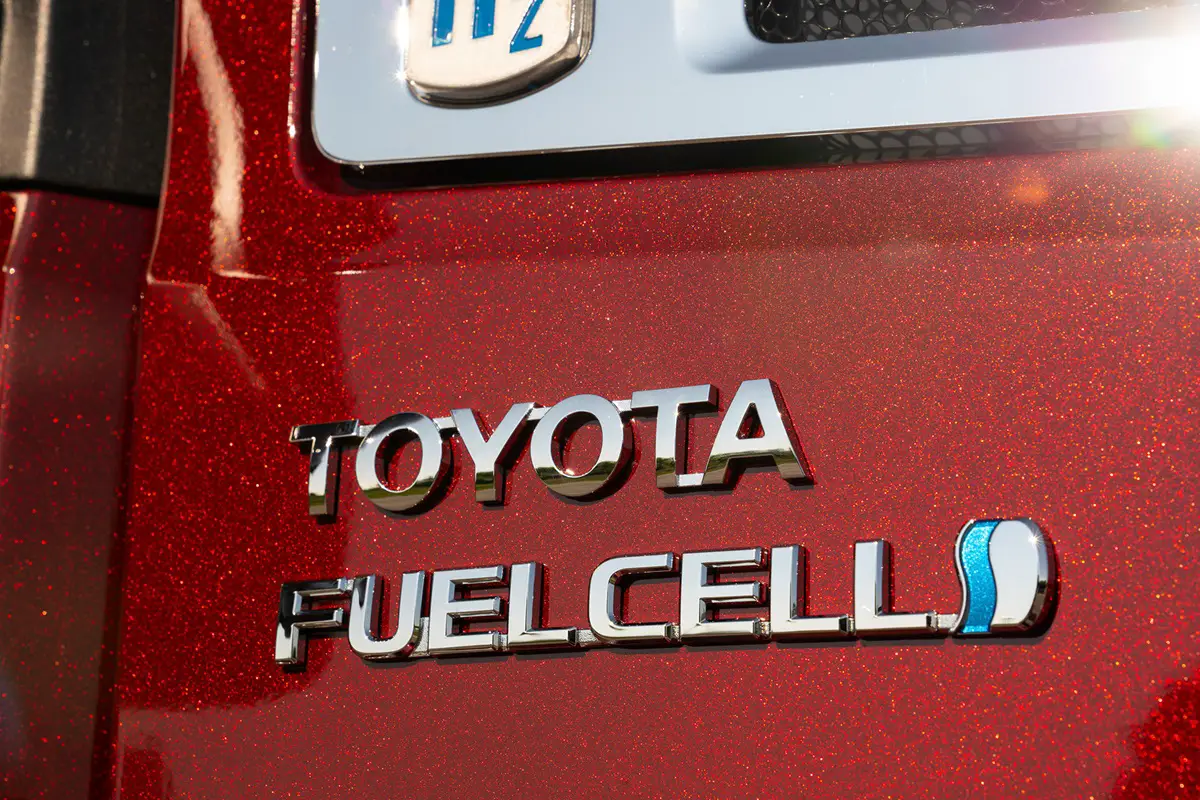 A Toyota Fuel Cell Heavy Truck - Image Source: Toyota Motor[/caption]
Ongoing interest in hydrogen
The Hydrogen Factory is hardly Toyota’s first step into H2. Its Mirai fuel cell car first launched in 2015, and its second-generation model rolled out in 2020. While the company has stated that it is stepping back from its production of new fuel cell passenger vehicles, it has repeatedly firmly committed itself to commercial vehicles and other larger mobility technologies. The automaker has been working its technology into heavy-duty transport and other applications for a number of years. Following its entry into the European market, it now feels prepared to establish its Hydrogen Factory there to scale up its efforts in this area.The Hydrogen Factory in Europe
Establishing its Hydrogen Factory as a center to its European focus on H2 is the company’s chosen next step. It is already partnered with Hyliko, a French manufacturer, for their joint focus on the European truck market through H2-powered trucks. It has also partnered with VDL Groep from the Netherlands, in a strategy that will have Toyota using VDL’s H2-powered trucks to decarbonize the automaker’s logistics operations. Toyota is also moving the technology off the roads in a partnership in Norway with Corvus, where it is working on future marine applications. GCK, a clean mobility company from France, will be using the automaker’s fuel cell modules in a conversion strategy to decarbonize its diesel coaches using zero-emission H2 technology. Ready to test your knowledge on the most abundant element in the universe? Take our fun and engaging Hydrogen Quiz now! [forminator_quiz id="58712"]How was this article?
Thanks for the feedback!