Green Hydrogen Production from Rainwater: INP Nordenham’s Solar-Driven PEM Demo Joins National WENde Project
INP in Nordenham-Einswarden has launched a solar-driven PEM electrolyser using treated rainwater for green hydrogen and methanol production, now serving as a demo site for the national WENde research initiative.
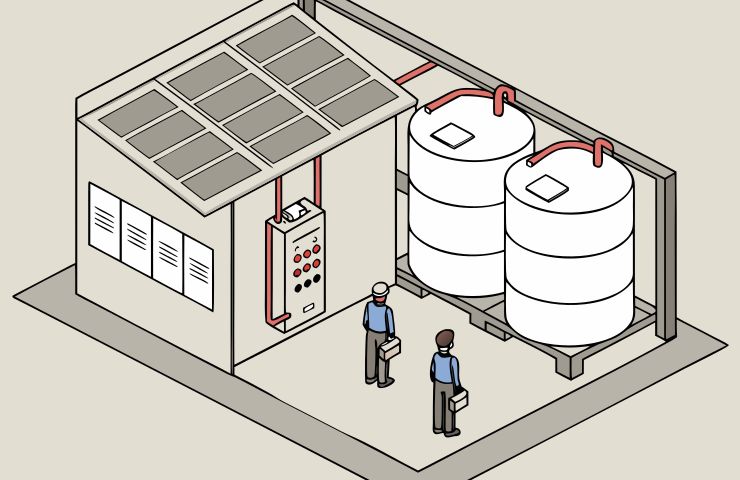
Most hydrogen demonstrations rely on big wind farms and grid hookups, but the folks at the Innovationszentrum für Nachhaltigkeit und Produktionstechnologie (INP) in Nordenham-Einswarden are shaking things up a bit. They’ve come up with a super cool, compact solar-powered electrolyser that’s actually powered by rainwater they’ve collected. This system not only produces hydrogen but also methanol, showcasing a full cycle of green hydrogen and methanol production without needing drinking water or large wind farms. Plus, it’s just joined the federal WENde research network, which is pretty exciting!
Integrated Solar-to-Hydrogen Module
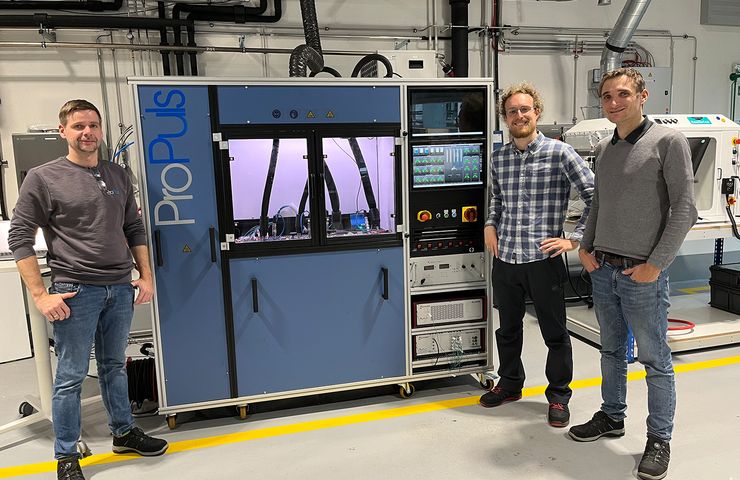
This demonstration runs on two photovoltaic plants that pack about 120 kWp each, paired up with battery buffers and a proton exchange membrane electrolyser. They’ve made sure that solar DC power flows right into the electrolysis stack using DC-DC converters for top-notch conversion efficiency. The rainwater they collect is filtered and sent through a reverse osmosis unit so it meets the purity levels needed for those PEM membranes. The electrolyser is pretty nifty too; it can ramp up or down in seconds, aligning with the current trends in renewable energy setups, and it operates completely off-grid, meaning it doesn't touch the public electricity grid or even use potable water.
Tech Spotlight: PEM Electrolysis with Rainwater
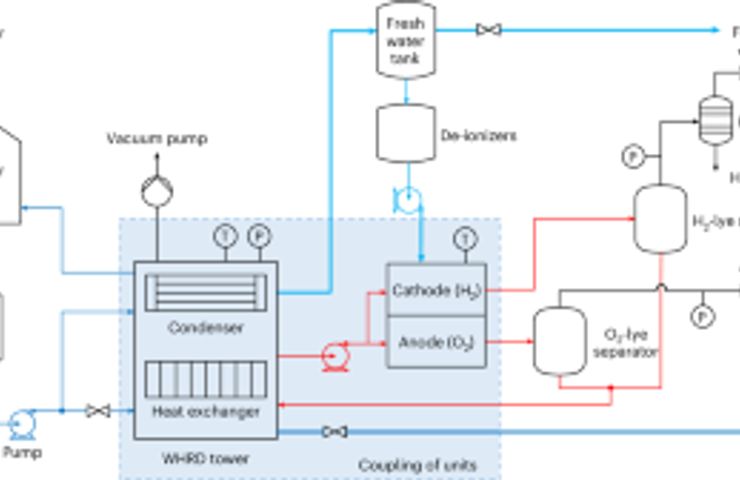
At the heart of this system is a PEM electrolyser that splits water into hydrogen and oxygen. The protons move through a solid polymer membrane while the electrons travel through the external circuit, coming back together at the cathode to generate high-purity hydrogen. One of the cool things about INP's system is how they treat rainwater; their reverse osmosis unit gets rid of unwanted minerals and contaminants, providing a clean permeate with low conductivity. By skipping municipal drinking water, this project addresses concerns about the water footprint that often comes with large electrolyser installations. They’re also contributing real-world data to the WENde project on alternative water sourcing, joining a select group of facilities exploring non-potable water treatment alongside a few Fraunhofer sites.
Scaling Up Power-to-X: Methanol Synthesis
Now, hydrogen is only half of the story. This INP plant channels part of its output into a methanol loop: hydrogen (H₂) reacts with CO₂ over a catalyst, creating crude methanol that then goes through a distillation column to produce high-purity methanol. Backed by the regional Zukunftsregion JadeBay program, this Reinmethanol distillation plant separates water, impurities, and unreacted gases, delivering methanol that’s perfect for fuel cells and synthetic fuels. Why methanol? It’s all about easier handling and liquid energy storage compared to gaseous hydrogen, making it a solid option for mobility and industrial decarbonization pilots.
Maritime Demonstrator & Fuel Cells
But INP isn’t just stopping at land-based projects! They’ve got a 50-year-old motor sailer named the H2-Innovation, which has ditched its diesel engine for an electric motor powered by both hydrogen fuel cells and direct methanol fuel cells. Onboard batteries help balance power delivery and store any excess renewable energy. What’s great about this project is that it gives small and medium-sized shipyards and marine operators a real-world platform to test out dual-fuel-cell integration, rather than just a static lab setup. This sailing vessel is tangible proof of the power-to-X concept, cruising on fuel produced from solar-electrolysis and captured carbon.
Key Research Partnerships: Enter WENde
What really sets INP’s demonstration apart is its involvement in the WENde project, which brings various partners together to research integrated water and energy management for green hydrogen and methanol production. The lineup includes the Karlsruher Institut für Technologie (KIT), the Deutsches Zentrum für Luft- und Raumfahrt (DLR), the Oldenburgisch-Ostfriesischer Wasserverband (OOWV), and the Gesellschaft für Chemische Technik und Biotechnologie (DECHEMA). This collaboration is aimed at benchmarking alternative water feeds, optimizing system integration, and feeding real-world data from INP’s rainwater facility back into national guidelines.
Regional Hydrogen Strategy at Work
Nordenham's jump from maritime trade and aerospace support to becoming a hydrogen hub isn’t just happening by chance. INP is part of the municipal Technologiezentrum Nordenham, supported by the Landkreis Wesermarsch and positioned right at the heart of regional networks like H2 MARSCH and JadeBay. With strong onshore wind, upcoming hydrogen pipelines, and EWE electrolyser feasibility studies in the mix, the ambition in this area is clear as day. INP’s compact module works in harmony with larger projects in Emden and Lingen, focusing on small to medium enterprises (SMEs), vocational schools, and practical learning in the bustling industrial harbor district of Einswarden.
Strategic Takeaways
This small-scale demo might only whip up a few kilograms of hydrogen an hour, but its modular approach challenges the traditional view of electrolysis. It highlights the often-overlooked importance of water sourcing, shows how methanol can bridge storage and mobility gaps, and provides blueprints for decentralized power-to-X setups. For SMEs, it opens a window into investment needs and operational dynamics without the hefty multi-megawatt budgets. For policymakers, it’s a living lab for setting water-electrolysis regulations and carbon accounting methods, showcasing replicable models instead of one-off megaprojects.
Education and Workforce Development
The Energiemodul der Zukunft also serves as a classroom. Local school groups, vocational trainees, and university teams are invited to check out the PV arrays, water treatment units, electrolysers, and fuel cells up close. This not only demystifies green hydrogen production but also trains the next wave of technicians in system startup, maintenance, and safety protocols. In today’s competitive job market for hydrogen specialists, these hands-on learning opportunities could really make a difference by aligning education with the realities of the industry and sparking new local service providers.
Sure, INP’s rainwater-fed hydrogen and methanol system may not make the front page like the big gigawatt electrolysers do, but it’s making a serious impact by bringing visibility to important issues. It experiments with alternative water sourcing, integrates power-to-X solutions from start to finish, and fosters research partnerships that will help shape national standards. The big question now? Can this compact blueprint be duplicated in other mid-sized industrial centers, or will it remain a unique regional gem? Either way, this journey brings home the truth that hydrogen innovation often starts small, and sometimes, that’s where the real change begins.