Green Hydrogen Production from Brewery Wastewater and Urban Sludge via Dark Fermentation
UPM and UCA researchers use dark fermentation to co-process brewery wastewater and municipal sludge, generating green hydrogen and volatile fatty acids while demonstrating a circular economy approach with predictive modelling for scale-up.
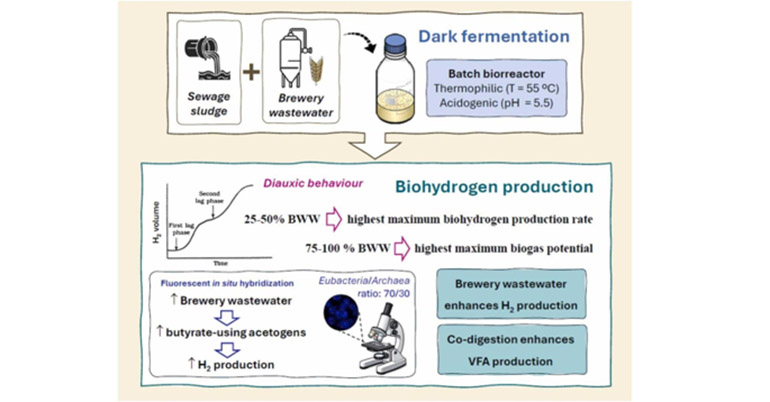
There's a real buzz in the air when it comes to global hydrogen demand—industries are racing toward net-zero targets, but there's a catch: sustainable production methods still have quite a way to go. Surprisingly, researchers are turning waste into resources, tapping into something we once considered a burden: brewery effluent and urban sludge. A dedicated team from Universidad Politécnica de Madrid (UPM) and Universidad de Cádiz (UCA) is showing us how co-processing these waste streams through dark fermentation not only makes use of overlooked organic matter but also generates green hydrogen and volatile fatty acids (VFAs). This exciting lab-scale proof-of-concept aligns perfectly with the EU’s Green Deal and the global push to decarbonize our economies, hinting at the potential for a more circular hydrogen economy linked with our water management systems.
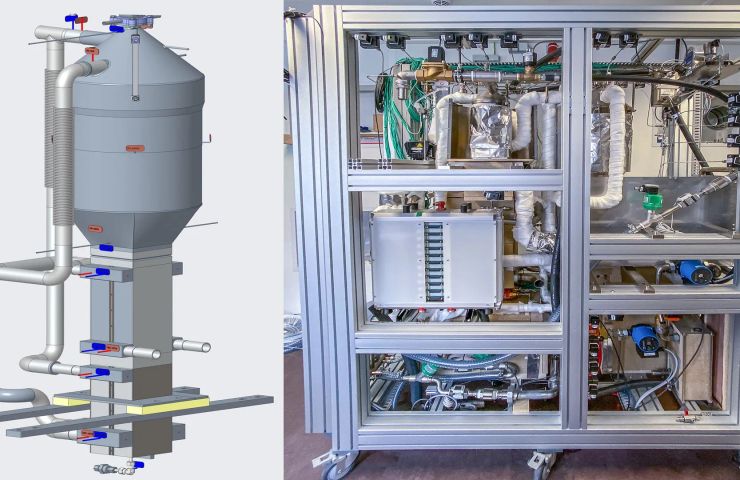
Featured in the journal Process Biochemistry, this study involved some pretty cutting-edge batch experiments in thermophilic reactors (running at about 55 °C) in university labs. The teams experimented with different ratios, mixing everything from pure brewery wastewater to sludge, and they meticulously tracked how much hydrogen came out and how many VFAs formed. Interestingly, while pure brewery effluent gave the highest cumulative hydrogen, the magic happened with a 50/50 mix blended with sludge, yielding not just a great rate of hydrogen production but also higher concentrations of VFAs—key building blocks for bio-based chemicals—illustrating the benefits of valorizing mixed streams.
How Dark Fermentation Unlocks Hydrogen
So, what's the deal with dark fermentation? It's an anaerobic process where certain acid-loving microbes munch on organic matter—without needing any light—creating hydrogen as a delightful by-product and leaving us with VFAs in the broth. In the setup from UPM and UCA:
When you compare this to sunlight-driven systems, dark fermentation has a few perks—it works in compact, insulated reactors and generally delivers quicker results. Still, keep in mind, it usually produces lower hydrogen yields per mass of substrate, so pulling out those VFAs is key for making the whole process more economically viable.
Synergistic Feedstock Blends
Going back to those systematic tests, it turns out that a nice balance in the co-substrate mix can unlock a treasure trove of benefits:
This synergy comes from the complementary nutrients; breweries supply carbon while sludge brings in essential microbes and micronutrients. For both treatment plants and breweries, blending these streams could not only recover energy but do so with minimal added infrastructure.
Predictive Modelling for Scale-Up
As they look to scale things up from the lab to pilot levels, researchers have crafted a kinetic model using differential equations to capture both phases of hydrogen production. They fitted parameters to real-life data, predicting how changes in substrate ratios, temperature, or retention time impact hydrogen and acid rates. The model even considers pH shifts and can simulate how effectively VFAs can be recovered, giving a full picture of process economics. Tools like these are invaluable for engineers designing reactors and strategies to avoid the expensive trial-and-error phase in early test runs.
Business Implications and Circular Economy
When you co-valorize wastewater and sludge, you dream big about the circular economy. It’s like flipping waste disposal fees into revenue potential. Here are a few takeaways:
Support from Spain’s Ministry of Science, Innovation and Universities and the Community of Madrid helps mitigate risks for pilot projects, showing how public-private partnerships can thrive in the budding hydrogen market.
Policy Context and Strategic Fit
Spain’s National Hydrogen Roadmap is ambitious when it comes to electrolyzer targets, but it also sees biohydrogen as a complementary approach. EU mandates on the circular economy are pushing for resource recovery in wastewater treatment, making this dark fermentation method a perfect strategic fit. Plus, regional funding works hand in hand with Spain’s broader decarbonization goals and the EU’s Fit for 55 package that pushes member states to innovate with waste-to-energy solutions. Municipal operators could hit stricter effluent standards while generating fuel for hydrogen refueling stations or local industries, all while further integrating wastewater assets into our emerging hydrogen infrastructure.
Comparisons and Research Ecosystem
The pursuit of biohydrogen from wastewater is buzzing with research activity. UCA has had success converting wine-industry waste using ozone to enhance yields, while international tests tapping into solar or electrochemical methods have yielded higher production rates per mass. Compared to electrolyzer-based green hydrogen, dark fermentation can provide additional revenue streams and use less energy when systems tap into local residuals. The standout in the UPM–UCA study? They minimize the need for pretreatment and focus on optimizing feedstock ratios with a rock-solid model. This integrated approach might lower barriers in regions where breweries and treatment plants are neighbors.
Challenges on the Road to Industrial Deployment
Of course, there are still several bumps in the road:
To get those initial pilots off the ground, modular and flexible designs will be a must, along with close teamwork with regulators to ensure everyone stays compliant and operations run smoothly.
Looking Ahead
With research paving the way to transform brewery wastewater and urban sludge into hydrogen and valuable chemical feedstocks, a fresh production method in the diverse hydrogen landscape is on the horizon. As pilot plants start to pop up, the industry is keen to keep an eye on cost thresholds, process robustness, and the overall lifecycle effects. Successfully scaling dark fermentation could integrate hydrogen production into existing water infrastructure, driving forward industrial decarbonization while embracing circular resource recovery. The real challenge? Figuring out how to implement these systems in real-world operations—and proving that wastewater hubs can truly power a cleaner, more circular future.