Green Hydrogen Production and Infrastructure at Lübeck Waste Facility Backed by State Funding
EBL secured 3.55 million euros to build a 1 MW PEM electrolyzer at the Niemark waste site, integrating solar PV, hydrogen storage and refueling infrastructure for heavy-duty vehicles.
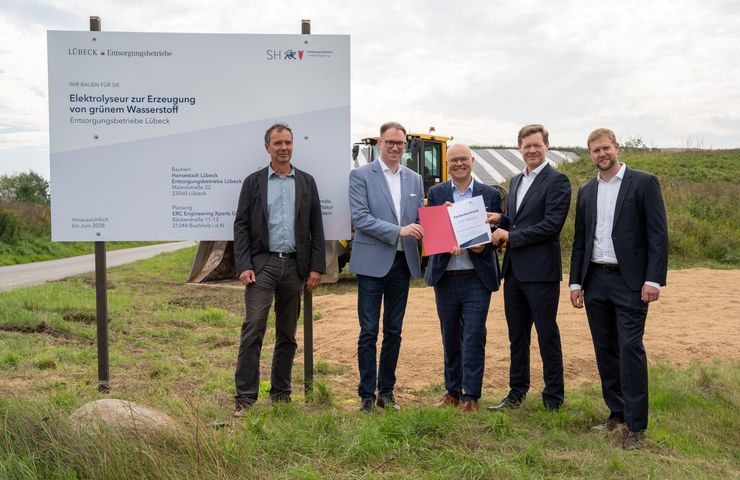
Entsorgungsbetriebe Lübeck (EBL) has recently landed a state grant of about 3.55 million euros from Schleswig-Holstein to kick off its H2ANSE initiative at the Niemark waste-management center in northern Germany. The plan includes installing a 1-megawatt proton-exchange-membrane electrolyzer aimed at producing green hydrogen using renewable electricity sources. They’re also looking to install a 7 MWp solar array on the landfill slope, with future wind power integration to boost output even more. This green hydrogen will primarily power heavy-duty transport, including fuel-cell waste-collection vehicles in EBL’s fleet, along with plans for a public refueling station in Roggenhorst.
Key insights
- The state funding will help cover nearly half of the overall 7.9 million-euro budget, supporting the planning and construction of the 1 MW electrolyzer and the necessary infrastructure.
- Annual hydrogen production could reach around 57,000 kg from solar alone. With wind power in the mix, that number could rise to an estimated 100,000 kg.
- They’ve designed the system to capture up to 1,100 MWh per year of waste heat from the electrolyzer, which can be repurposed for biogas processes, while also channeling oxygen into biological waste treatment.
- This project capitalizes on existing landfill gas, biogas, and wastewater infrastructure to create an integrated hydrogen supply chain, steering clear of greenfield development.
After adding a single fuel-cell waste-collection vehicle to their fleet in 2022, EBL plans to expand by adding eight to ten more vehicles, aiming for a fully decarbonized fleet by 2040. The hydrogen produced will also support a refueling station in the Roggenhorst commercial area to cater to other local heavy-duty users.
Technology deep dive
At the heart of this initiative is a PEM electrolyzer, which is noted for its ability to adapt to fluctuating power inputs. The process starts when purified water enters the unit. An applied current splits those water molecules into hydrogen and oxygen. Once the hydrogen is extracted, it’s dried, compressed—usually to pressures up to 700 bar for vehicle refueling—and then stored in high-pressure tanks. An inverter keeps the direct-current output from the 7 MWp photovoltaic system steady, ensuring that the electrolyzer gets stable power. They’re also planning to recover excess heat from the electrolysis process using heat exchangers, which will feed into nearby biogas digesters, while capturing the oxygen off-gas for onsite biological treatment.
Site integration and infrastructure
The Niemark site is already equipped with landfill gas capture, anaerobic digestion, and electricity generation. Positioning the solar panels on the southern slope of the landfill optimizes land use. The compressed hydrogen will be loaded onto trailers and shipped to Roggenhorst, creating a regional hydrogen infrastructure corridor. Onsite storage will buffer the variable renewable generation and ensure that refueling is always available. This setup avoids the need for new transmission lines and leverages EBL’s existing safety protocols, which were developed with expert input from Dräger Safety during an earlier pilot.
Financing and partnerships
The 3.55 million-euro grant from the state covers nearly half of the planned budget, aligning with regional policies aimed at boosting renewable energy, fostering a circular economy, and enhancing climate mobility. This funding is critical for EBL’s long-term goal of decarbonizing its vehicle fleet by 2040. While EBL is taking the lead on development and operation, their partners from the 2022 HyHL pilot, including ERC GmbH for engineering coordination and TU Hamburg for scientific support, might continue in advisory roles, though contracts are still being finalized. Stadtwerke Lübeck and safety consultant Dräger Safety provided expertise in the earlier project stages but are waiting to confirm their current involvement.
Strategic implications for transport
H2ANSE primarily targets the challenging heavy-duty transport sector, where battery range and charging times can stifle efficiency. By producing hydrogen onsite and storing it, they can create a buffer capacity that pairs nicely with battery-electric solutions, enabling faster refueling and longer service intervals. Producing fuel in-house means EBL can reduce its dependence on distant suppliers and navigate the ups and downs of market prices. Plus, this project is looking closely at the total cost of ownership for municipal operators: if hydrogen shines against diesel when considering costs for fuel, maintenance, and downtime, it could spur a broader embrace of fuel-cell trucks in public services.
Policy context and market dynamics
Germany’s updated National Hydrogen Strategy aims to ramp up the domestic electrolyzer target to at least 10 GW by the year 2030, with a strong emphasis on renewable origins. The strategy encourages decentralized production, particularly where local assets like landfill sites or biogas plants offer collaborative opportunities, fitting right in with EU climate goals under the Fit for 55 package, which focuses on cutting transport emissions and lowering fossil fuel imports.
Environmental and economic assessment
With the modelled operations, EBL anticipates cutting down about 589 to 1,020 tonnes of CO₂ emissions each year while replacing 222,000 to 385,000 liters of diesel. Of course, the actual numbers will vary depending on renewable supply and how well the system is utilized. Recovering waste heat and integrating oxygen can enhance overall efficiency, but we won't know how it all pans out until they’re up and running. Economic success hinges on keeping a lid on capital and operating costs—think electricity, water, maintenance, and staffing—as well as securing offtake agreements with municipal or commercial fleet operators.
Lessons for municipal hydrogen hubs
The H2ANSE model is a great example of how waste management centers can evolve into energy production hubs that combine hydrogen production, renewable generation, and efforts to decarbonize transport. To make this work, a solid permitting process, experienced safety planning, adaptable grid connections, and existing heat and gas infrastructure are key. There’s potential for replication in other cities with similar setups, though each site will likely face unique challenges regarding permitting, grid capacity, and land use.
Outlook
As EBL progresses from the design phase to construction, the spotlight will be on securing permit approvals, finalizing supply contracts, and sticking to commissioning schedules. Demonstrating performance—especially in hydrogen output, heat recovery, and overall integration efficiencies—will be crucial for informing future municipal projects. If H2ANSE hits its targets, it could have a big impact on policies regarding decentralized hydrogen production and help accelerate the rollout of hydrogen storage and refueling stations for heavy-duty vehicles.
All in all, the Lübeck waste-to-hydrogen initiative serves as a compelling real-world test case for blending electrolysis into circular-economy frameworks, with valuable lessons for the sustainable energy transition across Europe.