HKU and Mainland Partner Scale SS-H2 Alloy for Clean Hydrogen Production
HKU and a mainland manufacturer are partnering to industrialise SS-H2, a dual-passivating stainless steel alloy that stays corrosion-resistant up to 1700 mV, promising to slash structural material costs in green hydrogen electrolysers by up to 40-fold.
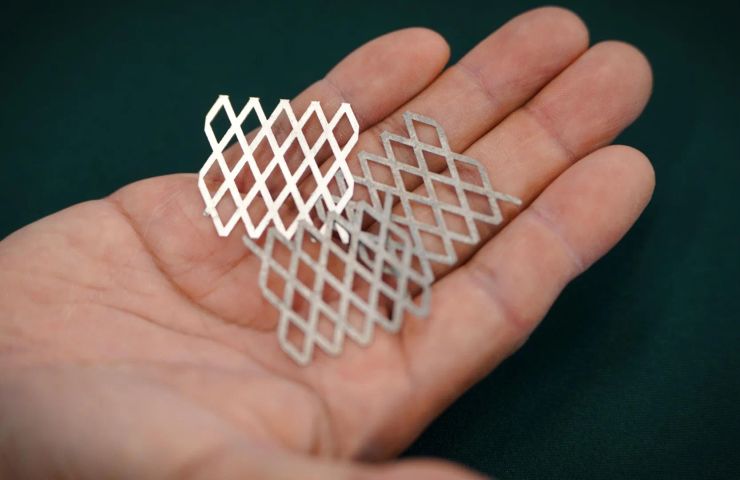
The University of Hong Kong’s Department of Mechanical Engineering is kicking off an exciting partnership with a top steel manufacturer over in mainland China, aiming to align with regional clean energy goals. Together, they’re diving into a joint project to bring SS-H2, an innovative stainless steel alloy, to the forefront of green hydrogen production, particularly in challenging environments like seawater and other chloride-heavy electrolytes. The goal? To take this game-changing material from lab-scale experiments to large-scale wire production, making it easier and cheaper to build the infrastructure we need for hydrogen.
Tackling Real-World Challenges in Hydrogen Infrastructure
As the world rushes to ramp up green hydrogen production and cut carbon emissions, one significant hurdle has been the hefty costs tied to electrolyser materials. Right now, in proton exchange membrane (PEM) systems, the go-to materials are often titanium parts coated in precious metals like gold or platinum—definitely not the most budget-friendly options. This is where SS-H2 steps in, offering a corrosion-resistant steel alternative that can withstand up to 1700 mV in a sodium chloride solution. This range is just what we need for hydrogen production, allowing this innovative steel to step in for expensive titanium components and potentially slashing costs by around 40 times in structural parts for a 10 MW system. The hope is that by tackling these real challenges, the project will make it cheaper and easier for manufacturers and plant operators to deliver hydrogen solutions while keeping everything running smoothly.
Even better, the way SS-H2 is made fits right into existing stainless-steel manufacturing processes. This means factories can keep their current setups for wire, mesh, or foam production without a complete overhaul. Initial trials have already cranked out tonnes of SS-H2 wire in collaboration with their mainland partner, proving that scaling up can happen quickly and efficiently. With promising results, the partnership is gearing up to test SS-H2 components in actual electrolyser modules—setting the stage for broader use in data centers, industrial parks, and renewable energy plants along the coast. By reimagining hydrogen production, SS-H2 offers a pathway to making green hydrogen more affordable and accessible at scale.
Simple Yet Powerful Innovation
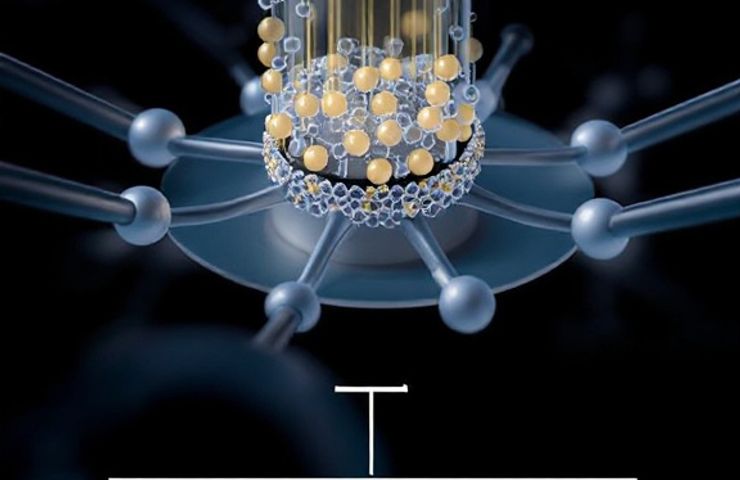
The concept behind SS-H2 is refreshingly straightforward but packs a punch: it uses a two-stage protective film that kicks in as voltage increases. When the steel is at rest or under low voltage, chromium forms a tough oxide layer—similar to what you’d find in regular stainless steel. As the voltage rises past about 720 mV, manganese takes over to create an additional outer oxide layer, reinforcing the surface against harsh, salty conditions. Thanks to these two layers working in harmony, the steel stays protected up to about 1700 mV, far exceeding the vulnerability point of ordinary stainless steel.
This clever dual-passivation strategy isn’t just an experiment; it’s a real-world solution that creatively uses common elements like chromium and manganese. By tweaking the alloy, the HKU team has come up with a way to keep the steel safe from rapid degradation, eliminating the need for pricey coatings found on noble metals. The result? A sturdy, conductive surface that’s more than ready for the demands of real electrolyser applications—all while keeping costs way down compared to titanium alternatives.
Dr. Kaiping Yu, who led the study, shared that atomic-scale measurements confirmed the stability of these layered protections during testing. Even the seasoned pros in corrosion science were taken aback, as they had thought adding manganese would weaken the protective film. Instead, it turned out that manganese-rich oxides actually help boost resistance to breakdown, increasing the corrosion threshold by hundreds of millivolts.
Homegrown Innovation for Asia’s Future
This partnership truly embodies the spirit of being made in Hong Kong for Asia’s future. The city is known for its top-notch universities and innovative research, and HKU’s Super Steel Project is tapping into that wealth of local knowledge. By teaming up with a factory in mainland China, they’ve rapidly transitioned from small-scale experiments to producing multi-tonnes of SS-H2 wire. This strategy not only supports regional supply chains but also creates manufacturing jobs in Hong Kong and surrounding areas.
Focusing on local production has its perks. By making SS-H2 wire close to research facilities, it shortens lead times and cuts down on shipping costs. Plus, engineers have the advantage of working with fresh samples for testing whenever they need. As pilot components are produced, teams in Hong Kong can collaborate directly with factory workers to fine-tune the production process. This close loop is not only enhancing skills but driving job growth in advanced alloys manufacturing, aligning seamlessly with broader economic goals aimed at diversifying high-value outputs.
Having a solid production base in the Greater Bay Area also means companies across Asia can tap into the SS-H2 parts more swiftly. Quick access supports new electrolyser projects in various markets, from bustling coastal cities to remote island communities, bolstering clean hydrogen deployment in line with regional energy transitions.
Harnessing Local Know-How
By leveraging Hong Kong’s rich academic landscape and the manufacturing expertise of the mainland, this collaboration bridges the gap between research and practical use. After six years of exploration into sequential dual-passivation, HKU has successfully driven this alloy from concept to patent submissions in key markets like China, Europe, and the US. The partner factory brings decades of stainless-steel processing know-how and high-volume production excellence to the table.
Engineers are adapting familiar manufacturing processes—like roll-to-roll and wire-drawing—to handle SS-H2’s unique makeup, meaning they won't need to invest heavily in new equipment. This smart approach speeds up how quickly they can bring SS-H2 to market since the focus is on quality control to make sure each batch measures up to the needed corrosion resistance standards.
Pragmatic Impact on Industry and Environment
What this all boils down to is that SS-H2 could significantly lower the capital costs associated with PEM electrolyser stacks, which account for roughly half of total system expenses—especially by replacing expensive titanium components. Studies suggest that reducing material costs could potentially lead to a 20% decrease in overall system costs, bringing hydrogen prices down by about 10%. If SS-H2 can take the place of titanium as a material, even greater savings could be unlocked, with estimates indicating up to a 40-fold reduction in costs for large-scale structures.
That’s a big win for project developers and end users, whether it’s data centers, remote industrial facilities, or coastal power plants looking to utilize seawater electrolysis. Cutting back on noble metals and using lower-cost steel not only helps the planet but also speeds up return on investments. Plus, by using seawater instead of freshwater, SS-H2 supports more sustainable hydrogen production—lightening the load on our precious water resources.
Looking Forward: Bright Horizons for Clean Hydrogen
Pilot projects are already underway this month, and the team is gearing up for full-scale electrolyser tests soon. If all goes well, this collaboration between HKU and the manufacturer could pave the way for new material standards in the green hydrogen sector. It shows that with innovative alloy design, high-performance materials don’t have to come from exotic metals.
As the hydrogen landscape continues to evolve and breakthroughs take center stage, this partnership stands out for blending academic creativity with local manufacturing talent and a focus on practical solutions. It's a shining example of how harnessing regional strengths—academic prowess, skilled labor, and dynamic supply chains—can drive sustainable and economically attractive innovations in the hydrogen energy field.