Clean hydrogen news: KAIST develops angstrom-scale polymer membrane for hydrogen separation
KAIST’s new angstrom-scale polymer membrane uses Bridge Connectivity Degree to boost hydrogen separation, offering high permeability, selectivity and stability.
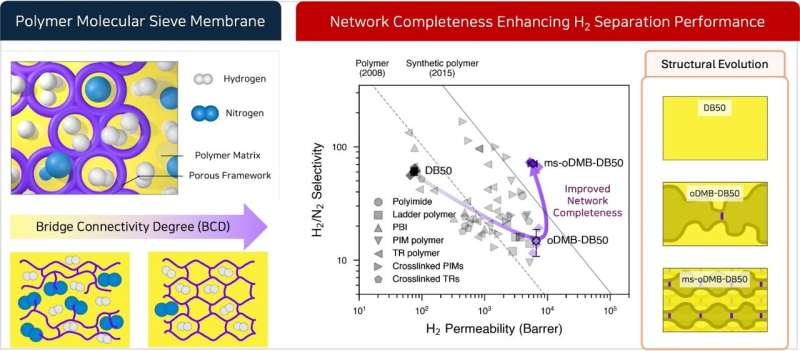
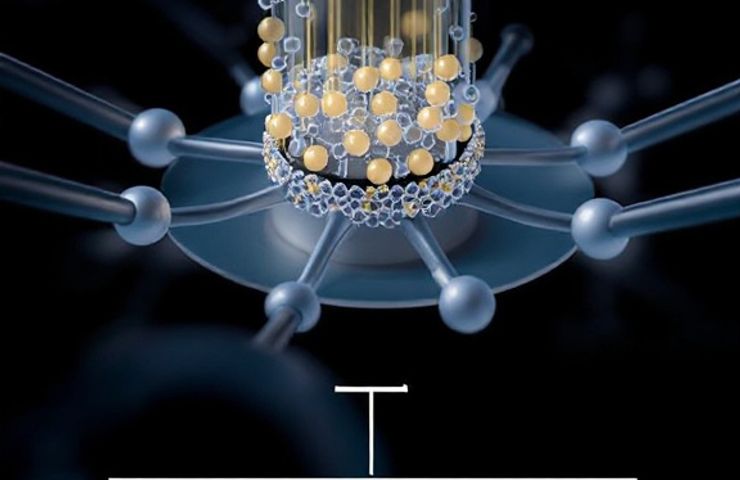
You ever wonder why hydrogen purification still relies on bulky machines and extra energy? Well, the folks over at KAIST might have cracked the code. In a recent paper published in Nature Communications, Professor Tae-Hyun Bae and Dr. Hongju Lee introduced ms-oDMB-DB50. This isn’t just a minor upgrade—it's a total rethinking of polymer membranes designed to sift through gases at the angstrom scale. Instead of just tweaking existing films, they decided to reengineer the whole polymer network, borrowing some clever ideas from reticular chemistry to achieve seamless, angstrom-level connectivity. The end result? A molecular sieve that delivers high hydrogen permeability along with precise H₂/N₂ selectivity, all packed into a thin and tough film.
The researchers took things a step further with the introduction of Bridge Connectivity Degree (BCD) in membrane technology. Unlike the typical crosslinking degrees that merely count how many links are in the mix, BCD actually checks how many of those links form bridges between polymer chains, creating a continuous pathway. With an impressive 73% of crosslinkers forming complete bridges, the ms-oDMB-DB50 generates ultramicropores under 3 Å—just wide enough for hydrogen’s 2.9 Å molecules to pass through while keeping larger molecules out. It’s a compact network that really maximizes selective transport.
Why It Matters
Hydrogen is a major player in decarbonizing industries like chemicals, steelmaking, and transportation. However, most of the hydrogen we produce today still comes from methods like steam methane reforming or coal gasification, which generates gas streams mingled with CO₂, CO, N₂, CH₄, and other undesirables. To purify this mix for use in refineries, ammonia synthesis, or fuel cells, facilities often depend on pressure swing adsorption (PSA) or cryogenic distillation. While PSA processes can achieve high purity (often over 99.9%) and recovery rates above 90%, they require complex multi-bed systems, significant energy for compressors, and expensive infrastructure.
Polymers present a leaner, continuous alternative with lower capital costs, compact modules, and fewer moving parts. Yet, polymeric membranes have been stuck facing the Robeson upper bound trade-off that limits permeability and selectivity. They also deal with issues like plasticization from gases that condense, physical aging, and thermal stability challenges. Until now, making meaningful tweaks to polymer chemistry rarely produced the ultramicropore control needed for industrial-grade separations. That’s what makes KAIST’s approach so groundbreaking: it directly ties the network structure to performance, offering a way to break past the long-standing material limits.
The Engine Under the Hood
At the heart of this breakthrough lies the clever engineering of the network. Rather than making educated guesses about how crosslinkers occupy free space, the team established Bridge Connectivity Degree (BCD) as the percentage of crosslinkers that actually connect two chains. A higher BCD means more complete, continuous channels for transporting molecules. To achieve a BCD of 73%, the membrane cleverly employs modular crosslinkers that integrate the parent polymer, DB50, into a tight, three-dimensional structure.
To determine the ultramicroporosity of the network, the researchers took on a novel method. They adapted a density-probe method using helium, which has a kinetic diameter smaller than hydrogen. By measuring how helium is absorbed and how it moves through the material, they could confirm the presence of those sub-3 Å channels that larger gases simply cannot access. Their experiments showed that ms-oDMB-DB50 combines high hydrogen flux with outstanding H₂/N₂ selectivity, while also providing tensile strength that’s about twice as strong as earlier high-performance films. A long 100-hour continuous test demonstrated that the performance remains stable over time, tackling one of the biggest hurdles in getting polymer membranes into widespread use.
Powering Progress
So, what happens when you swap out a multi-bed PSA setup for a single membrane module? The footprint shrinks, energy consumption drops, and capital costs go down. At ambient temperature, ms-oDMB-DB50 modules can handle the typical feed pressures from hydrogen plants without needing additional cooling, digging, or cycling. This means that refineries, ammonia production sites, and even the new wave of green hydrogen producers can roll out compact units, cutting down both construction time and operational costs.
In terms of distributed energy scenarios, this technology opens up a world of possibilities. Think about mobile or modular hydrogen generators fueling hydrogen vehicles at roadside stations, powering remote microgrids in off-grid communities, or serving industrial microfactories that need pure hydrogen on demand. Plus, if you equip these membrane modules with digital sensors, you could monitor real-time performance, catching problems like fouling or compaction before they get serious. This means creating a sturdy, low-maintenance purification stage that comes as close to plug-and-play as membrane technology has ever been able to get.
According to industry reports, the hydrogen purification membranes market is projected to jump from around $1.2 billion today to nearly $4.8 billion over the next decade, with the polymer segment expected to double in that timeframe. Innovations like ms-oDMB-DB50 could grab a sizable chunk of that market, especially in small to medium applications where PSA isn’t as cost-effective. This shift could revolutionize supply chains in membrane manufacturing and module assembly, opening up fresh opportunities along the clean hydrogen value chain.
Strategic Landscape
This breakthrough builds on KAIST’s expertise in polymer membranes and their collaborative research efforts. The Department of Chemical and Biomolecular Engineering’s Hydrogen Separation Membrane Team, led by Professor Bae, has teamed up with government organizations like the Ministry of Science and ICT, securing national grants to dive deeper into advanced membrane materials. Their earlier work on mixed-matrix membranes, nitrogen-rich porous polymers for CO₂/N₂ separation, and ultrathin films for pharmaceutical applications set the groundwork for tackling hydrogen purification.
By applying concepts borrowed from reticular synthesis—commonly used in crafting metal-organic and covalent organic frameworks—to polymer networks, the team has carved out a new approach to design. Now, industry players are lining up to test pilot modules: from chemical companies interested in on-site purification to oil and gas firms eyeing hydrogen hubs, and electrolyzer manufacturers keen on bundling membranes with their systems. Plus, policies encouraging low-carbon technologies, like clean hydrogen credits and industrial decarbonization mandates, could hasten adoption. As funding streams and offtake agreements take shape, polymeric membrane suppliers are poised to become vital allies in the growth of global hydrogen infrastructure.
Future Vision
This isn’t just another lab experiment; it’s a pathway for designing polymer membranes that could help drive down costs, reduce infrastructure needs, and speed up the rollout of clean hydrogen options. The next steps involve ramping up membrane production, engineering pilot modules for real-world conditions that include impurities like H₂S and water vapor, and exploring how to integrate seamlessly with fuel cell systems and other separation processes.
If ms-oDMB-DB50 delivers on its promises, we might witness decentralized purification stations springing up at data centers, fueling stations, microgrids, and industrial parks. This could shift the focus away from massive central facilities and pave the way for modular, distributed systems that adjust to demand flexibly. Just imagine a future where you can purify hydrogen right on-site and on-demand—no cumbersome PSA setups or cryogenic towers, just a sleek polymer film handling all the work.
For anyone keeping an eye on clean hydrogen developments, this breakthrough signals that membrane technology is finally catching up to market needs. The days of bulky, complicated hydrogen purification methods may be behind us sooner than we think. Buckle up!